
We spend so much time making our homes comfortable, but what if the biggest threat is the air you breathe inside? It's easy to overlook, but taking action to improve home air quality is one of the most important things you can do for your family's well-being, especially here in the Phoenix Valley. Our unique desert environment presents challenges that require smart, targeted solutions.
The Hidden Air Quality Challenge in Your Phoenix Home
Honestly, have you ever stopped to think about what's actually in the air you breathe at home every day? We seal our houses up tight to keep the summer heat out, thinking we're creating a safe haven. The surprising truth is that the air inside your Mesa home can be far more polluted than the air outside.
To really get a handle on this, it helps to understand what indoor air quality is and how it affects your health. This isn't just about a little dust on the furniture; it’s about a whole cocktail of invisible particles and gases that your family inhales constantly.
Why Indoor Air Is a Bigger Deal Than You Think
You know what? Most of us spend about 90% of our time indoors. According to the U.S. Environmental Protection Agency (EPA), the air inside our homes can be 2 to 5 times more polluted than the air outside. And during everyday activities like cooking or cleaning? That number can jump to 100 times worse.
That statistic is a real wake-up call. It shifts air quality from a simple cleaning issue to a critical health priority.
For us in the Phoenix Valley, our local environment adds another layer to the problem. Those same tight seals that keep our AC bills down also do a fantastic job of trapping airborne contaminants right inside with us.
Common pollutants we see in Valley homes include:
- Desert Dust and Particulates: That fine, powdery dust from our landscape gets everywhere, including deep inside your lungs.
- Pollen: Arizona has its own unique allergy seasons. Pollen from palo verde, mesquite, and ragweed doesn't just stay outside; it follows you in.
- Pet Dander: We love our pets, but their dander is a major allergen that your HVAC system happily circulates from room to room.
- Volatile Organic Compounds (VOCs): These are chemical gases off-gassing from everyday things like cleaning supplies, air fresheners, new furniture, and even paint.
The EPA ranks indoor air pollution among the top five environmental risks to public health. For families in Arizona, especially those with kids or anyone suffering from allergies or asthma, this invisible threat is a daily reality that you can't afford to ignore.
The Impact on Your Family’s Health
The fallout from poor indoor air quality is very real, ranging from nagging daily symptoms to more serious, long-term health problems. Are you constantly battling sniffles, headaches, or allergy flare-ups that magically seem to get better when you leave the house? If so, your indoor air is the likely culprit.
Kids are especially at risk because they breathe 50% more air per pound of body weight than adults, which means their little bodies get a bigger dose of any pollutant in the room. Here in Phoenix, where our HVAC systems run nearly nonstop, poor air quality can directly trigger allergy attacks, worsen asthma, and cause general respiratory misery. Tackling these issues is crucial, and you can explore our comprehensive guide on indoor air quality solutions to learn more.
Practical DIY Fixes for Cleaner Air Today
Before you start pricing out whole-home air purifiers, it's worth knowing that some of the biggest improvements to your home's air quality don't cost a dime. Many of the most effective changes are simple things you can tackle this weekend. The core idea is "source control"—getting rid of pollution where it starts, long before it has a chance to circulate through your home.
This is about making small, intentional choices—like swapping a heavily scented cleaner for a simple vinegar solution—that add up to a big difference. It all starts with the basics, like learning how to control dust in your home for cleaner air. Dust isn't just an eyesore; it's a messy cocktail of skin cells, pet dander, pollen, and chemicals that gives allergens a free ride into your lungs.
Attack Pollutants at the Source
The first move is to identify where common pollutants are coming from. This diagram gives you a quick visual of how even clean outside air can get contaminated once it’s sealed up inside a modern home.
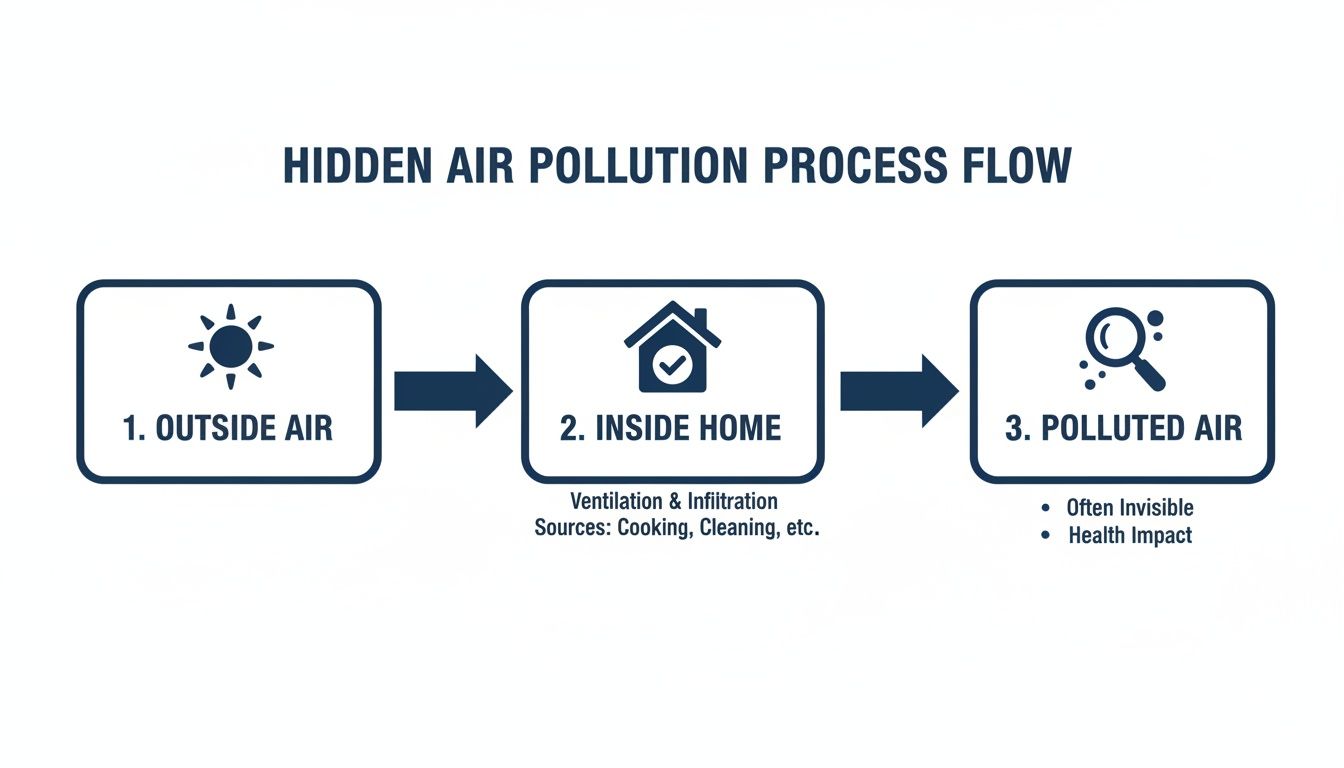
As you can see, our well-sealed homes are great for energy efficiency but can also trap pollutants, creating an unhealthy feedback loop. To make it more practical, we've put together a quick guide to the common pollutants we see in Phoenix homes and the simple fixes you can apply today.
Common Indoor Pollutants and Quick DIY Fixes
This responsive table breaks down some of the biggest offenders in our local environment and gives you actionable steps to take back control of your air.
| Pollutant | Common Source in Phoenix Homes | Easy DIY Solution |
|---|---|---|
| Volatile Organic Compounds (VOCs) | Scented candles, air fresheners, cleaning supplies, new paint, new furniture | Choose fragrance-free products. Opt for "low-VOC" or "zero-VOC" paints. Let new furniture air out in the garage for a few days before bringing it inside. |
| Pet Dander | Dogs, cats, and other furry family members | Groom pets regularly (preferably outside). Wash pet bedding weekly in hot water. Use a vacuum with a HEPA filter on floors and upholstery. |
| Dust Mites | Bedding, carpets, curtains, and upholstered furniture | Wash all bedding weekly in hot water. Use allergen-proof covers on mattresses and pillows. Keep humidity below 50% as dust mites thrive in moisture. |
| Pollen & Outdoor Dust | Open windows and doors, tracked in on shoes and clothing | Keep windows closed during high pollen seasons and dust storms (haboobs). Use doormats and adopt a "no shoes in the house" rule. |
By tackling these sources head-on, you’re not just cleaning—you’re actively removing the fuel for poor indoor air quality.
Small Habits, Big Impact
Beyond targeting specific pollutants, a few simple habits can make a huge difference:
- Ventilate While Cooking: Always use your range hood fan when cooking, especially with a gas stove. It pulls grease, fumes, and moisture right out of your kitchen.
- Run Bathroom Fans: Let your bathroom exhaust fan run during your shower and for another 15-20 minutes afterward to combat humidity and prevent mold.
- Declutter Surfaces: Clutter is a dust magnet. Fewer knick-knacks mean fewer places for dust to hide and easier cleaning.
The key takeaway here is that managing your home’s air is an ongoing process, not a one-and-done fix. Consistently applying these simple strategies is the most effective way to maintain a healthier indoor environment.
Another critical DIY task is changing your HVAC air filter on schedule. It’s one of the easiest and most impactful things you can do. If you're not sure where it is, our guide on locating the air filter in your house will help. These small steps put you back in the driver's seat of your home's health.
Leveraging Your HVAC System for Better Air
Here’s the thing: most people think of their HVAC system as just a big box for heating and cooling. But it's so much more. Your system is the lungs of your home, circulating nearly all the air your family breathes. This makes it your single most powerful tool in the fight for better home air quality.
Your AC or furnace is constantly pulling air out of your rooms, running it through a filter, and sending it back. By making smart upgrades, you’re not just cooling your home—you’re actively scrubbing the air clean with every cycle. It all starts with the often-overlooked air filter.
Go Beyond the Basic Air Filter
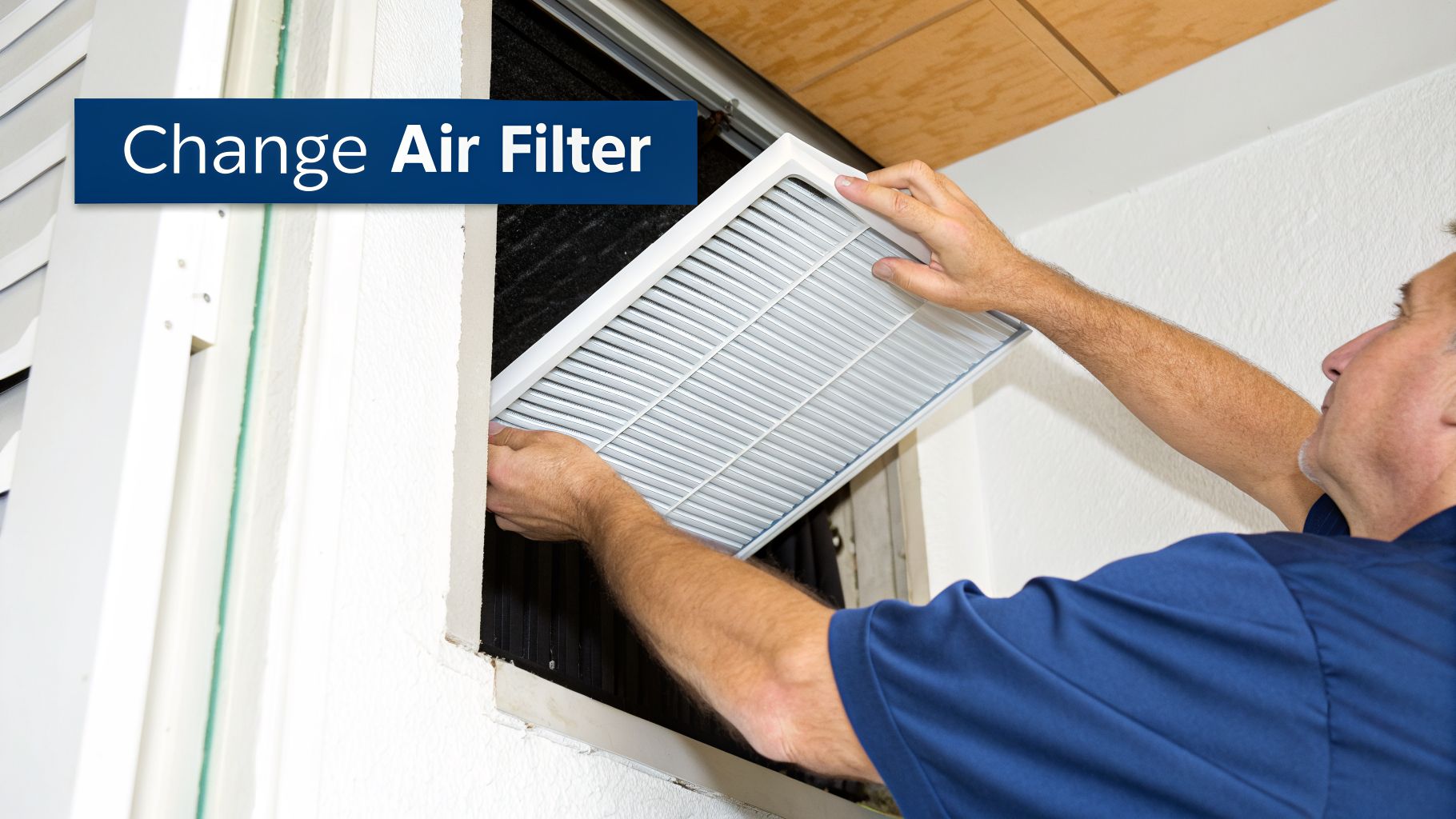
Let’s be blunt: regularly changing your air filter is the most important piece of HVAC maintenance you can do. A clogged filter can’t trap anything new and forces your system to work harder, driving up energy bills and leading to expensive breakdowns.
But not all filters are made the same. To pick the right one, you need to know about MERV, or the Minimum Efficiency Reporting Value. It's a 1-to-20 scale that tells you how well a filter catches airborne particles.
- MERV 1-4: Cheap, flimsy filters that stop large particles but let dust and pollen pass.
- MERV 5-8: The sweet spot for most homes, trapping dust mites, dander, and mold spores.
- MERV 9-12: High-efficiency filters fantastic for families with allergies or asthma.
- MERV 13+: Top-tier filtration, capable of snagging bacteria, viruses, and smoke.
It's tempting to grab the highest MERV rating, but that can backfire by restricting airflow. The goal is to find the perfect balance between filtration and airflow for your specific unit. Our guide on the best HVAC filters for allergies dives deeper into this choice for Phoenix-area homes.
It's What's Inside the Ducts That Counts
Your air filter is the front-line defense, but your ductwork is the delivery network. If those hidden highways are dirty or leaky, a great filter won't matter much. Over the years, ducts collect dust, pet hair, construction debris, and even mold.
Every time the AC kicks on, it can dislodge that junk and blast it straight into your rooms. Leaky ducts are just as bad, sucking in dusty, contaminated air from attics and mixing it with your clean air, trashing your air quality and forcing your system to work harder.
As HVAC professionals serving Mesa and the greater Phoenix area since 2011, we’ve seen it all. Getting your ducts professionally cleaned and sealed doesn't just drastically improve your home's air; it also makes your system run more efficiently, which can lower your energy bills. It’s a win-win for your health and your wallet.
Going Beyond Filters: Advanced Whole-Home Air Purification
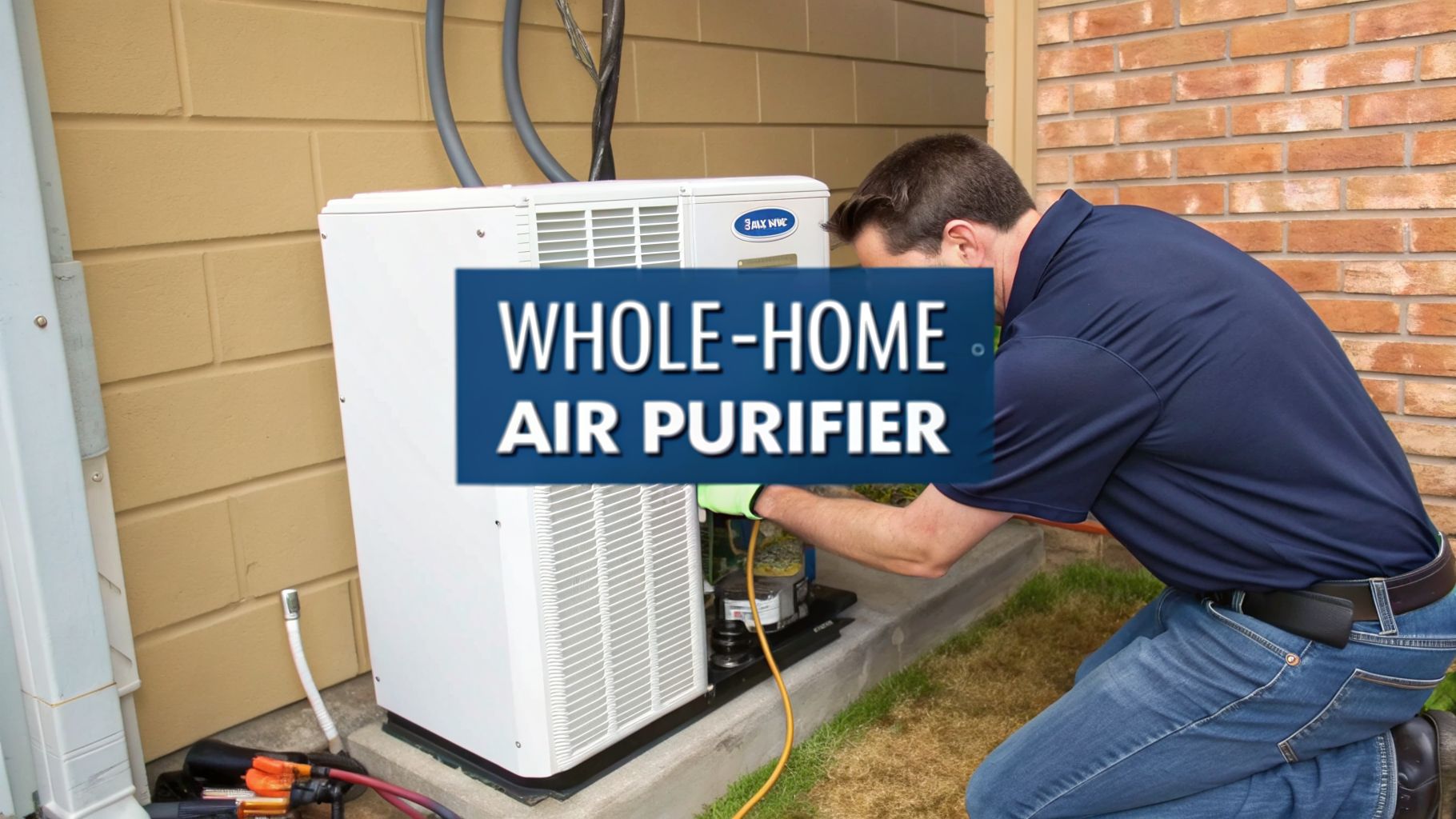
So, you've been swapping filters and vacuuming like a pro, but the air still doesn't feel truly clean. When basic maintenance isn't enough, it's time to look at the tools we use for the tough jobs. These aren't portable units; they're serious solutions integrated into your HVAC system that clean the air in your entire home.
Whole-Home Media Air Cleaners
Imagine your standard AC filter, but five times thicker and far more effective against dust and allergens. That’s a whole-home media air cleaner. Installed in your ductwork, these units use a deep, dense filter media (4-5 inches thick) to capture a huge percentage of airborne contaminants without choking your HVAC system’s airflow. They are incredibly good at nabbing irritants like pollen, pet dander, and mold spores. The best part? These filters only need to be replaced every 6 to 12 months.
We’ve seen it firsthand—for a family in Mesa with a child’s severe asthma, a media air cleaner can be a game-changer. It creates a sanctuary by capturing the vast majority of airborne triggers before they even enter the living space.
UV Air Purifiers: Waging War on Germs
Now, let's talk about the invisible stuff. Your ductwork can be a perfect hideout for mold, bacteria, and viruses. This is where UV (ultraviolet) air purifiers come in. Installed inside your ductwork, they emit a UV-C light that acts as a powerful disinfectant, scrambling the DNA of microorganisms and preventing them from reproducing. Think of a UV purifier as a silent, 24/7 guardian against mold, airborne bacteria, and organic odors. To see how these systems fit with your existing setup, you can learn more about whole-home air purifiers.
Air Scrubbers: The Proactive Cleaning Crew
While filters and UV lights are great at cleaning air that passes through them, an air scrubber takes a more active approach. Let me explain. An air scrubber uses a special UV light and a catalyst to create safe but powerful oxidizing molecules. Your HVAC fan then pushes these "scrubbing" molecules into every room, where they actively hunt down and destroy pollutants on contact, both in the air and on surfaces.
These systems are champions at knocking out:
- Lingering cooking or pet odors.
- Chemical smells from new furniture or paint (VOCs).
- Smoke particles.
- Bacteria and viruses on doorknobs and countertops.
An air scrubber is the ultimate upgrade for anyone who wants to actively sanitize their home, not just filter it.
When It’s Time to Call in the Pros
You’ve done everything you can think of. You’re swapping filters, caulking windows, and yet, the air inside still feels… off. This is the point where even the most determined DIYer needs to call for backup. Trying to solve a deep-seated air quality issue with store-bought fixes is like putting a band-aid on a broken arm. Recognizing you've hit that limit is the first step to finally getting the clean, healthy air your family deserves.
When DIY Just Isn't Cutting It
How do you know you've moved past a simple filter change and into professional territory? Keep an eye out for these persistent red flags:
- Constant Allergy Flare-Ups: If your family is always sneezing or sniffling inside the house, your air is the prime suspect.
- A Musty Smell That Won't Quit: A damp, musty odor, especially when the AC kicks on, is a classic symptom of hidden mold.
- Visible Mold or Mildew: Spotting mold around vents or in your HVAC unit's drain pan is a major warning sign.
- Dust That Reappears Overnight: This often indicates leaky or filthy ductwork pulling in dust from your attic.
If any of that sounds familiar, you’re up against a systemic problem that requires professional tools and expertise to solve for good.
Why Call the Comfort Experts
When you're dealing with these kinds of issues in the Valley, you need a local team that gets it. At Comfort Experts, we're your Mesa neighbors. We’ve been serving the community since 2011, building our business on honest work and real solutions for Arizona homes. We’re fully licensed and insured (ROC #275914), so you can have complete peace of mind.
We use advanced diagnostic tools to go beyond guesswork and find the true source of your air quality problem—whether it's hidden mold, an improperly sized system, or microscopic pollutants you'd never know were there.
Our Comprehensive Air Quality Services
We offer a complete range of services designed to take on any indoor air quality challenge. This can include:
- Professional Air Quality Testing: We use calibrated instruments to measure the specific pollutants in your home's air, giving you a clear, data-driven picture of what you're breathing.
- Advanced Duct Cleaning and Sealing: We use powerful, specialized equipment to scrub years of built-up gunk from your entire duct system. See what to expect from a duct cleaning service near you.
- Whole-Home System Installation: We can recommend and install the right equipment to keep your air clean long-term—from high-MERV media filters and UV purifiers to whole-home air scrubbers.
Common Air Quality Questions We Hear in Phoenix Homes
When we’re out in Mesa or Gilbert homes, the same questions about air quality almost always come up. Here are some honest answers based on what we see every day.
How Often Should I Really Change My Air Filter Here in Arizona?
For standard 1-inch filters, check them every 30 days. Don't go longer than 60 days. A strict 30-day schedule is best if you have pets, allergies, or nearby construction. Pro tip: after a major dust storm (a haboob), check your filter immediately. A new filter can be clogged in hours. If you have thicker 4- or 5-inch media filters, they typically last 6 to 12 months.
A clogged filter doesn’t just stop cleaning your air; it chokes your HVAC system, driving up your energy bill and risking a breakdown on a 115-degree day.
Is Professional Duct Cleaning Worth the Money?
Yes, in the right situation, it’s absolutely worth it. We strongly recommend it if you’ve just moved in, finished a remodel, see excessive dust, or have unexplained allergy flare-ups. A true professional cleaning uses high-powered vacuums and rotary brushes to scrub the inside of your ductwork, getting rid of all the gunk that's been circulating through your home.
Will an Air Purifier Actually Help with My Sonoran Desert Allergies?
It will make a world of difference. The key is choosing a system with a HEPA filter, which is engineered to capture 99.97% of airborne particles as small as 0.3 microns—including the pollen and dust that make life miserable in Arizona. While a portable unit helps in one room, a whole-home purifier integrated with your HVAC system is the ultimate solution, treating the air in every room.
What’s the Difference Between an Air Purifier and an Air Scrubber?
That’s a great question. Think of it this way:
- A Traditional Air Purifier is Passive: It’s like a net. It traps particles that are pulled through a filter.
- A UV Air Purifier is Semi-Active: It uses UV light inside your ducts to zap biological contaminants like mold spores.
- An Air Scrubber is Fully Active: It creates and sends out "scrubbing" molecules into your living space to actively hunt down and destroy pollutants in the air and on surfaces. An air purifier is like setting a trap; an air scrubber is like sending out a pest control team to actively seek and neutralize them everywhere in your home.
At Comfort Experts, we believe every Phoenix family deserves to breathe clean, healthy air. If you're done fighting dust, allergies, and strange odors, it’s time to find out what’s really going on. If you're ready to finally take control and create a healthier home, give our friendly team a call at 480-207-1239 or schedule service online for a real, lasting solution.