
If you're reading this while your current unit is limping through another Mesa afternoon, you're asking the right question. The best time to buy ac in the Phoenix area isn't just about finding a discount. It's about avoiding panic, long waits, and a miserable stretch of heat when your house should feel safe and comfortable.
Why Your AC Purchase Timing Is a Big Deal in Phoenix
A Mesa AC failure in June can turn a normal evening into a scramble. The thermostat keeps climbing, the bedrooms stay warm well past sunset, and every contractor in town is fielding the same urgent calls.
That pressure changes the way people buy.
In the Phoenix area, timing affects more than the price on the equipment. It also affects install dates, system availability, and how much time you have to compare efficiency levels, warranty terms, and ductwork needs. National advice usually treats climate like a footnote. Here, early heat and monsoon season change the whole decision.
Summer breakdowns create expensive pressure
Once the first long stretch of triple-digit days hits, HVAC calendars fill up fast. Distributors can run low on certain models. Homeowners who wanted time to compare options often end up choosing from what can be installed the soonest.
I see the same pattern every year in Mesa and the East Valley. A homeowner starts out wanting to make a careful decision, then a failing unit during a hot spell turns the job into a same-week emergency. That usually leads to more stress, fewer choices, and less room to weigh whether it makes sense to repair, replace, or upgrade.
For many homeowners, it helps to review the main AC replacement cost factors in Arizona before the unit quits for good. System size, efficiency, duct condition, electrical updates, labor difficulty, and seasonal demand all affect the final number.
The timing issue is not unique to HVAC either. Big home systems usually cost less and cause fewer headaches when you replace them before they fail, which is a point the Moore Construction Co. DFW roof guide also makes in a different trade.
Phoenix weather raises the stakes
In cooler parts of the country, a short AC outage is frustrating. In Phoenix, it can disrupt sleep, make parts of the house unusable, and put extra strain on kids, older adults, pets, and anyone working from home.
Our local weather makes planning more important than national guides suggest. Heat often arrives in spring, not just midsummer. Then monsoon season adds dust, humidity spikes, and service delays when storms roll through. If your system is already struggling in April or May, waiting for a total breakdown can box you into a rushed decision at the worst point in the season.
A unit that is aging, needing frequent repairs, or falling behind in the afternoon should be evaluated early. Buying on your schedule usually means a calmer process and a better fit for the house.
The Two Smartest Windows for Buying a New AC
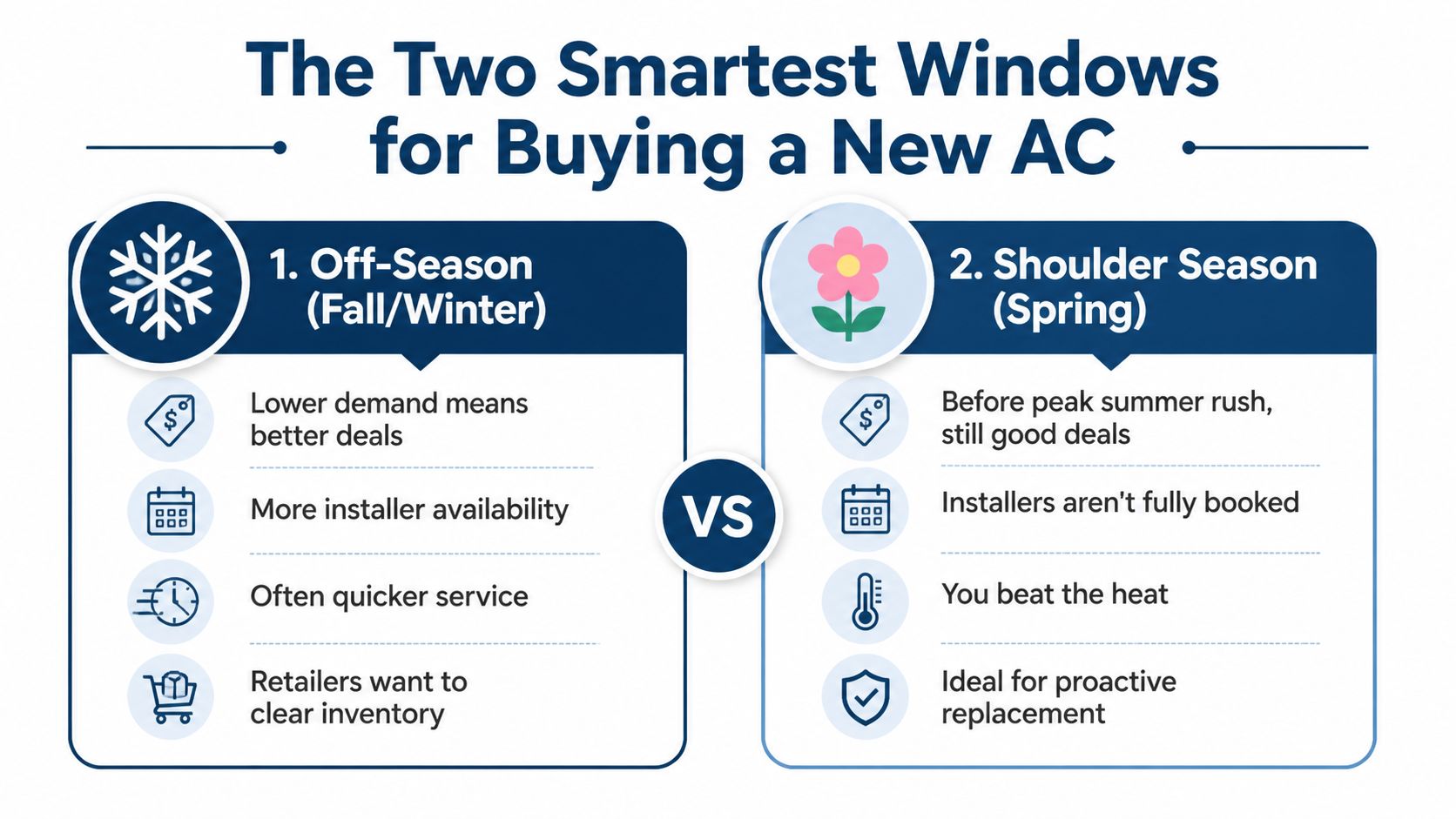
In Mesa and Phoenix, timing changes the whole buying experience. The same system can feel like a planned home upgrade in one month and an expensive emergency in another.
There are two purchase windows that usually make the most sense here. The first is late fall through winter if your goal is the best shot at lower pricing and a calmer install schedule. The second is early spring if you want to replace the unit before the first serious heat wave and still avoid peak summer pressure.
Off-season buying from fall into winter
November through January is usually the value window.
Crews are less slammed, homeowners have more time to compare options, and some manufacturers or distributors are trying to clear older inventory before the next cooling season. That does not guarantee a bargain on every system. It does improve your odds of getting better scheduling, more thoughtful quotes, and occasional price breaks on prior-year equipment.
This works especially well for homeowners whose unit still runs but is clearly near the end. If the system is limping along, winter gives you time to choose efficiency, sizing, and install details without making a panicked decision during a 108-degree week.
The same planning advantage shows up in other major home projects. The Moore Construction Co. DFW roof guide makes a similar point. Replacing big-ticket systems before peak demand usually means less stress and more control.
Spring buying before the first real heat surge
March through May is the second smart window, especially in Arizona.
National articles often treat spring like a mild shoulder season. Here, spring can turn hot fast. By late April or May, older systems in Mesa start showing their age, especially in the afternoon when the house has been soaking up heat all day. Buying before that first stretch of real desert heat can save you from getting stuck on a crowded install calendar.
Spring is often the better choice if you:
- want strong equipment selection, including newer models
- prefer to replace closer to the season when you will use the system
- have an older AC that still runs, but not confidently enough to trust through early summer
There is a trade-off. Prices in spring are not always as aggressive as winter. But for plenty of homeowners, paying a little more for better model availability and lower breakdown risk is the smarter move.
If you want to stack seasonal timing with available incentives, check current HVAC rebates and promotions in Arizona before you sign a proposal.
AC buying seasons compared for Phoenix homeowners
| Factor | Fall/Winter (Oct-Feb) | Spring (Mar-May) |
|---|---|---|
| Price potential | Best chance at off-season pricing and occasional clearance opportunities | Usually better than peak summer, though often not as low as winter |
| Installer availability | Calendars are usually more open, with less pressure to rush the job | Still workable, but schedules start tightening once early heat arrives |
| Equipment selection | Good for value shoppers, including some prior-year inventory | Often strongest for buyers who want current model options |
| Stress level | Low, because you are shopping well before extreme heat | Moderate, but still much easier than replacing during a summer breakdown |
| Best fit for | Homeowners focused on price and planning ahead | Homeowners balancing savings, timing, and lower risk |
Practical rule: If your AC is old and you already know replacement is coming, winter is usually the best buying window. If the unit is hanging on but acting unreliable, spring is often your last comfortable chance to replace it before Phoenix heat forces the decision.
Warning Signs Your Current AC Unit Is on Borrowed Time
A lot of systems don't fail all at once. They warn you first.
Many people ignore those warnings because the unit still turns on, and that feels good enough for now. But in Mesa, "still turns on" isn't the same thing as "ready for another season."
What homeowners usually notice first
Some signs are obvious. Others show up gradually and get dismissed as normal aging.
Weak cooling on hot afternoons
If the house never quite reaches the thermostat setting during the worst part of the day, the system may be losing capacity, airflow, or efficiency.Repairs that keep piling up
One repair doesn't automatically mean replacement. A pattern of service calls usually means the system is wearing out in multiple areas at once.Strange sounds
Grinding, squealing, rattling, or hard starts often point to worn mechanical parts or stress inside the unit. AC systems should sound steady, not dramatic.Indoor comfort that feels uneven
One room feels cold, another stays warm, and the thermostat never seems to match what you're feeling. That can signal equipment decline, duct issues, or both.
Less obvious clues that matter
Some homeowners notice symptoms that don't immediately scream "replace the AC," but they still matter.
Dust or stale air indoors
A failing system can struggle with airflow and filtration support, especially if other issues exist in the duct system.Long run times
If the unit seems to run forever just to maintain comfort, it's working harder than it should.A cabinet that looks rough
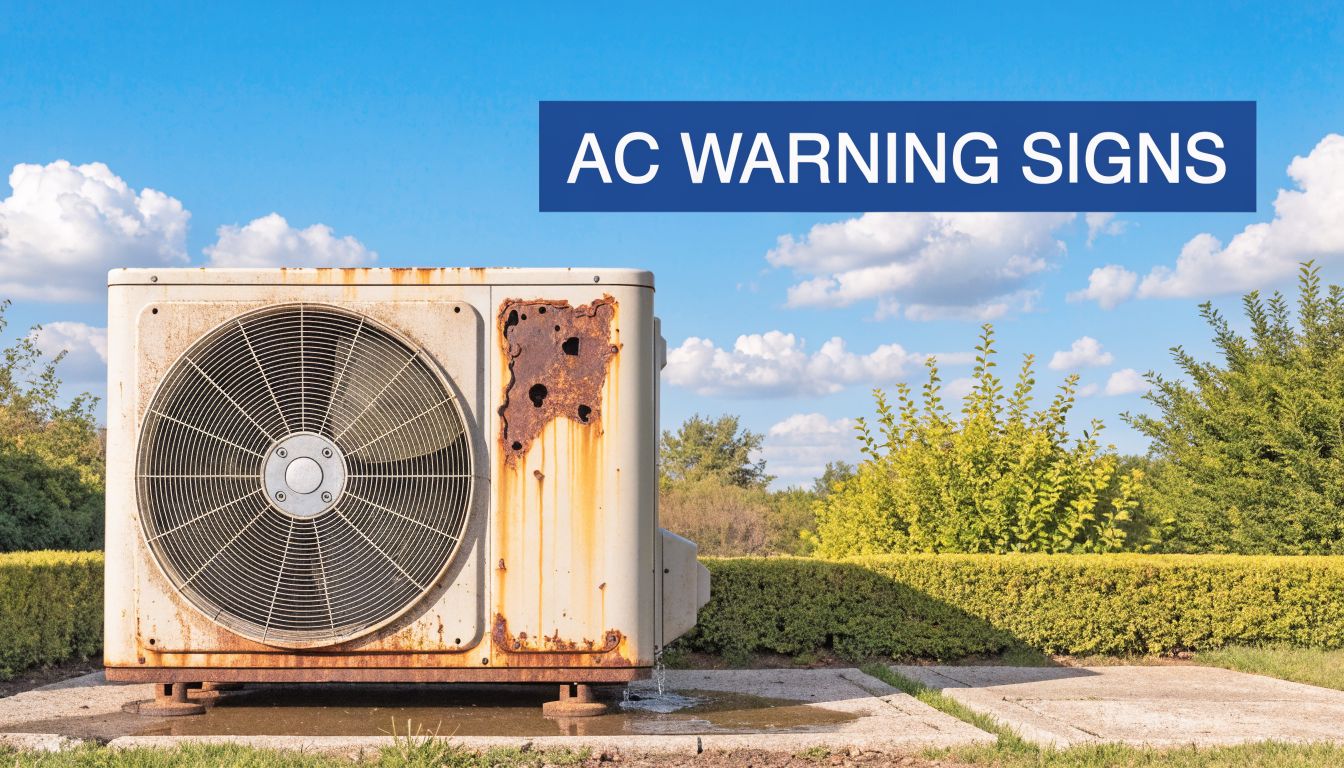
Rust, corrosion, damaged insulation, or visibly weathered components don't prove immediate failure, but they often line up with advanced wear.
If you're trying to gauge age along with condition, this guide on how long AC units last in Arizona gives useful local context.
If your AC shows several of these symptoms at once, don't wait for the "final proof." The final proof is usually a hot house and a rushed decision.
The worst mistake
The biggest mistake is treating replacement like a single yes-or-no event. Most failing systems live in a gray area for a while. They cool, but poorly. They run, but noisily. They get repaired, but never feel quite right again.
That's the stage where smart homeowners start planning. Not because they love spending money on HVAC, but because they want control over the timing.
A Smart Buyer's Guide to Maximizing Your Savings
A good AC deal in Mesa usually comes from a few smart choices made together. Timing matters, but so do the efficiency level, rebate availability, and the condition of the house the system has to cool.
That local piece gets missed in a lot of national advice.

Why Phoenix buyers need a different playbook
Phoenix area homeowners put more annual strain on an AC system than buyers in milder parts of the country. In Mesa, the cooling season starts early, stretches long, and can get rough again during monsoon humidity. That changes the math.
A unit that looks affordable on paper can cost more to live with if it runs hard for months, struggles in extreme afternoon heat, or leaves hot rooms that tempt you to keep lowering the thermostat. I tell homeowners to look at the full operating picture. Purchase price, electric bills, repair exposure, and comfort all belong in the same conversation.
Where extra savings usually come from
The biggest savings usually show up in three places.
Buying while you still have time to compare
A calm buying process leads to better choices. Homeowners can review options, ask about warranties, and compare labor scope instead of agreeing to the fastest available replacement.Choosing efficiency that matches the home
In Arizona, efficiency matters because the system works for a big chunk of the year. Still, the right target depends on how long you plan to stay in the home, your utility bills, and whether the ductwork and insulation are in decent shape. A quick look at SEER 14 vs 16 AC efficiency helps clarify where the extra cost may pay off and where it may not.Using rebates and seasonal promotions wisely
Manufacturer offers and utility incentives can take some sting out of the price, but only if the equipment qualifies and the paperwork gets handled correctly. Ask what is active right now and what deadlines apply.
Don't ignore the house around the AC
The AC only does part of the job. Roof heat, attic temperatures, sun exposure, insulation gaps, and leaky ducts all add load to the system.
I have seen homeowners replace equipment and still feel disappointed because the house was fighting the new unit all day. If you want a broader view of heat control, Arizona Roofers on roof venting is a useful place to start. Better venting and better HVAC planning often work together.
A practical savings mindset
The goal is not to buy the fanciest system in the brochure. The goal is to buy the system that fits the house and keeps your operating costs reasonable in Arizona heat.
Sometimes that means spending more upfront for better efficiency. Sometimes it means choosing a mid-range system and putting part of the budget toward duct fixes, attic insulation, or airflow corrections. Those trade-offs are where real savings happen.
Homeowners who plan early usually keep more control over those decisions. That control is worth money.
Planning Your AC Installation for a Smooth Process
Buying the right system is only half the job. Installation quality determines whether that system performs the way it should.
A homeowner can choose excellent equipment and still end up disappointed if the sizing is sloppy, the ductwork gets ignored, or the installer cuts corners. That's why the installation process matters so much.
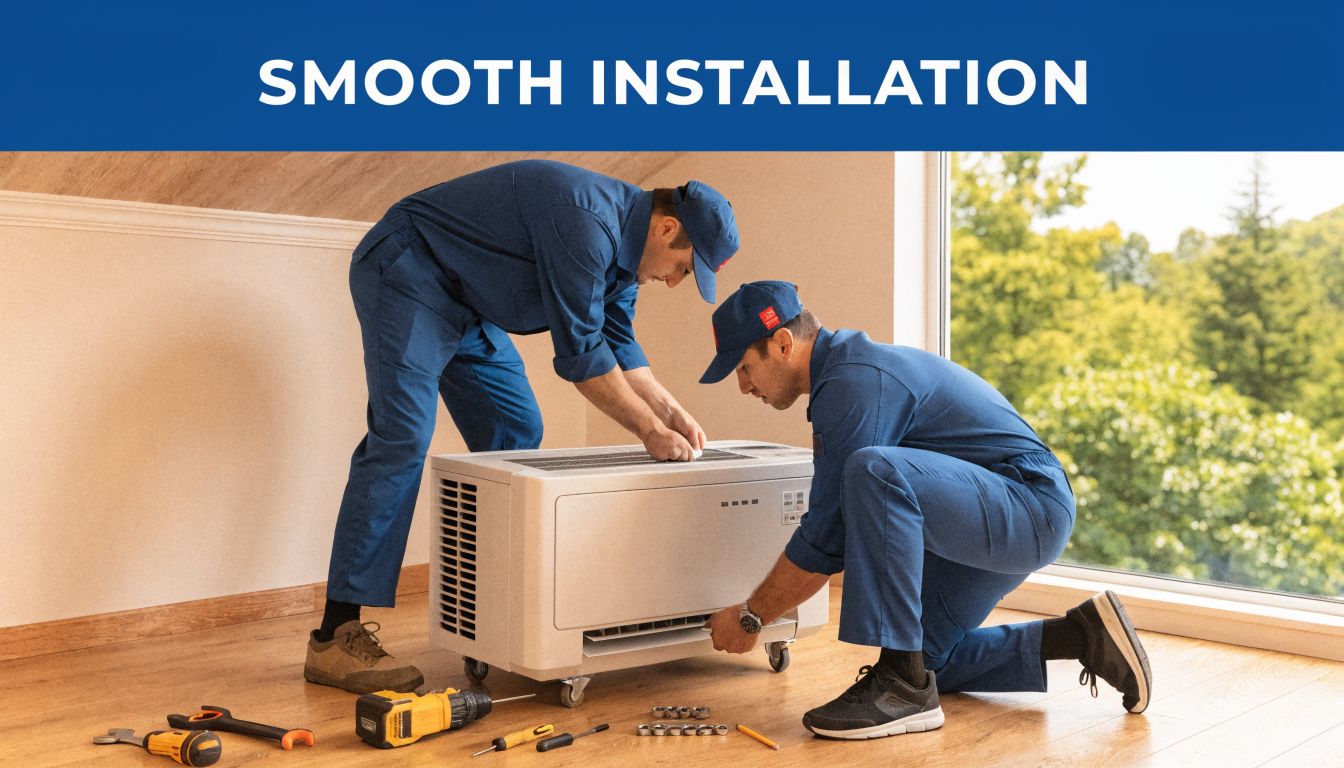
What a professional consultation should include
A proper estimate shouldn't feel like someone glancing at your old unit and matching the tonnage.
Look for a process that includes:
Load evaluation
The contractor should look at the home's size, layout, insulation, windows, and heat exposure. Bigger isn't automatically better.Duct inspection
If the ducts leak, sag, or restrict airflow, a new unit can inherit old comfort problems.Equipment matching
The outdoor condenser, indoor coil, and air handler or furnace pairing should make sense together.Thermostat and control review
Smart thermostat compatibility, zoning needs, and scheduling habits all affect daily comfort.
If sizing is part of your research, this article on what size air conditioner you need is worth reading before you compare proposals.
The best equipment will perform poorly if it's installed incorrectly.
What the day of installation usually looks like
Most homeowners want to know what they'll experience. Fair question.
Usually, the crew confirms the scope, protects work areas, removes the old equipment, sets the new components, connects refrigerant and electrical lines, checks airflow, verifies controls, and tests system operation. A careful installer also walks you through filter access, thermostat use, and basic maintenance expectations before leaving.
What to watch out for
A few red flags are easy to miss when you're focused on price:
Vague sizing explanations
If the answer is just "you had this size before," keep asking.No mention of ductwork
Air distribution problems don't disappear because the condenser is new.Pressure to decide immediately
Good contractors explain the why behind their recommendation.Thin paperwork
You want a clear scope of work, equipment details, warranty information, and installation terms.
A smooth installation starts long before the crew arrives. It starts with a contractor who treats your home like a system, not just a box to swap.
Your Next Step Toward a Cooler More Efficient Home
The best time to buy ac in Phoenix usually comes down to one simple idea. Replace on your timeline, not the weather's.
If you want the deepest savings, the off-season is the strongest window. If you want a practical balance of value and lower risk, spring is a solid move. Both are better than waiting for a scorching day when your old unit finally gives out and every contractor in town is suddenly booked.
The homeowners who usually feel best about their decision are the ones who plan before the emergency. They have time to compare efficiency options, ask about rebates, think through ductwork and sizing, and choose equipment that fits how they live. They also avoid the stress that comes with making a major home purchase while the house is heating up by the hour.
A new AC should solve problems, not create new ones. Good timing helps you protect your budget, your comfort, and your peace of mind.
If your current system is aging or struggling, Comfort Experts can help you sort out the right next step without the pressure. Call 480-207-1239 or schedule service online for an honest assessment and a fair quote.