
If you're standing in your hallway staring at the thermostat and wondering whether to set it at 72, 75, or 78, you're not alone. In Mesa, what's the best temp for air conditioner isn't a simple one-number answer, especially when the heat outside feels relentless and the electric bill keeps creeping up.
The Official Answer and Why It Is Only a Starting Point
The number most homeowners hear is 78°F. That recommendation comes from the U.S. Department of Energy, and it's a solid baseline for balancing comfort and efficiency. According to the DOE guidance summarized here, setting your thermostat to 78°F when you're home is the standard recommendation, and every degree you raise the thermostat above this baseline can save 3-5% on cooling costs. That means moving from 72°F to 78°F could reduce cooling expenses by up to 18%.
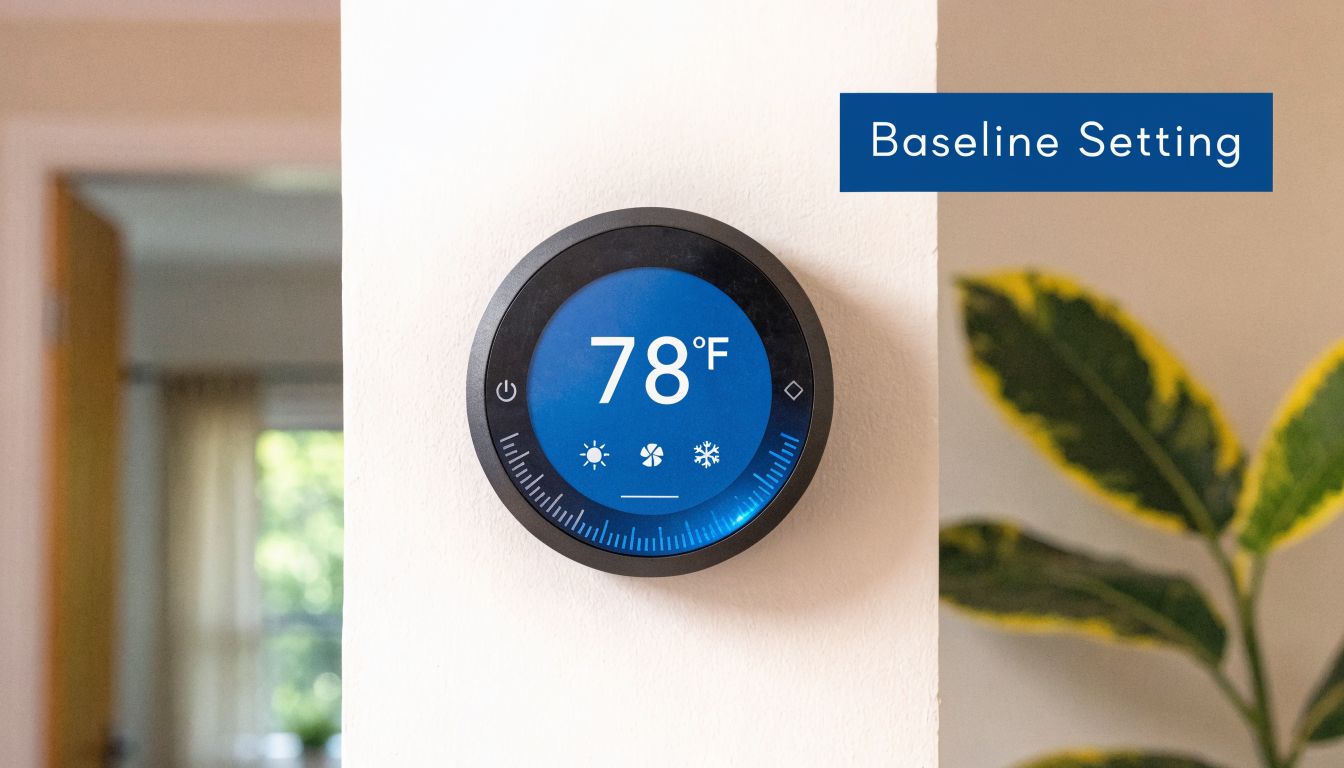
That guidance makes sense on paper. Your air conditioner doesn't have to work as hard when the indoor target temperature is higher, so the system runs less, uses less power, and takes less wear.
Why 78°F works for many homes
A thermostat setting isn't really about chasing cold air. It's about controlling how much heat your AC has to remove from the house.
A few practical realities make 78°F a smart starting point:
- Higher setpoints reduce workload. The farther you push indoor temperature below outdoor temperature, the harder your system works.
- Moderate settings protect equipment. A system that runs constantly through summer afternoons takes more abuse than one with a realistic target.
- Comfort isn't only about temperature. Sun through windows, air movement, humidity, insulation, and even your home's layout all change how 78°F feels.
Practical rule: Treat 78°F as the first setting to test, not a commandment carved in stone.
Why the official answer isn't always the best answer
A national recommendation can't account for every house in Mesa. Two homes on the same street can feel completely different at the same thermostat setting. One may have west-facing glass, another may have poor attic insulation, and another may have an undersized unit.
That's why asking only for the “best temperature” can lead you in the wrong direction. The better question is this: what temperature gives you acceptable comfort without forcing the system to fight a losing battle all day?
If your AC seems unable to hold your setpoint, thermostat strategy may not be the only issue. The equipment itself matters too, especially sizing, airflow, and duct design. If you're trying to figure out whether the unit matches the home, this guide on what size air conditioner you need helps connect those dots.
Ideal AC Temperatures for Every Part of Your Day
Using one thermostat setting all day is where a lot of homeowners waste money. Your home doesn't need the same temperature when you're cooking dinner, gone at work, and asleep under a blanket.
The better approach is to match the setting to what you're doing.
Recommended AC Temperature Settings
| Situation | Recommended Temp (General) | Primary Goal |
|---|---|---|
| Home and awake | 78°F | Balanced comfort and energy savings |
| Away from home | Higher than your occupied setting | Lower energy use while the house is empty |
| Sleeping | 65-72°F | Better sleep comfort |
When you're home and active
For many households, 78°F is the right daytime target. It's efficient, realistic, and easier on the system than trying to hold the house much colder during the hottest hours.
That said, “best” still depends on how the home feels. If a room gets hammered by afternoon sun or the kitchen heats up while you're cooking, you may feel warmer than the thermostat says you should.
When you're away
When nobody's home, there's no reason to cool the house like it's occupied. Raising the setpoint while you're out can trim energy use without sacrificing comfort once you return.
What doesn't work well is shutting the system off entirely for a short daytime absence in Arizona. The house can soak up a lot of heat, and then the AC has to claw its way back down later. In real homes, a controlled setback is usually a smoother approach than a complete shutdown.
If you have a programmable or connected thermostat, daily setbacks are one of the easiest upgrades in comfort management because they remove guesswork.
A smart thermostat helps here because you don't have to remember every adjustment manually. If you're comparing options, take a look at the benefits of a smart thermostat and how scheduling changes the way a system performs day to day.
When you're sleeping
Nighttime is different. People usually sleep better cooler than they live during the day. According to this sleep-focused HVAC guidance, a bedroom temperature of 65-72°F lines up with the body's nighttime rhythm, where core temperature drops by 1-2°F. That same source notes this cooler range can promote deeper sleep and can cut energy use by 10-15% compared to holding a constant daytime setting.
That's one of the few times cooler air isn't just a comfort preference. It's often a better fit for how the body rests.
A practical daily rhythm
Most homeowners do better with a simple pattern than an overcomplicated schedule:
- Daytime at home: 78°F if it feels acceptable
- Out for several hours: raise the setpoint
- Bedtime: cool the sleeping area more than the rest of the house if possible
The sweet spot is the one you can live with consistently. If you bounce between freezing the house and then panicking at the bill, the setting isn't working for you.
The Phoenix Factor Why Arizona Heat Changes the Rules
National advice gets you part of the way. Arizona conditions change the rest.
Mesa isn't dealing with an ordinary summer. On extreme afternoons, the challenge isn't just the air temperature outside. It's the radiant heat pouring through windows, the attic load, the hot walls, the garage heat bleeding inward, and the way the home keeps absorbing heat long after the sun starts dropping.
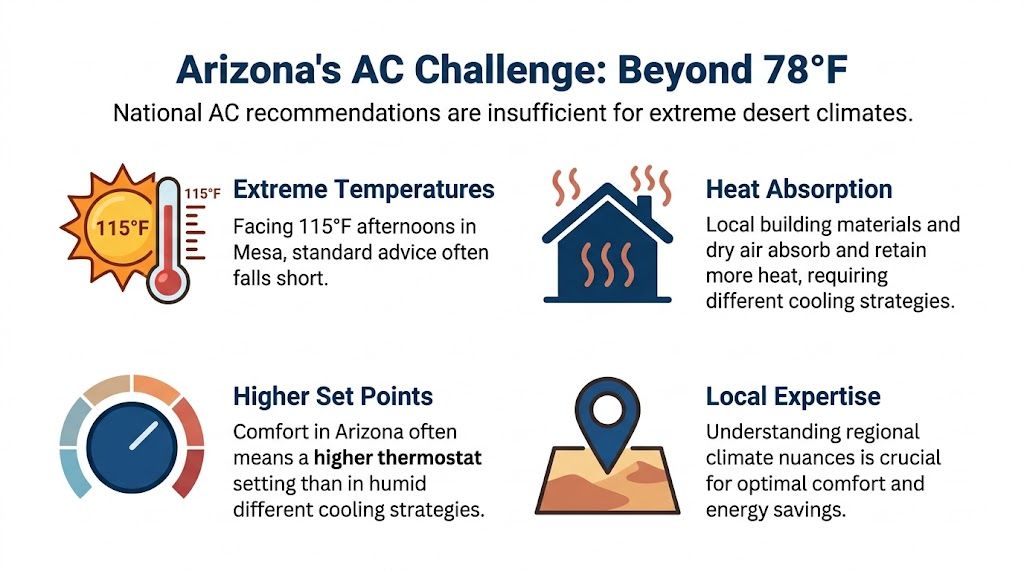
Why 78°F can feel different in Mesa
A thermostat reads air temperature at one location. It does not measure how much heat your body is picking up from a sun-baked room.
That matters in the Valley because:
- West-facing rooms store heat. By late afternoon, those spaces often feel warmer than the thermostat reading suggests.
- Dry air changes perception. People often tolerate higher temperatures better in dry heat, but direct solar gain can still make rooms uncomfortable fast.
- Monsoon season complicates things. Humidity changes how the house feels and how the AC should run.
According to this Phoenix-specific cooling guidance, maintaining 78°F while using ceiling fans can make a room feel 4-7°F cooler from the wind chill effect, and that strategy can reduce AC runtime by 20-30% during peak summer conditions when outdoor temperatures exceed 110°F.
That combo matters more in Arizona than people realize. The thermostat number alone doesn't tell the whole story.
The real trade-off in desert homes
Set the thermostat too low and the system may run hard for long stretches, especially during peak afternoon heat. Set it too high and some homes feel stuffy, uneven, or sticky during monsoon weather.
That's why local practice often lands a little more narrowly than generic national advice. In Phoenix-area homes, many owners end up living best in a modest range around the standard recommendation, adjusting for sun exposure, humidity, and how the house is built.
In Mesa, comfort often comes from a combination of thermostat setting, fan use, shade control, and run time. Not from chasing the coldest number.
Arizona homes need more than thermostat tweaks
Cooling strategy starts outside the thermostat too. Reducing heat gain into the house can make a noticeable difference in how high you can set the AC without feeling miserable.
Landscaping is one overlooked part of that. If you're trying to cut reflected heat and reduce how punishing the yard is around the home, these ideas for easy care Northern Arizona yards are useful for thinking about lower-maintenance outdoor design in Arizona conditions.
Equipment efficiency also matters. If you're weighing replacement options, understanding SEER 14 vs 16 helps explain why some systems hold comfort better with less struggle in our climate.
Beyond the Thermostat Fan and System Settings Matter
The thermostat setting gets all the attention, but it isn't the only lever that changes comfort. Fan settings, airflow, and filter condition can make a house feel better or worse even when the temperature number stays the same.
Auto versus On on the thermostat fan
For most Arizona homes, Auto is the better everyday setting for the thermostat fan. That means the blower runs when the system is actively cooling.
Why does that usually work better?
- Better moisture control: During humid stretches, continuous fan operation can move residual moisture back into the living space.
- Lower electrical use: Running the fan nonstop uses more electricity than cycling it with cooling calls.
- Less wear on moving air all day: Constant operation means more runtime on the blower.
There are situations where On can help, especially if you're trying to even out temperatures between rooms for a short period. But as a default summer setting, Auto is usually the cleaner choice.
Ceiling fans are not a gimmick
You know what? A lot of homeowners underestimate ceiling fans because they think of them as old-school, not serious cooling tools. In practice, they're one of the easiest ways to make a room feel better without turning the thermostat lower.
Fans don't lower the air temperature. They help your body shed heat faster, which is why the room feels cooler when you're in it.
A few simple fan habits make a difference:
- Run them only in occupied rooms. Fans cool people, not empty space.
- Use them where you spend time most. Bedrooms, living rooms, and home offices give the biggest payoff.
- Pair them with realistic thermostat settings. Fans work best as support, not as a replacement for AC.
Leave the thermostat alone for a day and improve air movement first. A surprising number of comfort complaints are really airflow complaints.
Don't ignore the filter and airflow path
Restricted airflow changes everything. A dirty filter can make the system struggle, increase temperature unevenness, and leave rooms feeling warmer than they should.
If you haven't checked yours recently, this guide on where your air conditioner filter is is worth reviewing. A good thermostat setting can't compensate for a system that's starved for airflow.
Proactive Steps for Ultimate Comfort and Savings
If you're tired of constant thermostat battles, the answer usually isn't more fiddling. It's better control.
Smart thermostats, zoning, and routine maintenance take a house from reactive cooling to planned cooling. That's where the bigger gains show up.
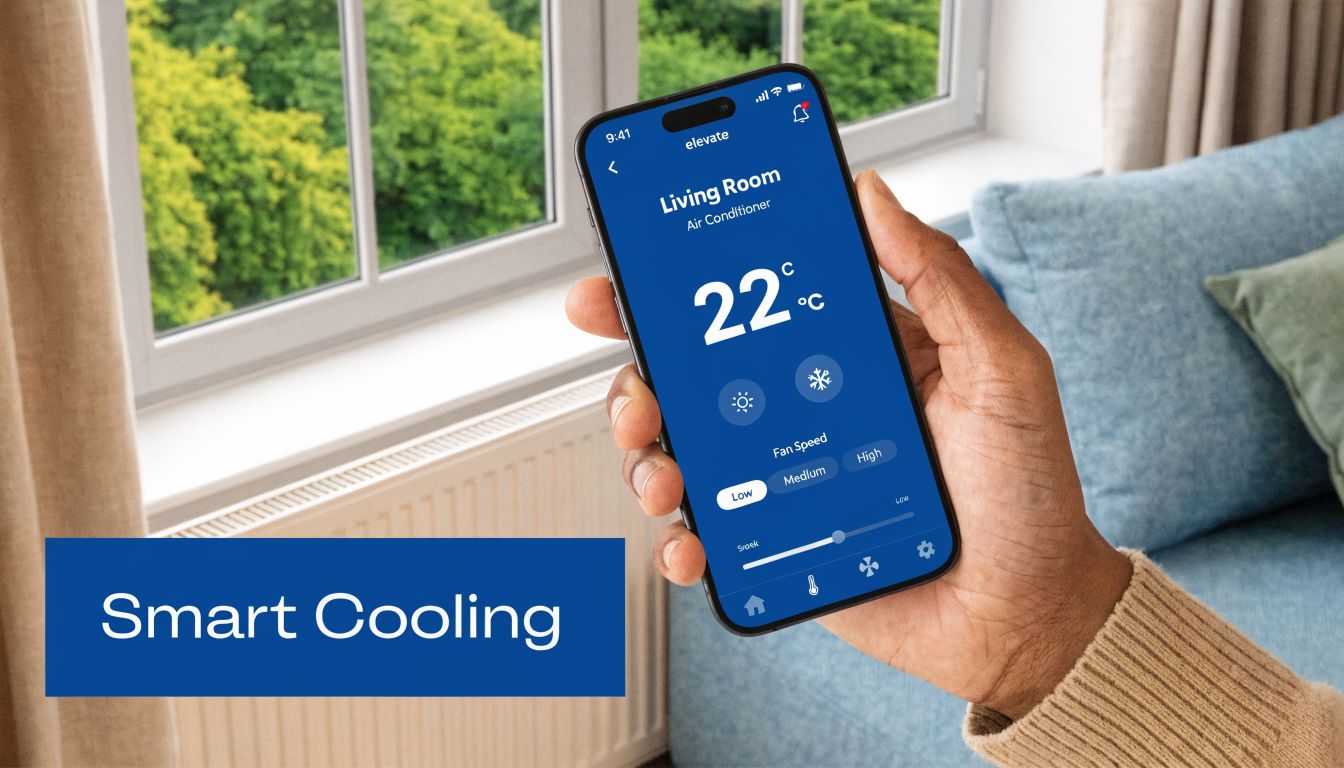
Smart thermostats do more than hold a schedule
A basic programmable thermostat follows times you enter manually. A better smart thermostat can respond to occupancy, timing, and usage patterns with far less micromanagement.
According to this Arizona smart cooling overview, smart thermostats integrated with zoned systems can reduce AC runtime by 20-30% compared to a single thermostat. That same source says a 2025 DOE pilot study in Arizona found smart thermostat features alone can save up to 23% on cooling costs by adjusting temperatures based on occupancy and humidity.
That's a meaningful difference because it attacks waste in the background. The system cools the home with more precision instead of treating every room and every hour the same.
Zoning solves the rooms that never feel right
One thermostat in a central hallway can't manage a whole house evenly. That problem shows up all over the Valley in two-story homes, split floor plans, large west-facing bedrooms, and additions.
Zoning helps because it separates the house into areas with different cooling needs. In practical terms, that means:
- Occupied rooms get the attention
- Unused spaces don't get overcooled
- Hot spots stop dictating the whole-house setting
Ductless mini-splits can also be a strong answer for bonus rooms, garages converted to living space, or additions that never matched the original duct design.
Maintenance protects the strategy
Even the best temperature plan falls apart if the system is low on performance. Dirty coils, weak airflow, aging capacitors, and duct leakage all chip away at comfort.
A few maintenance priorities matter more than people think:
- Filter changes: keep airflow where it should be
- Coil cleaning: helps heat transfer stay effective
- Refrigerant and electrical checks: prevent avoidable performance loss
- Duct inspection: catches leakage and delivery issues
If you're trying to lower bills without sacrificing comfort, these HVAC energy saving tips pair well with thermostat changes and system upkeep.
Frequently Asked Questions About AC Temperatures
What's the best temperature to leave the AC at for pets?
If pets are home while you're away, don't let the house drift excessively warm. Most households do better with a moderate away setting that protects comfort and keeps the indoor environment stable. Pets, flooring, electronics, and indoor air conditions all benefit from avoiding extreme indoor heat.
Is it better to turn the AC off completely when leaving for a few hours?
Usually, no. For a short absence, raising the setpoint is typically more practical than shutting the system off. In Arizona, the house can gain heat fast, and recovery can be uncomfortable once you return.
Why is the upstairs always hotter?
Heat rises, but that's only part of it. Upstairs rooms also take more roof load, often get stronger sun exposure, and can suffer from weaker airflow balance. If one floor constantly runs warmer, the issue may be duct design, return air limitations, insulation, or the need for zoning.
Should I lower the thermostat way down to cool the house faster?
No. Thermostats don't work like a gas pedal. Setting the thermostat drastically lower doesn't make the system cool faster. It just tells the unit to run longer until it reaches that lower target.
If 78°F feels too warm, what should I do first?
Start by improving air movement, checking the filter, and reducing sun gain with blinds or shades during peak afternoon hours. If the house still feels off at a reasonable setting, the issue may be equipment performance or airflow, not your comfort tolerance.
If your home never seems comfortable no matter where you set the thermostat, Comfort Experts can help you sort out whether the problem is settings, airflow, equipment, or humidity control. To talk with a local team in Mesa, call 480-207-1239 or schedule service.