
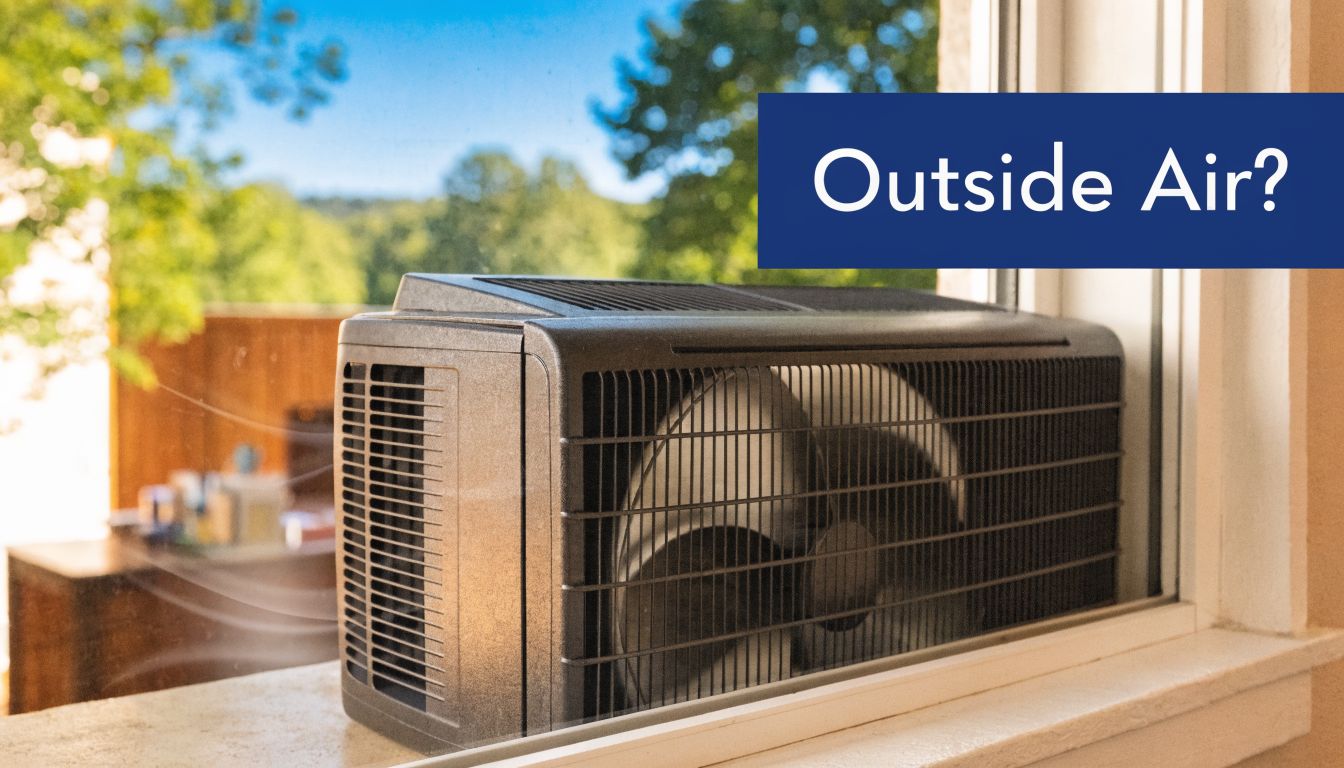
Most window AC units don't pull in meaningful outside air. They usually recirculate the air already inside your room, though a few models have a small vent or damper that allows only minimal outside air in. If you're staring at your unit during another brutal Mesa afternoon and wondering whether it's dragging hot desert air into the house, that's a smart question, because the answer affects comfort, dust, allergies, and how hard your system has to work.
A lot of homeowners assume that because part of the unit sits outside, it must be bringing outdoor air in. Do window ac units pull air from outside is one of those questions that sounds simple, but in Arizona it has real consequences. If outdoor air sneaks in where it shouldn't, you're not just cooling a room. You're fighting heat, dust, and everything else blowing around the Valley.
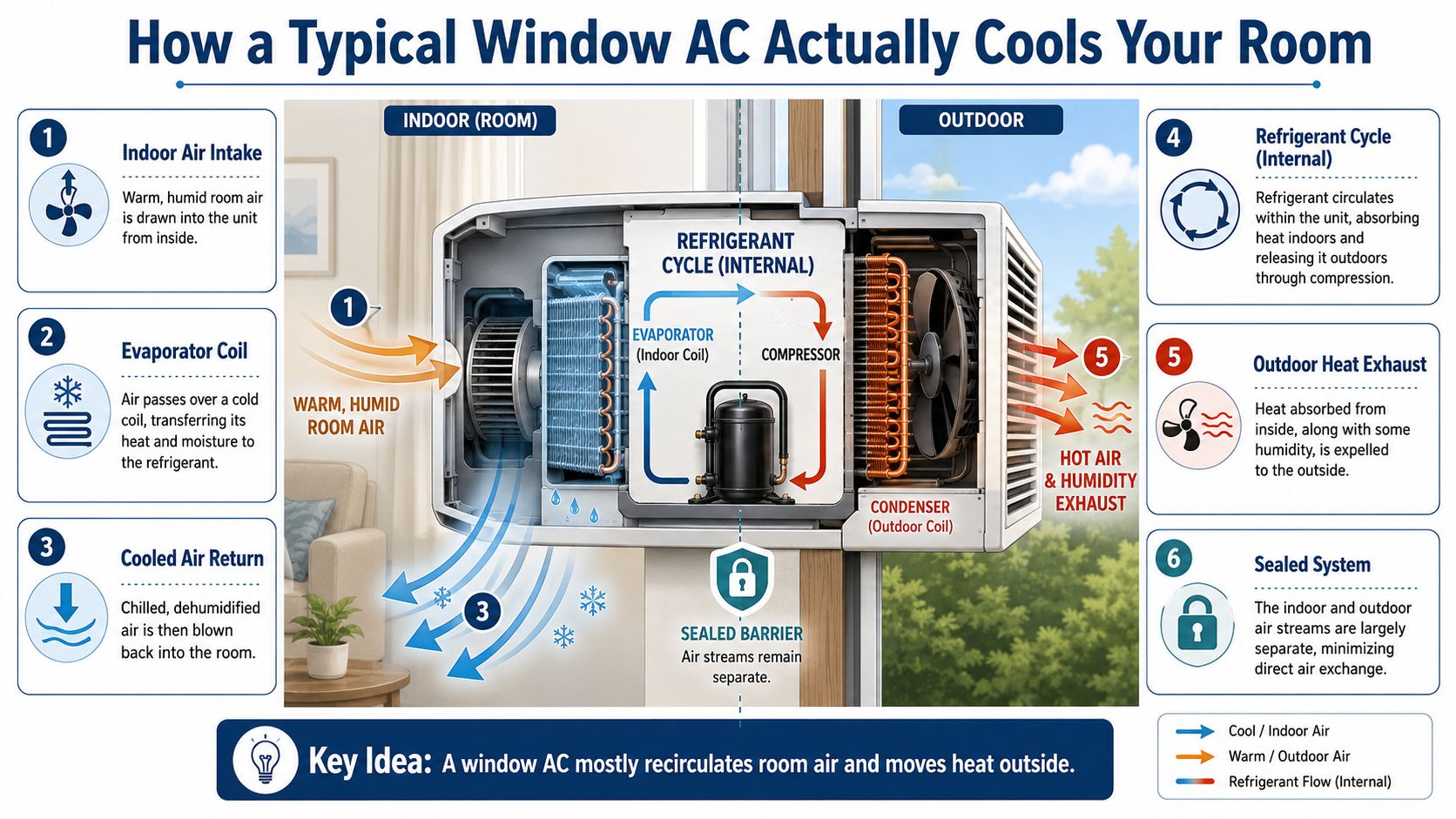
How a Typical Window AC Actually Cools Your Room
On a 110 degree Mesa afternoon, a window AC has one job. It takes heat out of the air already in your room and throws that heat outside.
That surprises a lot of homeowners because part of the unit hangs outdoors. But the indoor side and outdoor side do different work. The room side pulls in warm indoor air, passes it over a cold coil, and sends that same air back cooler and drier. The outdoor side releases the heat the system picked up from inside, as explained by Service Genius in its breakdown of window AC airflow.
A small fridge is the closest everyday comparison, but for one room instead of a food compartment. The system is moving heat, not gathering a fresh batch of outdoor air and chilling it.
What the airflow usually looks like
Here's the cycle in plain English:
- Indoor air goes in: The unit pulls warm air from the room.
- The coil removes heat: That air passes over the evaporator coil, which absorbs heat and pulls out some moisture.
- Cooler air comes back out: The blower sends conditioned air back into the same space.
- Heat gets dumped outside: The rear portion of the unit releases that captured heat outdoors.
That last step matters in Arizona. If the unit is sealed and working properly, it is rejecting heat outside, not feeding your room a steady stream of desert air.
Practical rule: A standard window AC cools by recirculating indoor air. If outside air is getting in, that is usually from a vent setting, a bad installation, or air leaks around the cabinet.
Why this matters to homeowners
This is more than a how-it-works detail. It affects comfort, power use, and indoor air quality.
If a unit had to cool raw 110 degree outdoor air all day, your electric bill would feel it fast. And if dusty outside air is sneaking in around the unit, you are also bringing in the fine dirt and allergens that make a room feel grimy even when it is technically cooler. I see that a lot around Mesa after monsoon winds or during dry, dusty stretches.
A window AC can lower room temperature and remove some humidity. It does not replace ventilation, filtration, or good air sealing. The cooling side of that process depends heavily on the indoor coil, and this explanation of where evaporator coils are located gives a helpful visual if you want to see the part doing the heat removal.
The Myth of the 'Fresh Air' Vent Setting
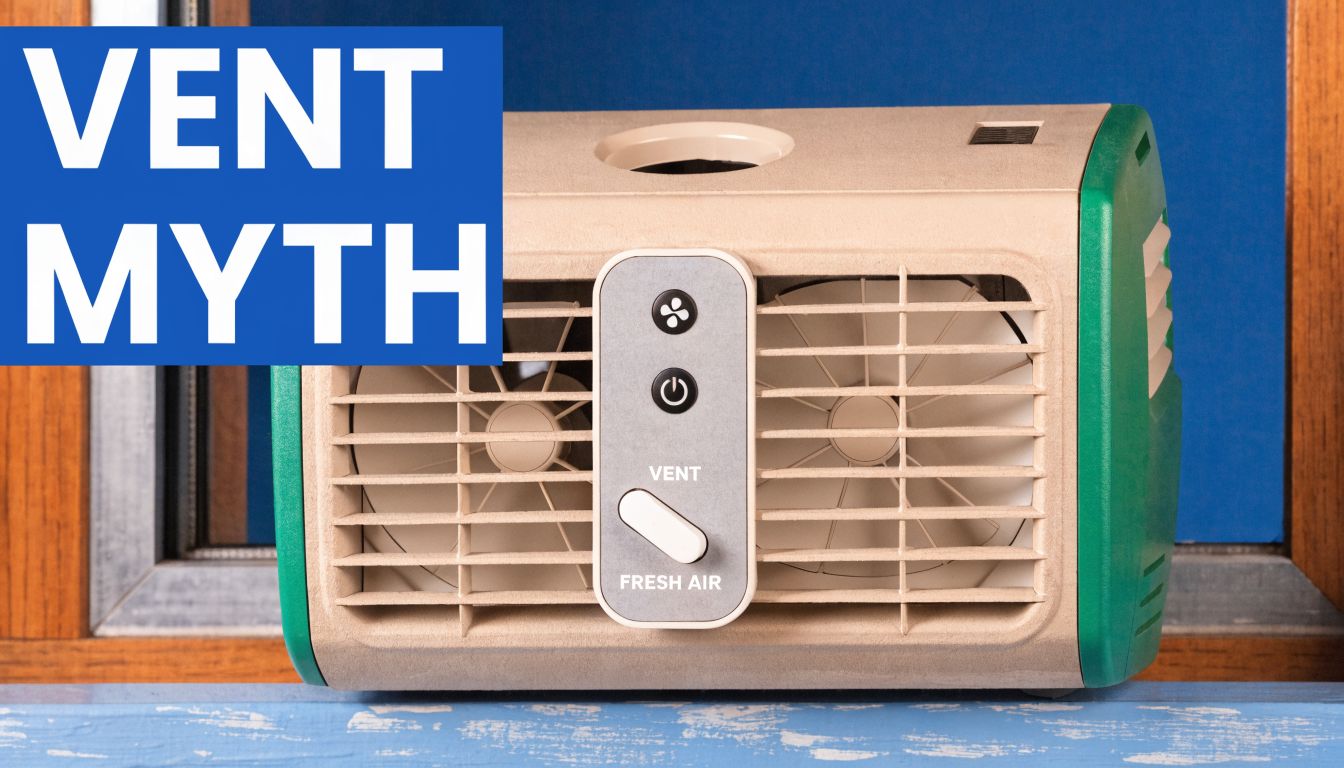
Confusion often arises because some window ACs have a lever, slider, or damper that gets labeled as a vent or fresh air feature, and homeowners naturally assume that means the unit can ventilate the room.
It can't, at least not in the way it's commonly understood.
What that setting actually does
Most window air conditioners do not pull in meaningful outside air and are built as recirculating systems. Some models include a small mechanical vent or damper for limited fresh-air intake, but that's an optional feature rather than the standard operating mode, according to HVAC Precision Experts' explanation of how window ACs recirculate air.
That little vent is usually a minor opening, not a full ventilation system. Let me explain. It's more like cracking a door than opening a wall-sized passage.
Why Arizona homeowners should be careful with it
In Mesa, Phoenix, and nearby cities, outside air often means heat, dust, and seasonal irritants. If you open that vent on a harsh summer day, you're asking the unit to deal with hotter air than the room air it was already recirculating.
That creates a trade-off:
- You may reduce stuffiness a bit
- You may also make cooling harder
- You may bring in dust and allergens
- You may notice the room never feels quite as crisp
For allergy-prone households, this matters even more. If your concern is cleaner indoor air, relying on a tiny AC vent usually isn't the best path. Filter strategy matters more, and these tips on the best HVAC filters for allergies can help you think through that side of the problem.
A “fresh air” lever on a window AC usually means a small outside-air opening, not true ventilation.
Why the myth sticks around
The myth makes sense. You see half the machine hanging outdoors, you feel air moving, and the control panel mentions venting. It's easy to assume the unit is pulling in a steady supply of outside air.
But in everyday operation, that's not the main job. The main job is room cooling through recirculation. If your goal is actual fresh air exchange, you need a different plan, such as opening windows when conditions allow or using equipment designed specifically for ventilation.
Signs Your Unit Is Leaking Unwanted Outside Air
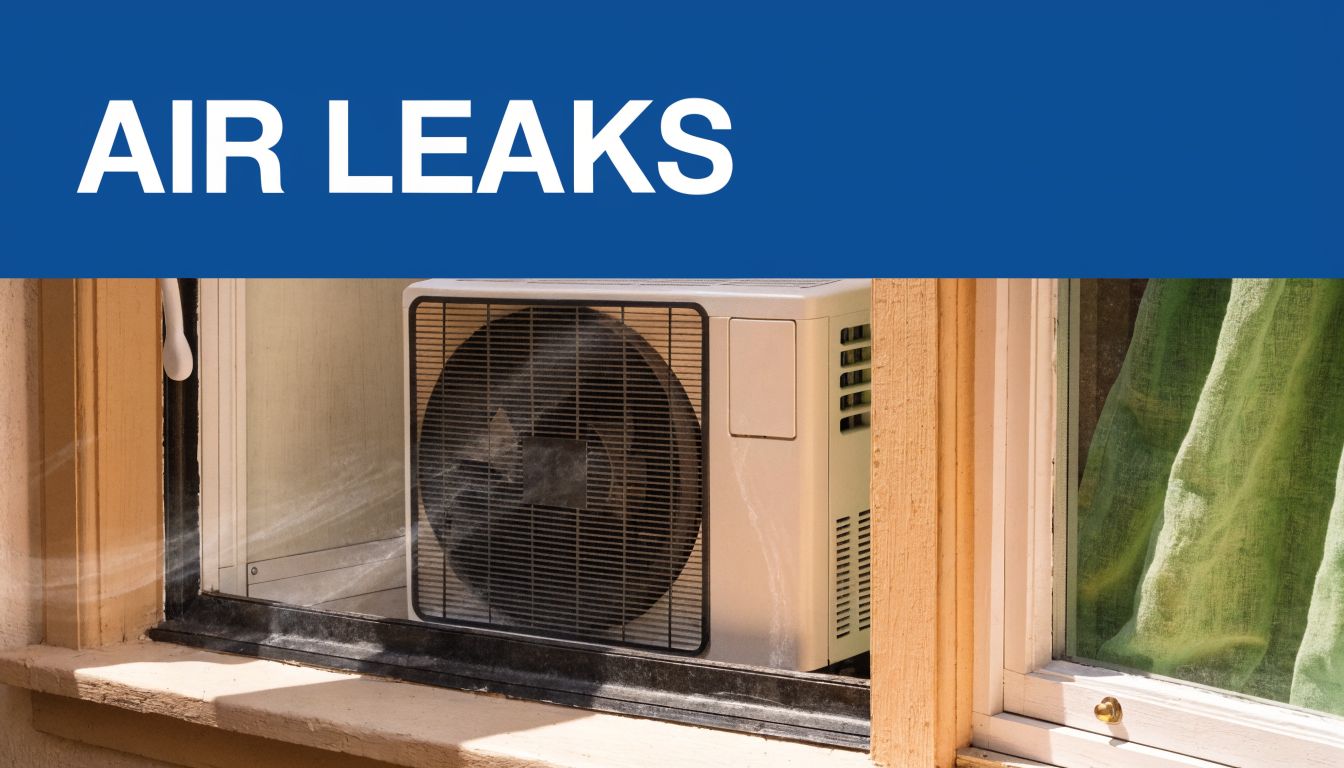
A standard window AC isn't supposed to bring in much outside air. But that doesn't mean outside air never gets in. Poor installation, worn foam panels, damaged side curtains, bent metal, or old seals can all let air sneak around the unit instead of through the intended cooling path.
You know what? This is one of the most common real-world problems I see with window units. The machine itself may be doing its job, while the installation around it is sabotaging comfort.
What homeowners usually notice first
Individuals don't typically diagnose an air leak by taking the unit apart. They notice symptoms.
- More dust around the unit: If the sill, trim, or nearby furniture gets dusty fast, outside air may be slipping in around gaps.
- A warm draft near the window: Put your hand around the side panels and lower sash area. If you feel moving hot air, that's a red flag.
- Outside smells indoors: Smoke, dust, yard odors, or pollen-heavy air drifting in often points to leakage.
- Cooling that falls apart in extreme heat: On brutal afternoons, a leaky setup can make the room feel like the unit is losing the battle.
- Rattling or shifting panels: If the install feels loose, air usually finds a way through.
Why leaks happen
Window units depend on more than the machinery inside the cabinet. The whole installation has to be sealed well. If the side accordion panels are flimsy, if the window doesn't close tightly against the top bracket, or if the insulation strip is missing, outdoor air can bypass the designed airflow path.
Here are some common trouble spots to inspect:
- Side curtains: These are convenient, but they're often the weakest part of the install.
- Bottom corners of the frame: Small gaps here can leak more than people expect.
- The top sash contact point: If the window isn't pressing firmly onto the unit seal, hot air can slip inside.
- Cabinet wear: Older units sometimes have bent housings or deteriorated gaskets.
If you can feel outside air around the unit frame, the issue isn't “fresh air.” It's air leakage.
A quick at-home check
Try this simple inspection during the hottest part of the day:
- Stand close to the unit with the AC running
- Move your hand slowly around the frame and side panels
- Check for warm airflow or dusty drafts
- Look for visible sunlight around gaps
- Notice whether the wall or trim near the unit feels unusually hot
If you also see moisture problems around the install, don't ignore that. Water and air leaks often travel together, and this guide on how to fix AC leak issues can help you sort out whether you're dealing with drainage, sealing, or both.
How Air Leaks Affect Your Bills and Your Health
Arizona makes this issue more serious than it might be in milder climates. When a window AC is properly sealed, it mostly works on indoor air that's already been somewhat conditioned. When it leaks, the unit has to fight whatever the desert is handing it.
That's bad for efficiency. It's also bad for indoor air quality.
Why leaks make cooling more expensive
Think about the workload difference. Cooling room air is one thing. Cooling blazing outdoor air that keeps sneaking in is another.
On a Mesa summer day, every unwanted leak forces your AC to cool air that never should have entered the room in the first place.
The machine runs longer, struggles harder, and may still leave you uncomfortable. People often assume the unit is undersized or failing, when the problem is that hot air is bypassing the system around the frame.
Here's a simple comparison.
| Metric | Properly Sealed Unit (Recirculating Indoor Air) | Leaky Unit (Pulling in Outside Air) |
|---|---|---|
| Primary air source | Mostly room air already inside the space | Hot outdoor air mixed in through gaps |
| Cooling effort | More manageable because the air is already indoors | Harder because the unit has to handle added heat |
| Room comfort | More stable and predictable | Uneven, drafty, or never quite comfortable |
| Dust exposure | Lower if the install is tight | Higher when outside air bypasses the intended path |
| Allergen control | Better contained | Worse if pollen and debris enter through leaks |
| System strain | More normal operation | More constant effort to keep up |
If you're trying to cut waste, practical sealing and efficiency habits matter more than people think. These HVAC energy saving tips line up with the same basic principle. Keep conditioned air in, and keep unwanted outdoor air out.
What leaks bring into your home
A leaking window unit can act like an invitation to whatever is floating around outside. In the Phoenix area, that often means fine dust, pollen, dry debris, and outdoor odors.
For some households, the result is mostly annoyance. For others, it shows up as:
- More frequent dusting
- More irritation for allergy sufferers
- A room that feels dirty even after cleaning
- Sneezing, congestion, or dry throat near the unit
- Smoke or outdoor odors lingering indoors
Comfort isn't only about temperature
A room can read cool on a thermostat and still feel lousy. If the air is dusty, stale, or leaking around the unit, your body notices even if the temperature number looks decent.
That's why the question “do window ac units pull air from outside” matters beyond curiosity. In real homes, the bigger concern is often accidental outside air infiltration. That's where comfort, cost, and air quality all collide.
What You Can Do and When to Call the Experts
Some window AC problems are simple homeowner fixes. Others point to a worn-out unit, a bad installation, or a bigger indoor air issue. The key is knowing which is which.
What you can check yourself
Start with the easy stuff. You don't need specialty tools to spot many common leak points.
- Inspect the side panels: If the accordion curtains are loose, warped, or flimsy, they may need reinforcement or added insulation.
- Look at the foam seal: The strip between the window sash and the unit should sit tight, not crushed flat or missing.
- Check the frame edges: If you can see daylight or feel hot airflow, seal the gap.
- Clean the filter and front grille: Restricted airflow can make performance seem worse than it is.
- Confirm the unit is sitting correctly: A crooked install can create gaps and sometimes drainage issues too.
What usually works
Basic weather-stripping, foam insulation, and careful re-seating of the unit often help. In many cases, the biggest improvement comes from tightening up the installation around the cabinet, not from touching the refrigeration system.
A few practical fixes homeowners often use:
- Foam board around side gaps: Stronger and tighter than relying only on thin accordion panels
- Weather-stripping at sash contact points: Useful where the window closes onto the unit
- New insulation strips: Helpful when the original material has dried out or fallen apart
- Reinstalling the unit squarely: Important when the chassis has shifted over time
Small gaps around a window unit can create outsized comfort problems, especially when the outdoor air is hot and dusty.
When it's time to stop DIY work
Call for professional help when the problem goes beyond simple sealing. That includes situations where:
- The unit still cools poorly after you seal visible gaps
- The cabinet or chassis is damaged
- The unit vibrates, freezes up, or cycles oddly
- You suspect the room has bigger pressure or ventilation issues
- Dust and air quality problems continue even after tightening the install
Sometimes the window unit is only part of the problem. The room may have insulation issues, sun load problems, or broader air quality concerns. In homes with central HVAC, the same principle applies on a larger scale. Unwanted air infiltration anywhere in the house can chip away at comfort.
Achieving True Comfort and Clean Air in Arizona
Window AC units are built to cool rooms, not to serve as real fresh-air systems. That's the big takeaway. In normal operation, they recirculate indoor air, and when outside air enters in a noticeable way, it's often because of a small vent setting or, more often, a leak that shouldn't be there.
For Arizona homeowners, that distinction matters. In our heat, every unwanted air leak makes the unit work harder. It can also drag in dust, odors, and allergens that leave a room feeling worse even when it's technically cooler.
If cleaner indoor air is part of your goal, it helps to think beyond the window unit alone. Better sealing, filtration, and dedicated indoor air quality improvements usually do more than expecting a basic AC to ventilate. For homeowners comparing those broader solutions, whole-home air purifiers are one example of equipment designed for the air-quality side of comfort rather than just temperature control.
If your room feels hot, dusty, drafty, or harder to cool than it should, that's usually a sign to look at the whole setup instead of blaming the weather.
If the problem is coming from your central system rather than the window unit, our Mesa AC repair team can diagnose the cooling and airflow problem instead of guessing at it.
If you want a real answer for what's happening in your home, contact Comfort Experts for an honest evaluation. You can call 480-207-1239 or schedule service if your window AC setup, indoor air, or overall cooling performance just doesn't feel right.