
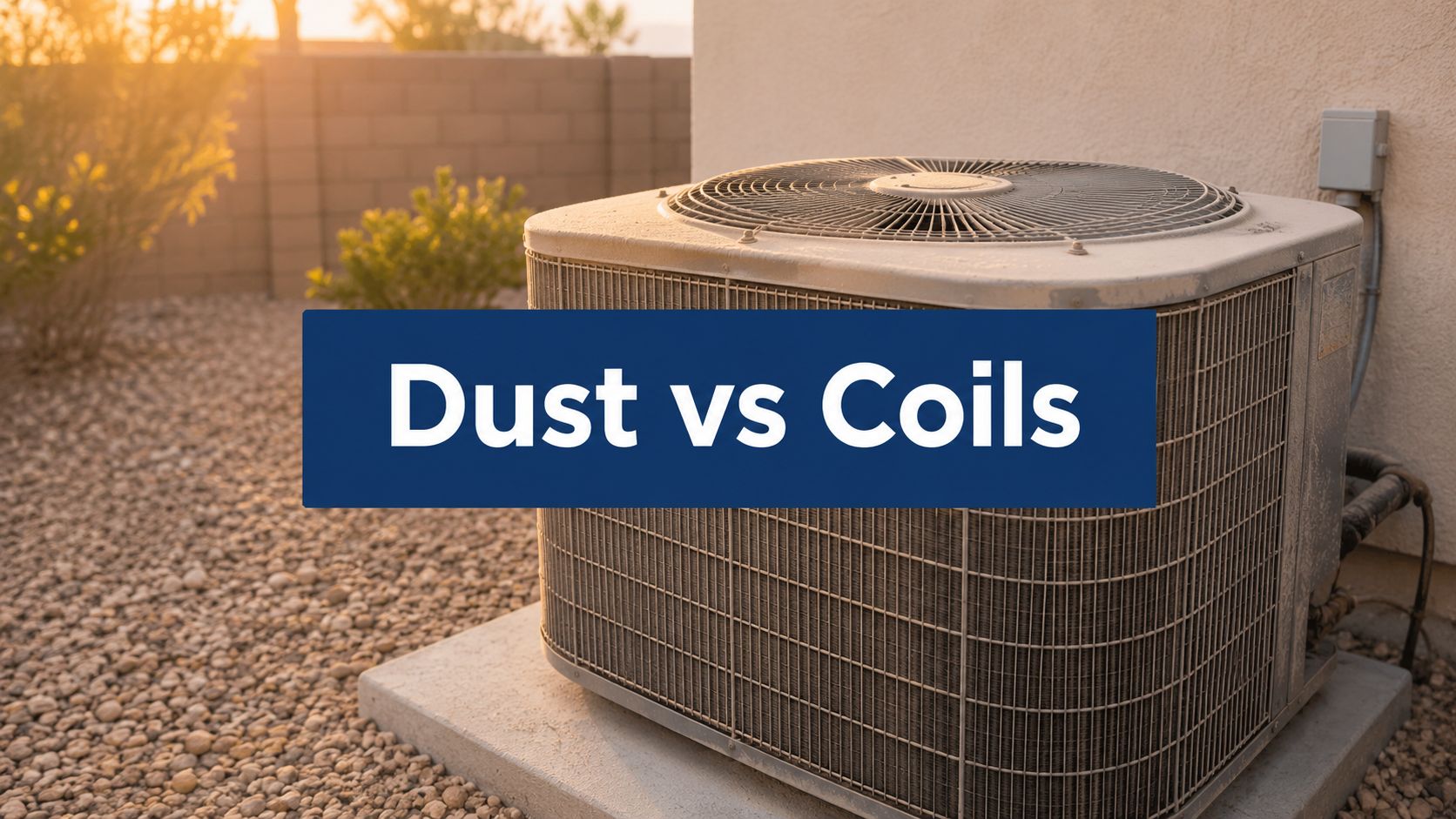
A Mesa homeowner may walk outside after a haboob and find the condenser buried in a film of tan dust. The system may still be cooling, but that doesn't mean the coil is unaffected. Desert dust can damage AC coils, usually by restricting airflow and increasing the work required to reject or absorb heat.
The practical question isn't only whether the coil looks dirty. It's whether the dust is causing longer run times, weaker airflow, rising utility costs, or permanent fin damage. Here's how to tell the difference in an East Valley home.
Why Desert Dust Is Hard on Coils in Mesa
After a windy spring afternoon or a monsoon dust storm, a side-yard condenser can look worse than it did that morning. Fine mineral dust settles between the aluminum fins, while leaves, grass, and storm debris may collect against the cabinet. A homeowner might see the unit running normally and assume the storm passed without consequence.
Yes, desert dust damages AC coils. The primary problem is usually not that dust acts like a thick blanket over the metal. Dust restricts the air moving through the coil, raises resistance, and makes the fan work harder to move the same air. That added pressure can reduce capacity and efficiency, especially when an older system is already operating close to its limits.
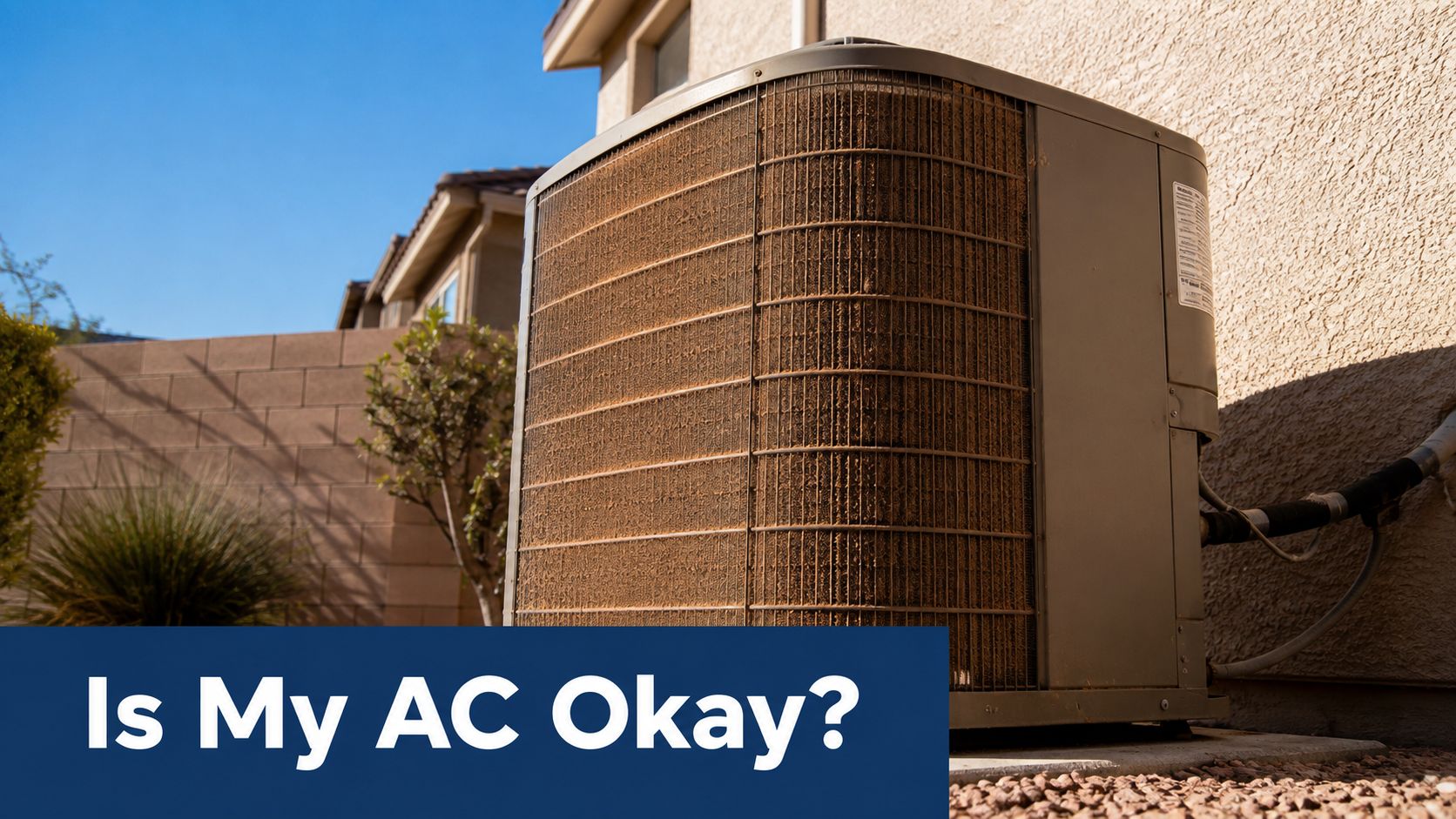
Independent HVAC research found that coil fouling can make an evaporator coil reach double its normal pressure drop in about 7.5 years, even though the coil was expected to last 15 to 30 years. In that study, the usual reduction in efficiency and capacity was less than 5%, but the researchers warned that marginal equipment and harsh conditions can experience much worse effects. The ACEEE coil-fouling research is especially relevant to dusty desert systems because pressure drop is the main way dust creates trouble.
A severe storm can create a faster concern. Field guidance for desert climates recommends immediate inspection and cleaning after storms when debris is packed into condenser fins, since restricted heat rejection can matter most during extreme heat. Homeowners working on the broader problem can also review Comfort Experts' advice to keep your house dust-free in AZ. For coil basics that apply across HVAC equipment, this Arizona homeowner HVAC guide offers useful background.
How an AC Coil Actually Moves Heat
An air conditioner doesn't create cool air from nothing. It moves heat. The indoor evaporator coil absorbs heat from air inside the home, and the outdoor condenser coil releases that heat into the outdoor air. Refrigerant carries the heat between those two locations as it circulates through the system.
Air must pass over the coil's thin aluminum fins for that exchange to work. The fins provide a large contact surface, while the blower and outdoor fan move air across them. If dust fills the narrow passages, the coil still contains refrigerant, but the system can't move enough air across the metal.
A simple comparison is drinking through a straw. A clean, open straw lets air or liquid pass with relatively little effort. Narrow the opening with debris, and the person has to pull harder for less flow. In an HVAC system, that resistance is measured as static pressure, which is the force the blower must overcome to move air through the system.
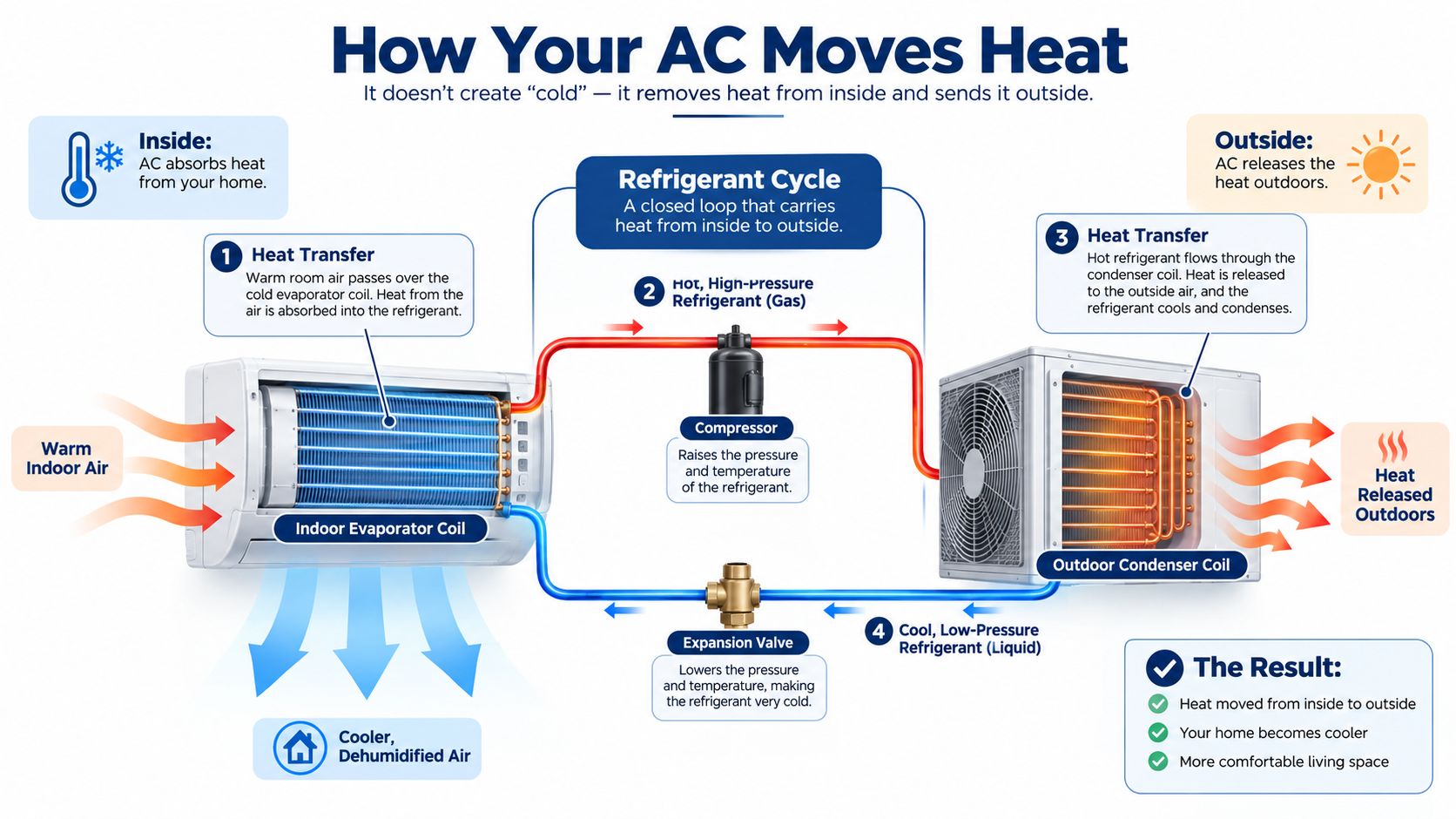
Dust can create several related effects:
- Restricted airflow: The blower moves less air through the coil.
- Higher fan demand: The motor works against added resistance.
- Longer operating cycles: The thermostat takes longer to reach its setting.
- Reduced heat movement: The system can't exchange heat as effectively when airflow falls.
Controlled testing found that coil fouling increased air-side pressure drop by 6% to 30% at an air velocity of 2.54 meters per second, while packaged-unit tests reported cooling-capacity reductions of roughly 2% to 7%, depending on equipment size and configuration. Those findings are summarized in this engineering factsheet on coil cleaning.
The central point is easy to miss. Dust doesn't need to destroy the refrigerant circuit to hurt comfort. A partially blocked fin pack can make the fan push harder, reduce the air crossing the coil, and increase runtime. A homeowner who wants a visual reference can use this diagram of AC parts before looking at the equipment.
The Two Coils Your System Has and What Each One Faces
Mesa homes commonly have either a split system, with an outdoor condenser and indoor air handler, or a rooftop package unit that contains both major sections in one cabinet. The location changes what the coils encounter, but the basic jobs remain different.
The outdoor condenser coil
The condenser coil sits in the side yard, on a pad, or on the roof. It faces the worst outdoor exposure, including desert dust, windblown sand, vegetation, cottonwood fluff, and monsoon debris. This is the coil most homeowners can inspect visually.
A condenser coil needs outdoor air to carry heat away from the refrigerant. When dust mats the fins, the outdoor fan has to move air through a tighter passage. Research on air-cooled condensers found that overall heat transfer dropped 8% to 18%, while air-side pressure drop increased by about 200% under ASHRAE standard test dust, as documented in this Purdue HVAC research paper.
The usual homeowner symptoms are longer cooling cycles, warmer air during the hottest part of the day, and a system that seems to struggle after a dusty weather event.
The indoor evaporator coil
The evaporator coil is inside the air handler, furnace cabinet, or ducted rooftop package unit. It sees indoor dust that gets past the filter, along with particles introduced through return-side leaks or poorly sealed filter racks. Because the coil becomes cold during cooling, moisture can form on its surface, and dust can combine with that moisture into a stubborn coating.
A dirty evaporator more often appears as weak airflow at the vents, uneven room temperatures, or ice on the coil and refrigerant lines. Reaching the coil usually means opening the air handler or package unit, so inspection and cleaning should generally stay with a qualified technician.
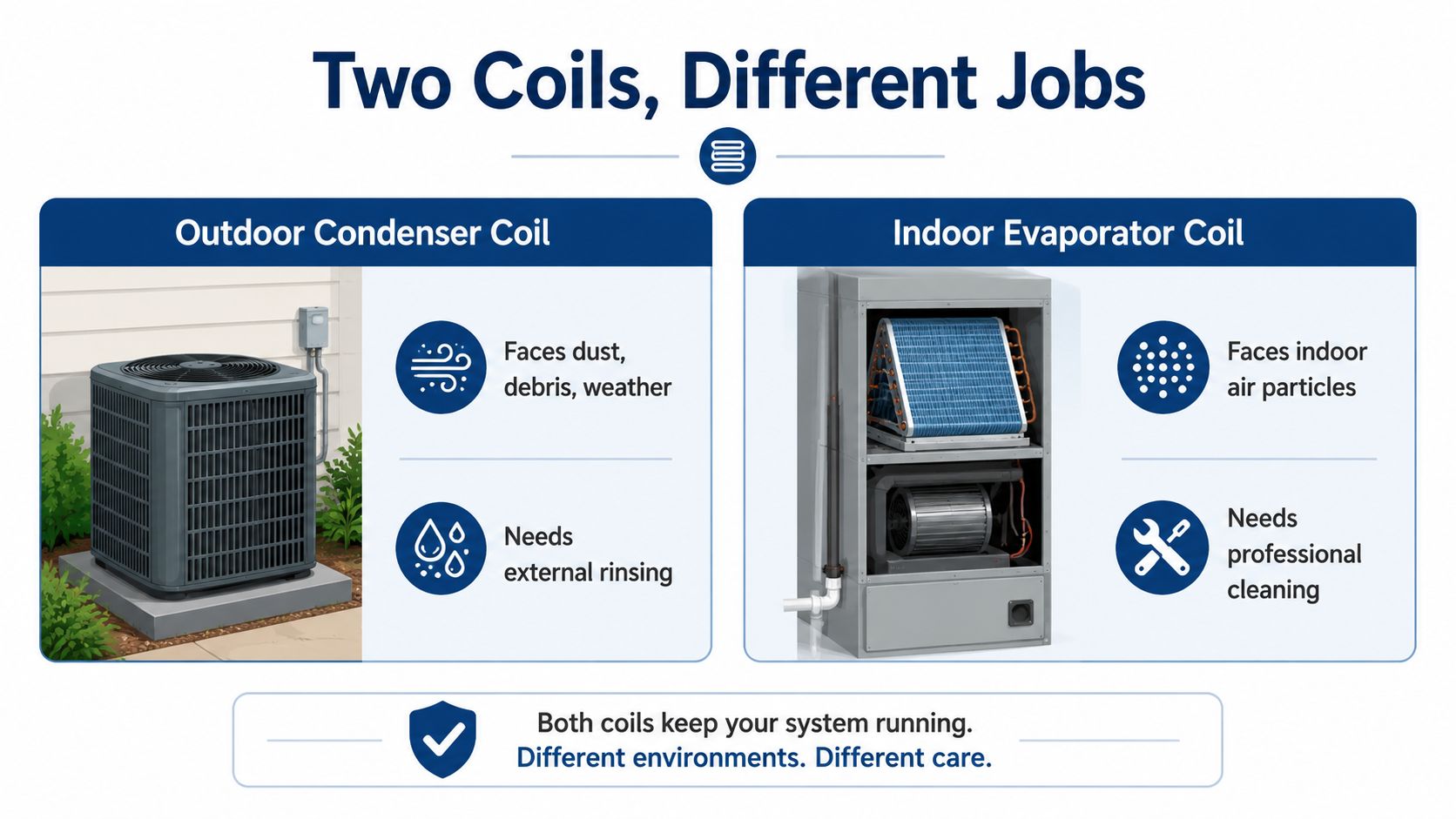
Practical distinction: A visible dirty condenser can sometimes receive a careful homeowner rinse. An indoor evaporator coil usually needs controlled access, proper cleaning equipment, and condensate management. This guide from Comfort Experts shows where that indoor coil is located.
Signs Your Coils Are Loaded With Dust
The first clues usually appear in how the system operates, not in a dramatic breakdown. A thermostat setting that worked last summer may now require longer cycles, especially during a Phoenix-area heat wave. A single symptom doesn't prove the coil is dirty, but several together justify an inspection.
Start with observations that don't require tools or opening equipment:
- Longer run times: The system runs much of the afternoon without reaching the usual setting.
- Weaker supply airflow: Vents feel less forceful than they did during comparable weather.
- Higher utility use: APS or SRP bills rise even though the thermostat schedule and household routine seem similar.
- Visible coil matting: The outdoor fins look packed with tan dust rather than lightly coated.
- Uneven cooling: Rooms farther from the air handler or at the end of a duct run fall behind.
- Ice or heavy condensation: Refrigerant lines or accessible coil surfaces show frost or ice.
Research reviewed by Purdue found that severe dust-loading experiments raised pressure drop by more than 200%, with airflow reductions typically around 5% to 6% and efficiency losses around 2% to 4% in some tested configurations. The Purdue coil-fouling study shows why a system can still operate while delivering noticeably less air.
Common signs of dust-loaded coils
| What you notice | Most likely coil involved | Homeowner next step |
|---|---|---|
| Dust is visible between outdoor fins | Condenser coil | Turn off power and consider a gentle external rinse |
| Airflow feels weak at several vents | Evaporator coil, filter, or duct system | Replace a dirty filter and arrange professional diagnosis if airflow stays low |
| Cooling takes longer during hot afternoons | Condenser coil or broader system restriction | Schedule maintenance before continued heavy use |
| Ice appears on refrigerant lines | Evaporator coil, airflow restriction, or refrigerant problem | Turn the system off and call a technician |
| Fins look flattened, torn, or eroded | Condenser coil damage | Avoid brushing or pressure washing and request an inspection |
Dust buildup and physical fin damage aren't the same problem. Wind-blown sand can act as an abrasive over time, bending or eroding soft aluminum fins. That possibility is discussed in desert-market HVAC coverage, although controlled data separating abrasive damage from ordinary fouling remains limited. Cleaning removes dirt, but it can't restore fins that have permanently lost their shape.
Safe Cleaning Limits and When to Call a Pro
A homeowner can often handle a light exterior rinse, but the work needs to stay gentle. First shut off the air conditioner at the thermostat, then disconnect power at the outdoor disconnect. The unit should be completely de-energized before water is applied.
Use a regular garden hose with low pressure. Rinsing from the inside out can push dust back through the direction it entered, rather than driving it deeper into the coil. Keep the nozzle away from the fins, and don't insert tools, brushes, or fingers into the cabinet.

What homeowners can and can't do
Reasonable homeowner work:
- Clear loose debris: Remove leaves and branches from around the cabinet after dangerous weather has passed.
- Rinse accessible fins: Use low-pressure water on a lightly dusty outdoor condenser.
- Check the filter: Replace it when it's loaded with dust, using the correct size and compatible rating.
- Watch the result: After the coil dries and power is restored, monitor airflow and cooling.
Work that should stay with a professional:
- Indoor evaporator cleaning: The coil may require a soft brush, controlled vacuuming, coil-safe cleaner, and a way to collect dirty condensate.
- Heavy mat removal: Dense buildup can require the cabinet to be opened and the fin pack cleaned from the proper direction.
- Fin repair: A technician can assess whether fins are bent, torn, or eroded beyond what cleaning can address.
- Performance diagnosis: Weak cooling can also come from duct leakage, blower problems, refrigerant issues, or electrical faults.
Pressure washers are a poor choice because they can flatten fins and drive dirt farther into the coil. Coil-brightening chemicals also require careful label reading, equipment compatibility, and runoff control. Homeowners shouldn't open an attic air handler to reach an evaporator coil or continue operating an air conditioner that has ice, electrical odors, repeated breaker trips, or storm-related water damage.
A homeowner looking for general cleaning guidance can review how to breathe easier with clean coils. For service in Mesa, AC maintenance and tune-ups fit a clean, inspect, and measure approach, while AC repair in Mesa is more appropriate when the system has stopped cooling or shows a fault.
A Realistic East Valley Maintenance Rhythm
Generic advice to “clean the coils regularly” doesn't account for Mesa weather. Dust exposure changes with open desert lots, nearby construction, landscaping, rooftop placement, pets, and the timing of monsoon storms.
Before the heavy cooling season
A pre-summer visit in April or May is a practical time to remove winter dust and cottonwood fluff, inspect the outdoor condenser, check airflow, and evaluate the indoor coil. A filter change belongs in the same preparation, especially in an older home where return leaks or an imperfect filter fit may allow dust to bypass the media.
Filters may need checking every one to two months during heavy use, with the exact interval depending on dust exposure and the filter's condition. A rooftop package unit or a home beside a new desert-lot development may load faster than a shaded side-yard condenser.
Around monsoon season
The first major haboob or monsoon dust storm deserves a visual inspection once weather conditions are safe. Look for dust mats, lodged debris, shifted panels, bent fins, and anything blocking the airflow path. Don't cover an operating condenser with a tarp, and don't inspect equipment during lightning, high winds, or standing water.
A professional coil cleaning may be appropriate every one to three years, depending on exposure, pets, construction, and how quickly the equipment loads. This AC maintenance schedule Phoenix Valley gives homeowners a broader way to plan service. For a climate comparison, this Florida HVAC maintenance guide shows why maintenance timing has to reflect local conditions rather than a one-size-fits-all calendar.
After summer
An inspection after the main cooling season can identify dust accumulation, fin damage, drainage concerns, and wear before the equipment enters a lighter shoulder season. That timing is useful for property managers as well, since rooftop and packaged units can be difficult to assess from ground level after a long, dusty summer.
Deciding Your Next Step in Mesa
After a dusty monsoon, judge the coil by system behavior, not appearance alone. If cooling remains normal, airflow stays steady, utility use fits the weather, and fins are not matted or visibly bent, a clean filter and careful low-pressure rinse may be reasonable.
Book professional maintenance when run times gradually lengthen, bills rise without a schedule change, or debris has packed the coil. A repair visit is safer for ice, unusual sounds, electrical odors, repeated shutdowns, weak cooling after a storm, or physically damaged fins. Slow pressure loss usually needs cleaning and airflow checks. Abrasive fin damage is less common, but it can restrict airflow and may require repair.
Comfort Experts serves Mesa and the East Valley with AC maintenance, coil cleaning, diagnostics, repairs, and replacement guidance for split and rooftop package systems. Homeowners can call 480-207-1239 or schedule service before extreme heat returns.
Pre-summer inspection gives you time to address dust loading before demand peaks, while a post-monsoon check can catch storm-related problems early.