When it’s scorching hot outside, the last thing you want is a weak stream of air from your vents. If you've noticed your air conditioner not blowing hard, it's a clear sign your system is struggling and needs attention. This common issue can stem from a simple fix you can do yourself to a more complex problem requiring a professional touch.
Why Is My Air Conditioner Not Blowing Hard All of a Sudden?
When your AC’s airflow suddenly drops off, it's not just a minor inconvenience—it's your cooling system alerting you that something is wrong. Here in the Valley, strong airflow isn't a luxury; it’s what keeps your home bearable and your electricity bills from skyrocketing. A system that has to fight to move air will run longer and harder just to keep up, burning through energy and putting immense strain on its components.
So, what’s happening behind the scenes? Let me explain. The problem almost always traces back to one of three things: an issue with air intake (what the system breathes in), air distribution (what it breathes out), or a mechanical failure (the parts that do the breathing). Think of it like trying to run a marathon with a stuffy nose or weak lungs—you just can't get enough air. Your AC is no different, and any blockage or worn-out part will cut its performance immediately.
Common Culprits Behind Weak Airflow
When we get a call about an AC not blowing hard, our techs have a mental checklist they run through, starting with the most likely culprits. Knowing what they are can help you figure out what's going on with your own system.
- Blocked Air Filter: This is, without a doubt, the #1 cause. A filter packed with dust and pet hair is literally suffocating your system, preventing it from pulling in enough air to cool and send back through your vents.
- Frozen Evaporator Coils: If you see ice on the indoor unit's coils, it’s forming a solid barrier that air can't pass through. This isn't the root problem, though—it’s usually a symptom of something else, like a dirty filter or low refrigerant.
- Ductwork Leaks: Your cool air is supposed to travel through a sealed highway of ducts. Any holes or disconnected joints let all that cold air spill out into your scorching hot attic or wall cavities before it ever reaches you.
- Blower Motor Issues: The blower motor is the powerful fan that drives the whole airflow process. If the motor is dying or its capacitor has failed, the fan will spin too slowly to do its job, leaving you with a weak breeze.
Here at Comfort Experts, our experience shows that over 50% of weak airflow service calls in the Mesa area are fixed by simply replacing a filthy air filter or clearing furniture away from vents. It's a quick check that can save you a service call and a lot of frustration.
This diagnostic chart gives you a great visual road map for troubleshooting, starting with the easiest things to check yourself before you get too deep.

The big takeaway here is to start simple. Before you assume the worst, check the things you can see and access first. This table breaks it down even further.
Quick Diagnostic Checklist for Weak AC Airflow
This responsive table helps you quickly identify potential reasons for weak airflow, assess the fix complexity, and understand the urgency.
| Common Cause | Typical Fix | Urgency Level |
|---|---|---|
| Dirty Air Filter | Homeowner can replace in 5 minutes. | High (Causes strain) |
| Blocked Vents or Registers | Inspect and clear obstructions. | High (Disrupts balance) |
| Frozen Evaporator Coil | Requires professional diagnosis. | Immediate (Shut AC off) |
| Leaky Ductwork | Professional sealing (e.g., Aeroseal). | Medium (Wastes energy) |
| Failing Blower Motor | Professional replacement is necessary. | High (System will fail) |
This checklist is a great starting point for any homeowner. If you've run through the simple fixes and you're still not getting the airflow you need, it’s a sign that the problem is deeper inside the system.
Easy DIY Checks You Can Do Before Calling a Pro
Hold on before you pick up the phone to schedule a service call. When your air conditioner is not blowing hard, the fix is often something you can handle yourself in just a few minutes, saving you both time and a service fee.
We're going to walk through the three most common culprits you can safely check on your own: your air filter, the vents around your house, and the big outdoor unit. Let's start with the number one offender we see in the field.

Check the Air Filter First
If there’s a single piece of AC maintenance every Phoenix homeowner should master, it’s checking the air filter. A clogged filter is essentially trying to make your AC breathe through a dirty blanket—it just can't pull in enough air. This chokes the system, leading to weak airflow and putting a ton of strain on expensive components.
Most filters are in one of two spots: either behind the large return air grille on a wall or ceiling, or in a dedicated slot right on your indoor air handler (the unit in your garage, closet, or attic). If you're not sure where to look, our guide on how to locate your air conditioner filter can point you in the right direction.
Slide it out and hold it up to a light. Can you see light through it? If it’s covered in a thick, gray mat of dust and pet hair, you’ve almost certainly found your problem. You should plan on replacing your filter every 30-90 days, but with our dusty desert environment, checking it once a month is a really smart habit.
Pro Tip: Look at the MERV (Minimum Efficiency Reporting Value) rating on the filter's frame. For most Valley homes, a filter with a MERV rating between 8 and 11 is the sweet spot. Our experience shows this rating does a great job trapping our fine dust without being so dense that it restricts airflow and causes the very problem you're trying to fix.
Inspect All Vents and Registers
This next one is so simple that it gets overlooked all the time. Your HVAC system is a big loop, and a single blockage can throw everything off. Take a quick walk through your house and physically check every supply vent (where the cold air blows out) and return vent (where air gets pulled in).
Here's what to look for:
- Closed or Blocked Vents: Make sure the little levers on your supply vents are open. They often get closed by accident during cleaning or by kids playing.
- Furniture Obstructions: Is a new bookshelf or a big couch pushed right up against a vent? Air needs clear space to circulate properly. Blocking a vent can mess with the pressure in your ductwork and reduce airflow in other rooms.
- Dirty Return Grilles: That big grille where air gets sucked back into the system can get caked with dust just like your filter. A quick once-over with a vacuum can make a surprising difference.
It’s a common myth that closing vents in rooms you don’t use will save money. More often than not, it does the opposite by creating pressure imbalances that can stress your blower motor and even lead to duct leaks. For a healthy, balanced system, our expert advice is to keep all your vents open.
Clear Your Outdoor Condenser Unit
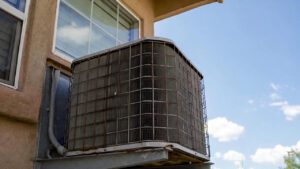
Your AC system has two major halves: the indoor unit and the outdoor unit, called the condenser. The condenser's job is to dump all the heat it pulled from inside your house. It does this with a huge fan that pulls air across a set of coils.
Walk outside and take a good look at that big metal box. You’d be surprised what can clog it up:
- Dirt and dust from a haboob
- Leaves, twigs, and cotton from nearby trees
- Grass clippings after you mow the lawn
When those coils get blanketed in debris, the unit can’t get rid of heat. This makes the whole system work harder and run less effectively, which can feel like weak cooling and poor airflow inside.
You can actually do a light cleaning yourself. First, and this is critical, turn off the power to the unit. Use the disconnect box right next to the unit and flip the corresponding breaker in your main electrical panel. Once it’s off, use a soft brush to knock away any loose stuff. For a deeper clean, you can take a regular garden hose (no pressure washers!) and gently spray the fins from the inside out to wash the dirt away.
If you’ve done all this and the air is still just trickling out of your vents, it's a sign the problem is deeper in the system.
Signs of Deeper HVAC System Problems
Okay, so you've done the basics. You swapped the filter, made sure every vent is wide open, and even hosed down the outdoor unit, but your air conditioner is still just whispering cold air. When the simple fixes don’t move the needle, it usually means the problem is buried deeper in the system’s mechanical heart. These are the kinds of issues that almost always need a professional's eyes and tools.

The Icy Blockade of a Frozen Evaporator Coil
One of the most common—and dramatic—signs of trouble is a frozen evaporator coil. This is the part inside your home that gets cold to cool the air passing over it. If you see ice on the copper lines going into your indoor unit or notice water pooling on the floor nearby, you likely have a freeze-up.
When that coil becomes a solid block of ice, air can't get through. That’s why the airflow from your vents feels so pathetic. But here’s the thing: a frozen coil isn't the real problem, it's a symptom. It’s almost always caused by one of two things:
- Suffocating Airflow: We keep circling back to this, but it’s critical. A severely clogged filter or a blocked return vent means not enough warm air is reaching the coil. Without that warm air to absorb heat from, the coil's temperature just keeps dropping until it freezes the condensation right out of the air.
- Low Refrigerant: A leak in the refrigerant lines lowers the pressure in the system. This causes the refrigerant to get way too cold, which in turn freezes the moisture on the coil.
If you even suspect the coil is frozen, turn the AC cooling function off immediately, but leave the fan running (switch your thermostat to "FAN ON"). This will help thaw the block of ice. Running the AC while it’s frozen can destroy your compressor, turning a manageable repair into a complete system replacement. You can learn more about those costs in our guide to air conditioner compressor replacement.
A frozen evaporator coil is a massive red flag. It’s your system screaming that it’s either suffocating from lack of airflow or bleeding out its vital refrigerant. Ignoring it is like continuing to drive your car with the oil light flashing—it rarely ends well.
A Weak Heart: The Failing Blower Motor
The blower motor is the powerful fan that pushes conditioned air through your ducts. If it’s starting to fail, your airflow will get weaker and weaker, even if the AC is making plenty of cold air. It's the difference between a strong, steady breeze and a weak, disappointing puff.
A dying blower motor usually gives you some warning signs. Listen for these sounds coming from your indoor unit:
- A loud hum or buzz: The motor might be getting power but struggling to start.
- Screeching or grinding: This classic noise often points to worn-out motor bearings.
- Starting and stopping: If the fan kicks on, runs for a bit, then shuts off on its own, the motor is likely overheating and tripping its thermal protection.
Sometimes the issue is just a weak or dead capacitor—a small part that gives the motor the jolt it needs to get spinning. Replacing a capacitor is a quick job for a pro, but a full motor replacement is much more involved. Either way, this involves high-voltage components and is definitely not a DIY repair.
Hidden Problems in Your Ductwork
Your ducts are the highway system for your cold air. If there are problems hidden away in your attic or walls, they can absolutely cripple your airflow. An air conditioner not blowing hard might have nothing to do with the AC unit itself, but everything to do with the delivery route.
Leaks are a massive energy drain, especially here in Phoenix where attic temperatures can soar past 150°F. A small tear or a disconnected duct joint can bleed a huge amount of your cold air into a scorching hot attic. The U.S. Department of Energy estimates a typical home can lose 20% to 30% of its conditioned air just through leaky ducts.
Other common duct problems we find include:
- Crushed or Kinked Ducts: Flexible ductwork in an attic can easily get squashed by stored boxes or kinked during a poor installation, creating a serious bottleneck.
- Blockages: Over the years, ducts can accumulate debris. In some cases, we've even seen internal insulation come loose and create a clog.
- Bad Design: Unfortunately, some homes were built with poorly designed or undersized duct systems from the start, making it impossible to get good airflow to every room.
These deep-seated issues are exactly when you need an expert diagnosis to figure out what's really going on. A pro can inspect the entire system, from the unit to the vents, and find the true source of your weak airflow.
Understanding AC Repair Costs in the Phoenix Area
When your air conditioner isn’t pushing air like it used to, one of the first questions on your mind is, "How much is this going to cost me?" Nobody likes a surprise bill, especially when you’re already stressed about a sweltering house. At Comfort Experts, we believe in being upfront and transparent, so let’s talk numbers.
Knowing the potential costs before you even make a call helps you budget and make decisions without feeling pressured. The final price tag for an AC repair can swing wildly based on what’s actually wrong, the age of your system, and whether parts are easy to get. A simple fix might be relatively affordable, but a major component failure is a different story.
You know what? This is especially true here in Phoenix. The global air conditioning industry is massive—the entire HVAC sector was valued at an estimated $333 billion globally in 2026. That growth directly impacts homeowners in the Valley, where intense heat and aging systems drive constant demand for AC repair services.
The Diagnostic Service Call
Before any real work starts, the first step is always a professional diagnosis. When you schedule a service call with us, you’re not just paying for a quick glance; you’re investing in our expertise to find the root cause of the weak airflow.
A good technician will perform a full system check-up, which usually involves:
- Inspecting all the electrical parts, like capacitors and contactors.
- Checking refrigerant levels and pressures to spot signs of a leak.
- Examining the blower motor and wheel for wear and proper function.
- Assessing the condition of your indoor and outdoor coils.
- A basic inspection of any accessible ductwork for obvious leaks or blockages.
Once we know exactly why your air conditioner is not blowing hard, we’ll give you a clear, itemized quote for the repair. We take the time to explain what needs fixing, why it failed, and what your options are. Our goal is to give you information, not a sales pitch.
Estimated AC Repair Costs for Common Airflow Issues
To give you a clearer idea of what to expect, we put together a table of common repairs we perform for weak airflow and their typical cost ranges in the Phoenix metro.
Remember, these are just estimates from our experience—the final cost will depend on your specific system and how complex the job is. For a more detailed look, check out our guide on the cost to fix an AC unit.
| Repair Service | Estimated Cost Range (2026) | What It Fixes |
|---|---|---|
| Capacitor Replacement | $175 – $450 | Restores power to the blower motor or compressor, allowing them to start and run properly. |
| Refrigerant Leak & Recharge | $500 – $1,800+ | Finds and seals the source of the refrigerant leak and refills the system to the correct level. |
| Blower Motor Replacement | $750 – $2,200 | Replaces a failed or failing motor to restore powerful and consistent airflow through your vents. |
| Duct Leak Sealing (Aeroseal) | $1,500 – $4,000+ | Seals leaks from the inside out, ensuring cooled air reaches its destination instead of escaping. |
| Evaporator Coil Cleaning | $300 – $750 | Removes deep-seated dirt and biological growth from the indoor coil to allow air to pass through freely. |
After reviewing the potential costs, it’s easy to see why getting a clear diagnosis first is so important. A professional can tell you whether you’re looking at a minor electrical fix or a major component replacement.
A Note on Value: The cheapest quote isn't always the best deal. A quality repair from a licensed, insured company like Comfort Experts includes experienced technicians, warrantied parts, and the peace of mind that the job was done right the first time. We stand by our work because your comfort is our business.
Preventative Maintenance to Keep Your AC Blowing Strong
The single best way to deal with an AC problem is to make sure it never happens in the first place. While troubleshooting is crucial when things go wrong, proactive care is your best defense against weak airflow and surprise breakdowns in the middle of a July heatwave.
Think of it like this: you don't wait for your car's engine to seize up before changing the oil. The same logic applies to your HVAC system. Regular, professional maintenance is the most powerful strategy for ensuring strong cooling, peak efficiency, and a longer life for your equipment. It shifts you from being reactive and stressed to being confident in your AC's performance.
What Happens During a Professional Tune-Up
When a Comfort Experts technician performs a seasonal tune-up, it’s a lot more than just swapping out a filter. We're doing a deep dive into the health of your entire system, specifically looking for the small issues that lead to big problems, like an air conditioner not blowing hard.
Here’s the thing: every step in our process directly targets the common culprits behind poor airflow.
- Deep Cleaning the Coils: We give both the indoor evaporator coil and the outdoor condenser coil a thorough cleaning. Even a thin layer of dust and grime acts like a blanket, blocking heat transfer and forcing your system to struggle.
- Inspecting and Cleaning the Blower: The blower wheel itself can get caked with debris, which throws it off balance and reduces how much air it can actually move. We clean the wheel and check the motor for signs of wear, making sure it can spin at the powerful speeds you need.
- Checking Refrigerant Levels: We don't just "top off" the refrigerant. Our technicians measure the system’s pressure to make sure it matches the manufacturer’s exact specs. If it's low, that points to a leak we can find and fix—preventing a future system freeze-up.
- Testing Electrical Components: We check capacitors, contactors, and all the electrical connections. A weak capacitor can make your blower motor run slowly, directly cutting your airflow long before the motor gives out completely.
Each of these checks is a preemptive strike against the things that cause weak airflow. For a complete rundown of everything we check, you might be interested in our detailed HVAC preventive maintenance checklist.
The Long-Term Benefits of Maintenance
The immediate payoff of a tune-up is restored performance, but the long-term value is where you really see the savings. A well-maintained system doesn't just blow harder; it runs smarter.
When all the components are clean and calibrated, your AC doesn't have to fight to keep your home cool. That translates directly into lower monthly energy bills. On top of that, regular service dramatically extends the life of your equipment. A system that gets annual care can easily last years longer than one that’s ignored, saving you thousands in premature replacement costs.
Investing in a maintenance plan is one of the smartest financial decisions a homeowner can make. The annual cost is a tiny fraction of what you'd pay for a single major repair, like a compressor failure or blower motor replacement—both of which are far more likely in neglected systems.
This proactive approach is even more critical in commercial settings. The commercial air conditioning market, valued at $56.35 billion in 2026, is projected to hit $87.75 billion by 2032. For business owners in the Phoenix Valley, this growth just underscores why professional HVAC maintenance is a core business investment. An air conditioner not blowing hard can tank employee productivity, drive away customers, and even affect regulatory compliance.
Our maintenance plans provide that peace of mind for both homeowners and businesses, ensuring comfort and operational reliability all year long.
Your Phoenix HVAC Experts Are Here to Help
You've checked the filter, you've made sure the vents are open, and you've done all the simple things you can think of. While some causes of weak AC airflow are a five-minute fix, many of the real culprits—think refrigerant leaks, electrical faults, or a failing blower motor—are best left to a pro. Guessing wrong can turn a simple repair into a much more expensive problem, or even create a serious safety risk.
As a local company that’s been serving the Phoenix Valley since 2011, we’ve seen it all. We know just how miserable a weak AC can be when it's 110°F outside, and we're committed to giving our neighbors honest answers and reliable service. We diagnose problems accurately, explain your options in plain English, and treat your home like it’s our own.
Here’s the bottom line: you shouldn’t have to sweat through a complex HVAC diagnosis on your own. Our team is here to take that stress off your shoulders and get your home comfortable again—quickly and affordably.
When to Call the Pros
If you've run through the basic DIY checks and your AC is still just not keeping up, it’s time to bring in an expert. It's definitely time to call if you notice any of these signs:
- You’ve changed the filter and cleared the vents, but the airflow is still pathetic.
- You can see ice or frost building up on the copper lines or on the indoor or outdoor unit.
- You hear any strange noises—screeching, grinding, buzzing, or loud clanking.
- The system is short-cycling, meaning it turns on and off every few minutes instead of running a full cycle.
These symptoms almost always point to deeper issues that need the right tools and training to fix safely. If you’re curious about what a service call involves, you can learn more about what to expect from an AC repair service near you.
Frequently Asked Questions About Weak AC Airflow
When we're out on calls for weak airflow, the same few questions always come up. Here are the straight answers we give homeowners right here in the Phoenix area, based on what we see in the field every day.
How Often Should I Change My AC Filter in Arizona?
That old "every 90 days" rule you hear about? Honestly, it doesn't apply here. With our constant desert dust, a filter's job is never done.
We tell our customers to check their filter every 30 days, especially during the summer and right after a haboob rolls through. If you've got pets or anyone with allergies at home, you might even need to swap it out more often. A clean filter is the cheapest, easiest fix for an air conditioner not blowing hard.
Can a Smart Thermostat Help With Weak Airflow?
A smart thermostat is an amazing tool for dialing in your home's temperature and saving on energy bills, but it can't physically solve an airflow problem. It's not going to clean a clogged filter or patch a leaky duct for you.
What it can do, especially the models with remote room sensors, is act like a detective. By showing you the temperature difference between your living room and that hot back bedroom, it can help point you toward where the underlying airflow issue is hiding.
Is It Better to Repair or Replace My Old AC?
This is the big one, and the answer usually comes down to simple math. We often use the "5,000 Rule" to help homeowners get a gut-check on the decision.
Here’s how it works: Multiply the age of your AC unit by the estimated cost of the repair. If that number is over $5,000, replacement is almost always the smarter long-term investment.
For example, let's say you have a 12-year-old AC and you're looking at a $500 repair bill. That's 12 x 500 = $6,000. In that scenario, it makes more sense to put that money toward a new, high-efficiency system than to sink it into an aging unit.
An honest technician can look at the real-world condition of your equipment and help you weigh the repair cost against the long-term energy savings and reliability of a new system.
We’ve walked through a lot here, from simple DIY checks to more serious system problems. While swapping a filter is easy enough, many airflow issues—like a failing blower motor or hidden duct leaks—really need a trained eye and the right tools to diagnose and fix safely. If you’ve tried the basics and your AC is still letting you down, or if you’d just rather have an expert from Comfort Experts handle it right the first time, we’re here to help. Give us a call at 480-207-1239 or schedule service online to get your home feeling comfortable again, fast.