
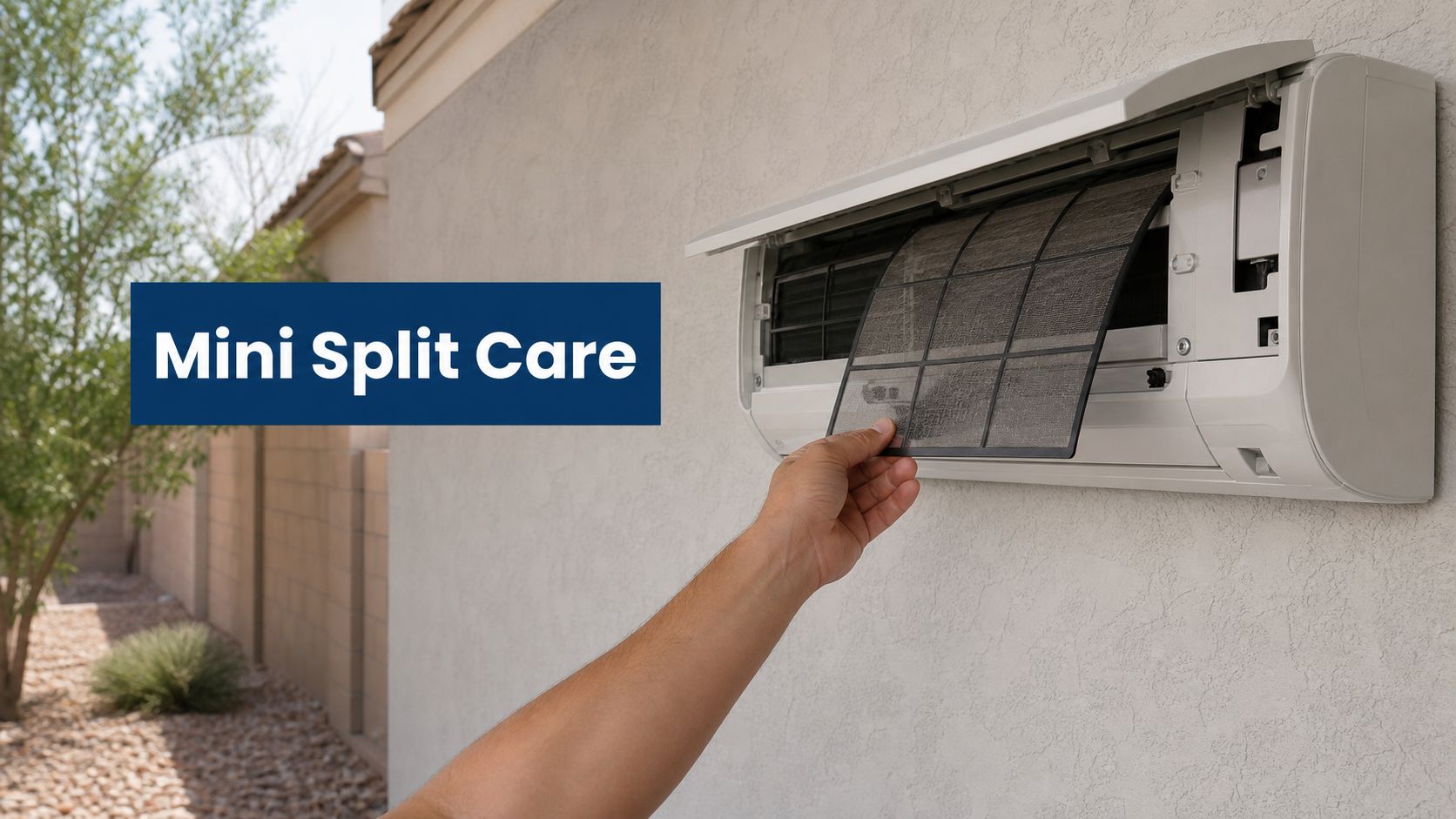
By late June in Mesa, a mini-split can look like it's running fine while dust is already packed into the filter, the outdoor coil is coated, and the drain is starting to collect grime. That's why mini split maintenance in Mesa, AZ isn't a nice extra. It's part of keeping a ductless system alive through East Valley heat, haboobs, and monsoon mess.
Why Mini Split Maintenance Is Critical in the East Valley
A Mesa mini-split usually does not fail all at once. It starts with longer afternoon run times after a dusty week, weaker airflow in one room, or water around the indoor head after a humid monsoon stretch. In the East Valley, that slow decline is common because these systems deal with fine haboob dust, yard debris, and moisture swings that load them up faster than many homeowners expect.
A ductless system also responds differently than central air. The indoor head is out in the open, so it pulls room air and dust directly through a smaller filter and coil surface. The outdoor unit sits low enough to catch blowing dirt, cottonwood, and monsoon debris. In parts of Mesa, hard water adds another layer of trouble when condensate lines build up scale and sludge over time.
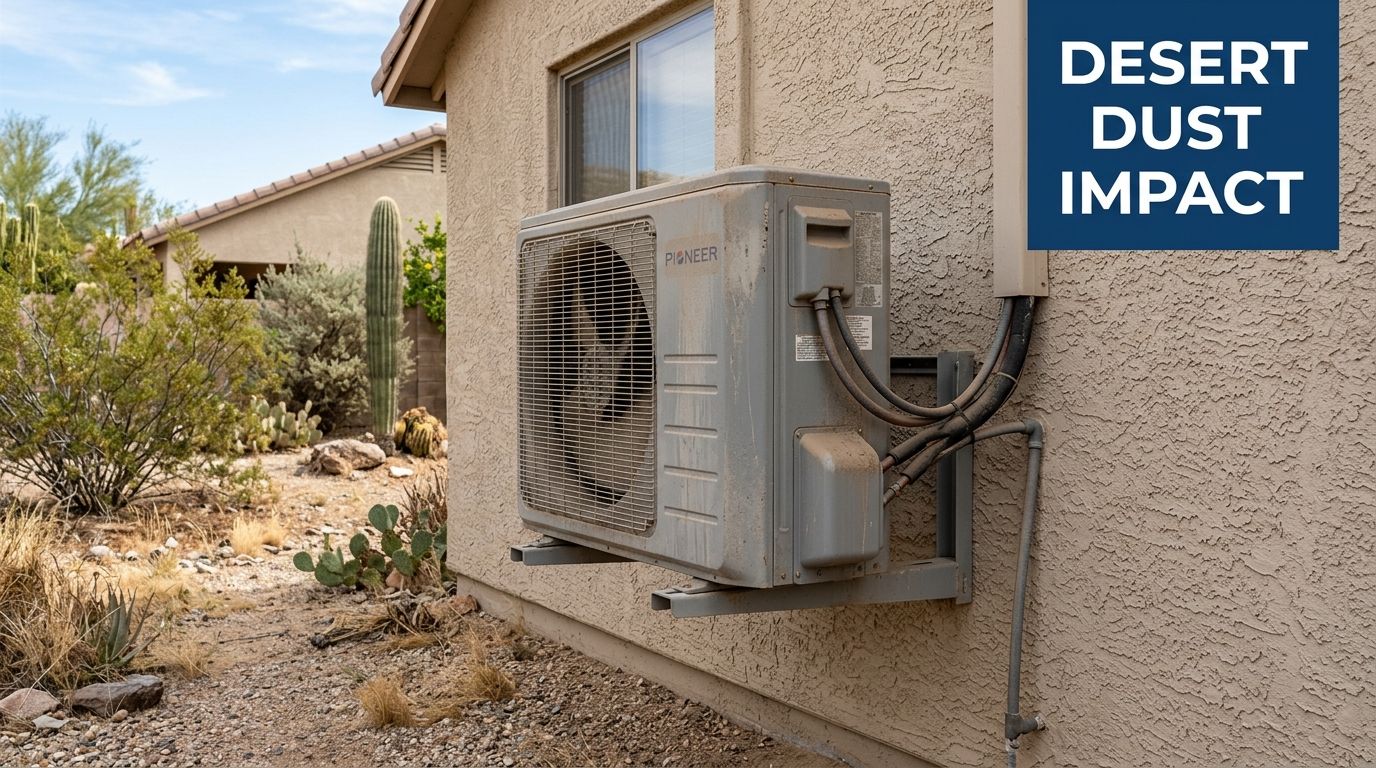
The baseline is simple. Ductless mini-split systems in dusty conditions like the East Valley need regular professional attention, and neglect can lead to a 25% drop in system efficiency within just two years, according to this mini-split maintenance reference. Homeowners usually notice that loss in practical ways first. Rooms cool unevenly. The system runs longer during peak heat. Power use climbs even though the unit still turns on and blows air.
Dust causes most of the trouble, but it is rarely the only issue. Once buildup gets into the blower wheel, indoor coil, or condenser fins, airflow drops and heat transfer slips. If the drain line is also starting to clog after a humid spell, you can end up with both weaker cooling and water problems at the same time.
That combination is what shortens equipment life.
Three maintenance problems show up again and again in Mesa homes:
- Restricted airflow: Dirty filters, matted blower wheels, and coated coils reduce the air moving through the unit.
- Lower cooling performance: The system keeps running but removes heat less effectively, especially during late-day summer load.
- More wear on expensive parts: Long runtimes put added strain on fan motors, control boards, and the compressor.
Daily-use ductless equipment in Mesa should be maintained like any other cooling system you rely on through triple-digit weather. Waiting for a clear breakdown usually means paying for the hottest day of the week, not the most convenient one.
If the unit already shows weak airflow, uneven cooling, musty odor, or drainage issues, it makes sense to have the full system checked through mini split service. A proper visit should go beyond a quick filter rinse and look at the coil condition, blower buildup, drain operation, electrical components, and overall performance under Arizona load.
Your Seasonal Mini Split Maintenance Checklist for Mesa
A Mesa maintenance schedule works better when it follows the actual climate, not a generic calendar. Dust season, pre-summer heat, monsoon debris, and post-summer wear all affect a mini-split differently. The biggest mistake is doing one quick cleaning and assuming the system is set for the year.
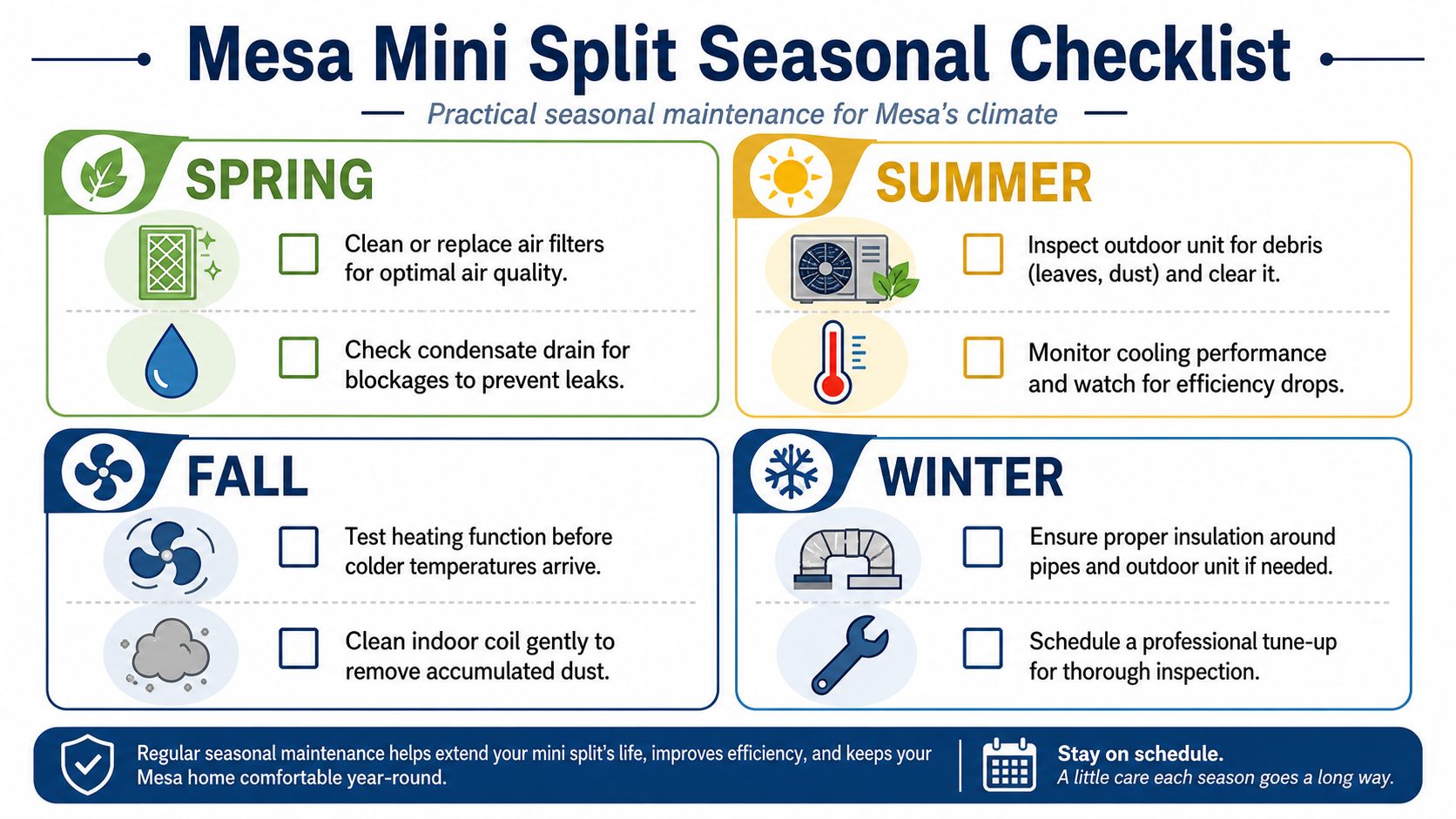
For Phoenix-area homeowners who use mini-splits as their primary cooling source, the recommended schedule is twice per year, once in spring and once in fall, while secondary or seasonal-use units still need at least annual service, based on this Phoenix mini-split tune-up guidance. In practice, that twice-yearly rhythm fits Mesa well because it prepares the system before summer and checks it again after months of heavy runtime.
What to do by season
| Season | What to focus on | Why it matters in Mesa |
|---|---|---|
| Spring | Filters, drain check, performance check, professional tune-up | Prepares the unit before peak cooling load |
| Summer | Frequent filter cleaning, outdoor debris checks, watch for weak cooling | Dust storms and constant runtime load the system fast |
| Fall | Post-summer inspection, coil cleaning, heating mode test if heat pump | Catches wear after the hardest cooling stretch |
| Winter | Light filter checks, inspect outdoor condition, schedule service if skipped in fall | Keeps lower-use systems from being ignored too long |
Homeowner tasks between tune-ups
Most of the ongoing work is simple and visual.
- Check the filter regularly: In dusty periods, don't wait until airflow feels weak.
- Look at the outdoor unit monthly: Windblown debris, cottonwood fluff, and dirt buildup can restrict heat transfer.
- Watch the drain behavior: Any indoor dripping or staining around the head unit needs attention.
- Pay attention to runtime changes: If the room takes noticeably longer to cool, something has changed.
A Mesa maintenance plan works best when it follows the weather, not just the month on the calendar.
When to schedule professional service
Spring and early fall are the smart windows for deeper service because they land before and after the heaviest use. That gives a technician time to clean the system properly, inspect operation, and catch issues before they become a no-cooling call.
For homeowners who want a set seasonal plan, seasonal AC maintenance is the right place to schedule it.
Simple DIY Mini Split Cleaning You Can Do Today
The most useful DIY task on a mini-split is also the easiest. Clean the indoor air filters. That one step helps protect airflow, keeps dust from packing into the coil too quickly, and gives the system a better chance of cooling normally through Mesa heat.

In the Phoenix metro area, especially during dust storms or haboobs, homeowners should check and clean mini-split filters every 2 to 4 weeks, or more often if buildup is visible, according to this local maintenance guidance. That timing is more aggressive than generic advice because Mesa dust loads filters fast during heavy cooling season.
How to clean the indoor filter safely
Before touching the unit, turn it off at the remote and let the fan stop completely. If the unit is easy to access and the manufacturer instructions are clear, open the front cover and remove the mesh filters carefully.
Then follow a simple sequence:
- Vacuum loose dust first: A soft brush attachment works better than shaking the filter indoors.
- Rinse with water: A sink sprayer or gentle faucet flow is usually enough for mesh filters.
- Skip harsh chemicals: Strong cleaners can damage the material or leave residue.
- Let it dry fully: Reinstalling a damp filter can create odor and moisture problems.
- Re-seat it properly: A crooked filter lets dust bypass the screen.
What to do outside
The outdoor condenser also needs light attention, but keep it basic.
- Remove leaves and trash: Pick out anything trapped around the cabinet or base.
- Brush off loose dust carefully: Use a soft hand brush, not a stiff wire brush.
- Check for blocked airflow: Fencing, storage, or yard clutter too close to the unit can hurt performance.
Don't start bending fins, opening panels, or spraying water into electrical sections. A mini-split outdoor unit is compact, and it's easy to create more problems than the original dirt caused.
Worth remembering: DIY maintenance should improve airflow and cleanliness. It shouldn't turn into disassembly.
What not to do
A few common shortcuts cause trouble:
- Don't use coil cleaners blindly: Some products are too aggressive for indoor mini-split components.
- Don't pour random solutions into the unit: Drain treatment needs to be done correctly.
- Don't scrub the blower wheel through the louver opening: That often just pushes grime deeper.
For homeowners who want a better understanding of coil-related cleaning limits, Comfort Experts' coil cleaning guide gives useful background before going beyond basic filter care.
Arizona-Specific Problems That Clog Your Mini Split
Generic maintenance advice usually treats all dust the same. Mesa isn't that simple. The East Valley adds a mix of haboob dust, monsoon grime, and mineral-heavy moisture issues that can affect mini-splits in different ways.
A local maintenance gap shows up around monsoon conditions. Many general guides stop at broad quarterly checks, but they don't distinguish debris patterns caused by storms, mud splash, and insect activity. That issue is described in this ductless maintenance discussion focused on monsoon-driven debris dynamics.
Haboob dust
Fine brown dust from a haboob isn't just surface dirt. It gets into the filter quickly, but some of it also settles deeper onto the indoor coil and blower assembly. Once that buildup sticks, the system can start blowing less air even after the filter is cleaned.
Typical signs include:
- Dust returning fast after cleaning
- Air volume feeling weaker at the wall unit
- A faint dusty odor when the unit starts
Monsoon mud and insect blockages
Monsoon season changes the problem. Dust gets wet, turns tacky, and sticks harder to outdoor components. Drain lines can also collect mud-like residue, plus insect debris that wouldn't show up during dry weather.
That's why a mini-split can cool acceptably in May, then develop water issues or weak performance after a few summer storms. Homeowners trying to prevent AC breakdowns in monsoons need to think beyond dry-climate filter checks.
Wet debris is harder on a mini-split than loose dust because it sticks, blocks, and drains poorly.
Hard water and drain trouble
Mesa homeowners also deal with mineral-heavy water conditions around condensate management. While the cooling process creates condensate naturally, minerals and grime can leave crusty residue in drain pathways over time. That buildup can slow drainage and lead to indoor dripping around the head unit.
This is one reason a system can appear mechanically fine but still create property damage. The fan runs, the room cools, and then a clogged drain starts leaking onto drywall or flooring.
When to Call a Professional for Mini Split Service
DIY maintenance has a clear limit. Filters, visible dust, and surface debris are homeowner tasks. Refrigerant charge, electrical diagnostics, deep coil cleaning, and internal drain or blower work need tools and training.
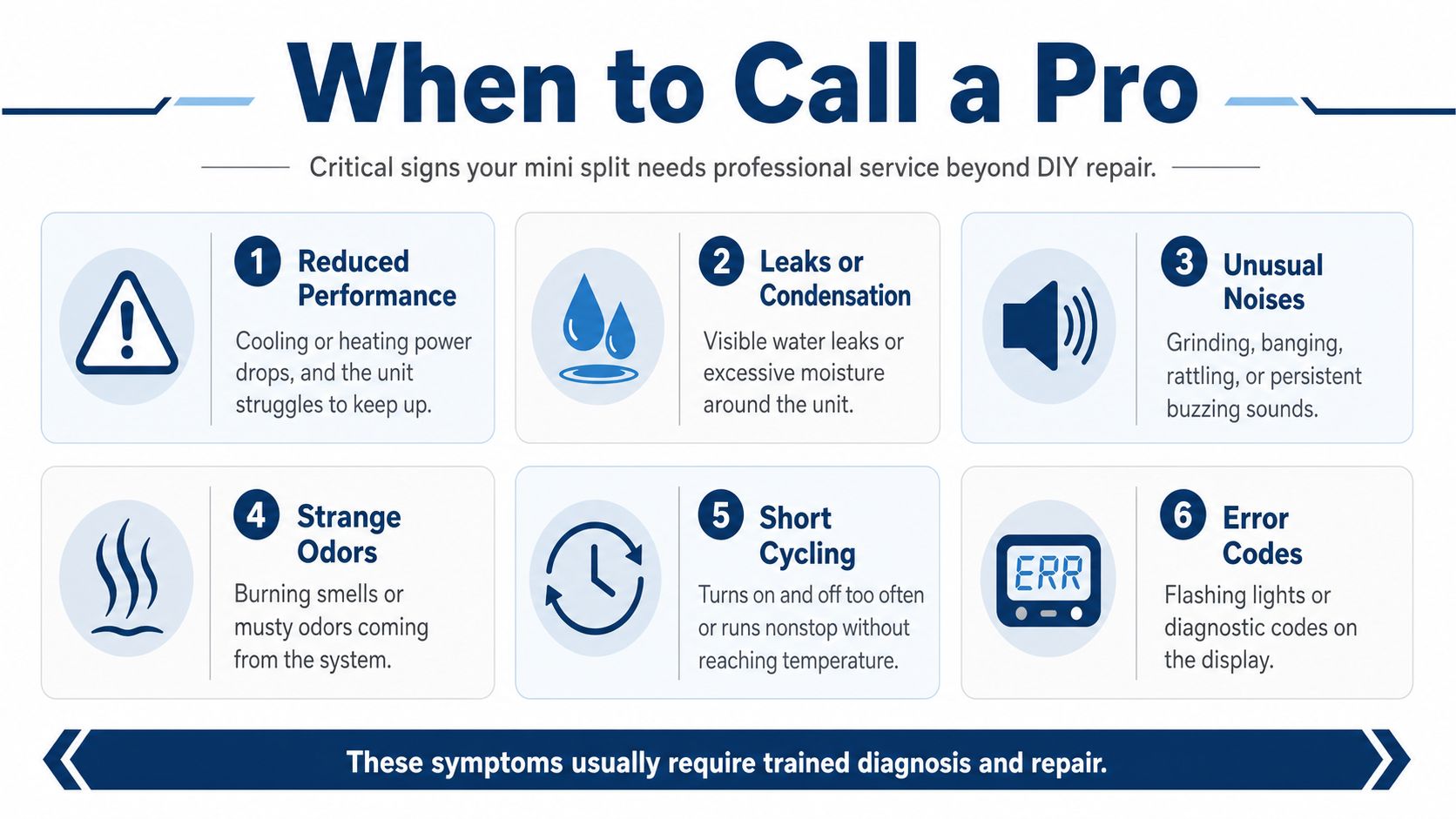
Professional mini-split maintenance in Phoenix Valley climates should include bi-annual service, along with refrigerant charge verification using gauges and electrical connection inspection. Skipping that can degrade compressor life by 40% and may void manufacturer warranties, based on manufacturer guidance for ductless system maintenance.
Signs that need a technician
Some symptoms point to more than dirt.
- Weak cooling after filter cleaning: If airflow still feels poor, the issue may be deeper in the coil, blower, or refrigerant circuit.
- Water around the indoor unit: Drain restrictions can become a property-damage problem fast.
- Buzzing, grinding, or rattling: Those noises can mean loose components, motor trouble, or debris in moving parts.
- Icing or freeze-up: That often ties back to airflow or refrigerant problems.
- Short cycling or nonstop running: Either pattern deserves diagnosis.
Why these jobs aren't good DIY projects
Mini-splits pack a lot into a small cabinet. Electrical sections are tight, boards are sensitive, and refrigerant charge has to be measured correctly. Guessing at charge by “feel” doesn't work. Neither does opening electrical compartments without understanding the layout.
A trained technician can inspect:
| Professional task | Why it matters |
|---|---|
| Refrigerant verification | Confirms the system is operating within spec |
| Electrical inspection | Finds loose or heat-stressed connections |
| Deep coil cleaning | Removes buildup that surface cleaning misses |
| Drain and condensate check | Helps stop leaks and hidden moisture issues |
If the problem involves refrigerant, wiring, or recurring water leaks, it's time for a service call.
When the system has moved past routine upkeep and needs troubleshooting, mini split repair is the right next step.
How Comfort Experts Keeps Your Mini Split Running
A mini-split in Mesa holds up better when the maintenance plan matches what the unit faces here. Fine dust works past the filter, haboob storms pack debris into outdoor coils, and monsoon season can leave drain lines dirty fast. A quick wipe-down does not address those problems.

The payoff is straightforward. Regular service usually costs far less than an early major repair or replacing a system before it should be worn out. Consistent maintenance also gives technicians a chance to catch the Mesa-specific issues that shorten mini-split life, including dust packed into the blower wheel, algae and sediment in the condensate line, and coil buildup that gets worse when hard water leaves mineral residue after repeated cleaning.
Comfort Experts approaches mini-split maintenance with those local conditions in mind. That means checking the indoor head for hidden dust beyond the filter, clearing the drain so monsoon humidity does not turn into a leak, and inspecting the outdoor unit after storm season for dirt, leaves, and coil restriction. The goal is simple. Keep airflow, drainage, and heat transfer where they need to be.
For Mesa and East Valley homeowners, the practical approach is simple:
- Handle the basic upkeep: Clean filters and keep visible debris off the outdoor unit.
- Time service around local wear: Spring service helps before extreme summer runtime. Fall service makes sense after monsoon dust and debris.
- Act on early warning signs: Musty odor, weak airflow, or a small water spot usually means the system needs more than routine cleaning.
Mini split maintenance in Mesa, AZ works best with service that is built for East Valley dust, monsoon mess, and heavy summer use.
If a ductless system is due for cleaning, tune-up, or diagnosis, Comfort Experts can help with practical service for Mesa and the East Valley. Homeowners can call 480-207-1239 or schedule service online to get the unit checked before dust, heat, or monsoon debris turn a small issue into a larger repair.