
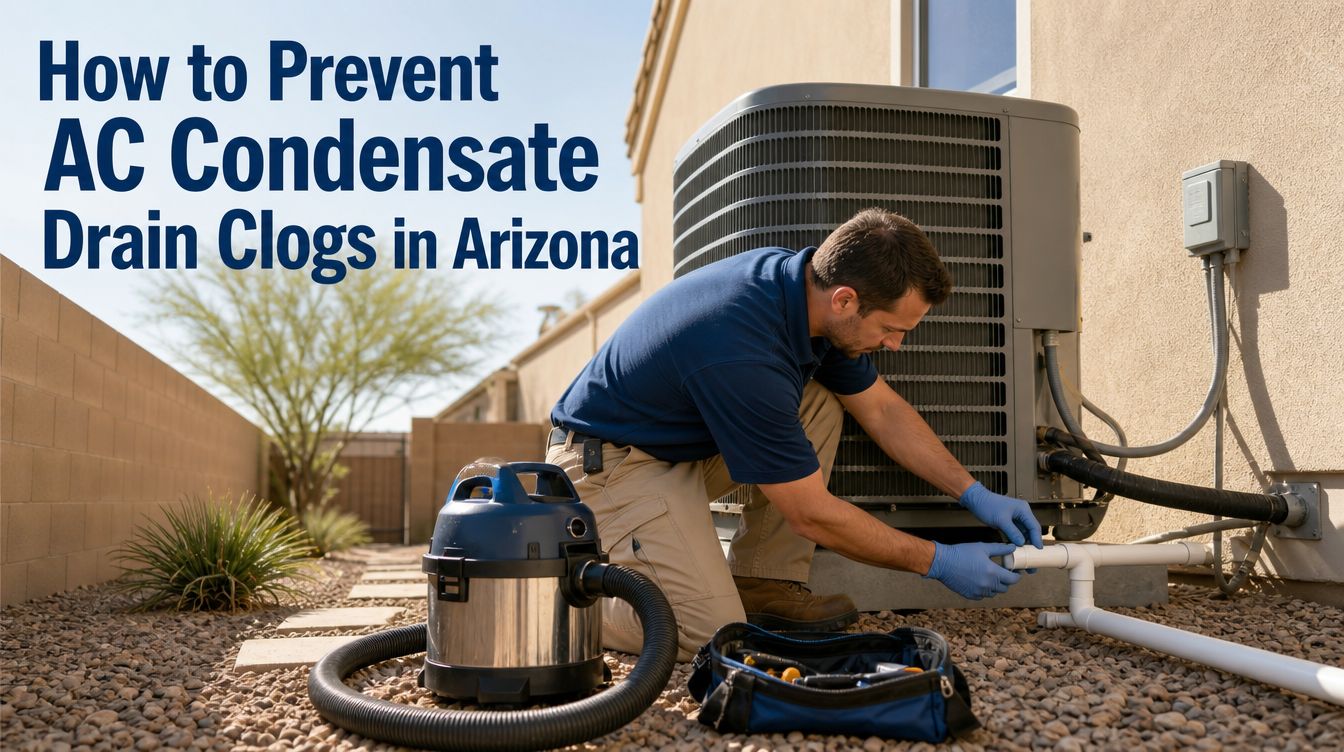
A Mesa homeowner can leave for a short July errand and come home to water beneath the air handler, a stained ceiling, or an AC that has stopped unexpectedly. In Arizona, learning how to prevent AC condensate drain clogs means treating the drain as part of seasonal HVAC maintenance, not as a once-a-year detail.
Why Arizona ACs Need Drain Care Year Round
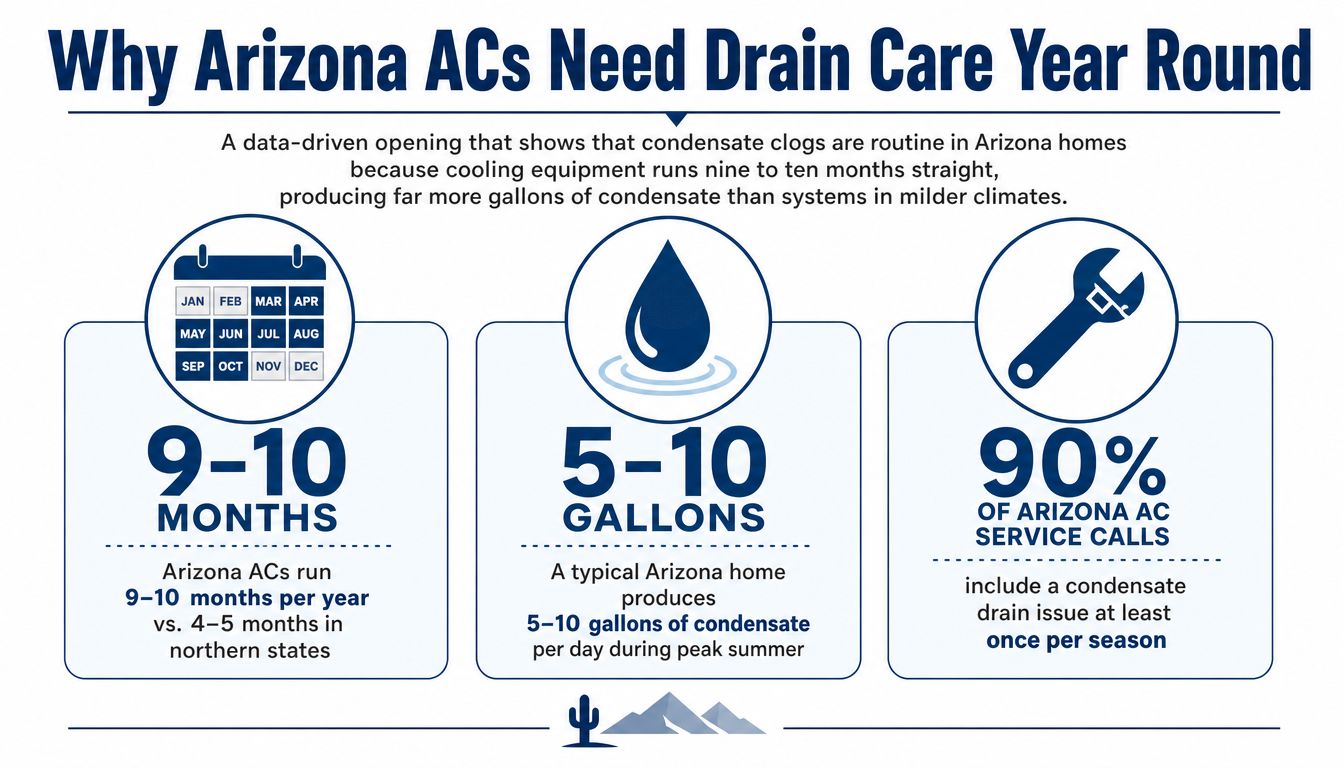
In Arizona, condensate drain prevention belongs in seasonal HVAC maintenance, especially through the long cooling season. An air conditioner may run for months in hot, dusty conditions. The drain carries moisture away from the indoor coil, while dust, algae, slime, and debris can collect inside it. A restriction may stay hidden until the pan fills and water begins moving toward the home.
Arizona guidance recommends flushing the condensate drain once per month from April through October and replacing air filters every 30 to 60 days. Dust, debris, and monsoon conditions increase the material reaching the system. The same guidance supports professional coil cleaning before monsoon season and a float switch when the system lacks one. (Arizona condensate drain guidance)
A practical seasonal rhythm
Mesa and East Valley homeowners can use a recurring maintenance cycle:
- Before heavy cooling demand: Have the coil, pan, trap, and drain inspected and cleaned.
- During summer: Flush the line regularly and check for standing water when changing the filter.
- Before monsoon activity: Confirm that dust is not restricting airflow and that the drain has a clear exit.
- After a backup: Find the cause before restarting the system repeatedly.
The AC maintenance tips Arizona homeowners use should cover condensate drainage alongside refrigerant, electrical, and filter checks. Long runtimes reveal weak points that can remain unnoticed in milder climates.
If the air handler sits above a finished ceiling, stop at routine checks and call Comfort Experts when water appears, the drain will not clear, or the pan is already filling. Preventing an overflow is safer than waiting for the secondary pan to catch it.
What Causes Condensate Drain Clogs in the Desert
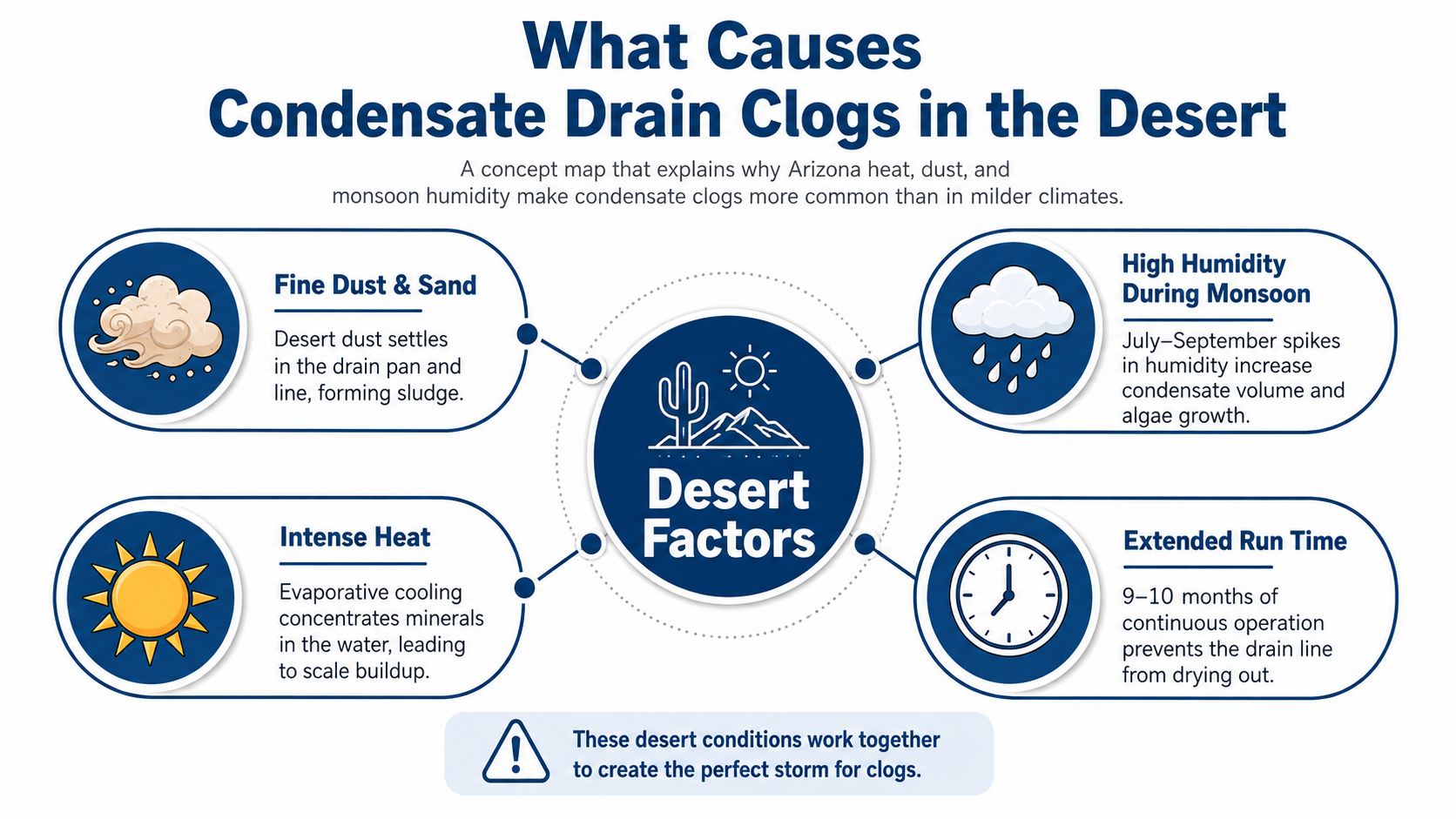
Arizona's climate stacks several clog-producing conditions on top of ordinary HVAC buildup. Fine dust can move through a loaded filter and settle on the evaporator coil or drain pan. When moisture reaches that material, it forms a heavy sludge that can travel into the PVC line.
Mineral residue can also contribute to narrowing. Mesa and nearby East Valley communities deal with hard water, and mineral deposits may accumulate where condensate repeatedly contacts fittings, pans, and drain components. The line doesn't need a large obstruction to drain slowly enough for an overflow during a long cooling cycle.
Warm, shaded drain piping creates another problem. Algae and microbial slime can grow inside the line and create a sticky surface that traps additional debris. Condensate drain maintenance guidance identifies algae, slime, and debris as recurring causes, which is why coil cleanliness, filter changes, and flushing work better together than any single measure. (Condensate drain maintenance causes)
Why monsoon season changes the risk
Monsoon storms add dust loading and a rise in humidity. Phoenix-area guidance notes that storms can clog filters faster, while dust combined with condensation can restrict the drain. (Phoenix-area monsoon guidance)
The result usually falls into one of three patterns:
- Dust-sludge plugs: Fine particles collect in wet areas and form a soft restriction.
- Biofilm choke points: Algae and slime narrow the line and catch more material.
- Pan-side backups: The drain is restricted near the air handler, so water remains in the pan before it ever reaches the outlet.
Homeowners comparing general drain-maintenance information can also review these emergency drain cleaning Boerne resources for broader drain-clearing context, although Arizona HVAC drainage has its own desert-specific concerns. For a related explanation of coil contamination, see why Comfort Experts warns about dust.
Safe DIY Cleaning Steps for Homeowners
A homeowner can handle light preventive maintenance, but the work should stop before it becomes an attic repair project. Safety comes first. Turn off power at the disconnect, confirm the blower has stopped, raise the thermostat above room temperature, and keep a towel and wet/dry vacuum nearby.
A useful basic kit includes:
- Wet/dry vacuum: A model with a 1¼-inch hose can attach to many accessible drain outlets.
- Large syringe: A turkey baster or large syringe helps move water slowly without forcing pressure into the system.
- Nylon brush: A stiff nylon brush can clean accessible pan surfaces without scratching them.
- Pan treatment: Use replacement condensate pan tablets only as directed on the product label.
- Flashlight: Good lighting helps reveal standing water, slime, cracked fittings, or rust.
A cautious cleaning sequence
First, locate the primary vertical PVC drain near the indoor air handler. From the outdoor exit, attach the wet/dry vacuum and run it for 30 to 60 seconds to pull loose material from the line. Follow with a slow distilled-water flush, stopping if water backs up near the equipment.
Inspect the secondary pan for standing water or visible biofilm. A fresh tablet may help slow buildup in the pan, but it won't repair a blocked line, damaged trap, poor slope, or cracked fitting. Guidance commonly recommends a monthly vinegar flush during the cooling season, using about one-quarter to one cup of distilled white vinegar and allowing it to sit for roughly 20 to 30 minutes before rinsing with water. (Vinegar flushing guidance)
Don't pour concentrated bleach into the line, use high-pressure air, or remove the coil or blower door. Those shortcuts can damage components, force debris deeper into the system, or expose a homeowner to electrical and mechanical hazards. For broader cleaning context, these GTA HVAC cleaning steps show why accessible cleaning and deeper equipment work should be treated differently.
If the line backs up again within a week, the secondary pan contains water, or mold growth is visible, stop the DIY work. Homeowners can also consult these Comfort Experts AC cleaning tips before deciding whether the problem is safe to handle.
Safeguards That Stop Overflow Damage
A drain treatment helps reduce buildup, but it doesn't replace an overflow safeguard. Three options are common: a float switch, pan treatment tablets, and a condensate pump.
A float switch detects rising water in the drain pan and shuts the air handler down before the backup becomes a larger leak. It's especially useful for attic equipment above drywall, insulation, or finished rooms. (Float switch operation)
Pan tablets release treatment gradually and can help slow algae and slime. Stronger anti-biofouling guidance recommends replacing tablets or strips twice per year, or every six months in open-line systems. Liquid additives may require a 90-day re-dose interval, depending on the product. (Condensate pan treatment guidance) Tablets aren't a solution for a dirty coil, a badly restricted line, or a pan already full of water.
A condensate pump moves water where gravity drainage isn't practical. It may be necessary when the equipment is installed in a low closet, crawlspace, or another location where the drain cannot slope naturally toward an outlet. Pumps add moving parts and need functional testing, so they aren't automatically better than a gravity drain.
Comparing condensate overflow safeguards
| Safeguard | How It Stops Overflow | Best For | Approx. Cost |
|---|---|---|---|
| Float switch | Shuts the AC off when water rises in the pan | Attic air handlers above finished ceilings | Varies by equipment and installation |
| Pan tablets | Helps slow algae and slime buildup | Lightly used or accessible systems | Varies by product and replacement schedule |
| Condensate pump | Moves water when gravity drainage isn't available | Low closets, crawlspaces, and difficult drain routes | Varies by pump and installation requirements |
Homeowners dealing with ceiling stains from AC leak should prioritize locating the source before adding a tablet or restarting the unit. A safeguard should match the system's age, location, and accessibility, not just the homeowner's preferred price.
Arizona Seasonal Prevention Schedule
A workable schedule follows Arizona's cooling demand instead of relying on a single annual appointment. Local guidance recommends a professional tune-up during the October through February window so the drain can be flushed before peak summer use. (Arizona AC tune-up timing)
A calendar that fits Mesa homes
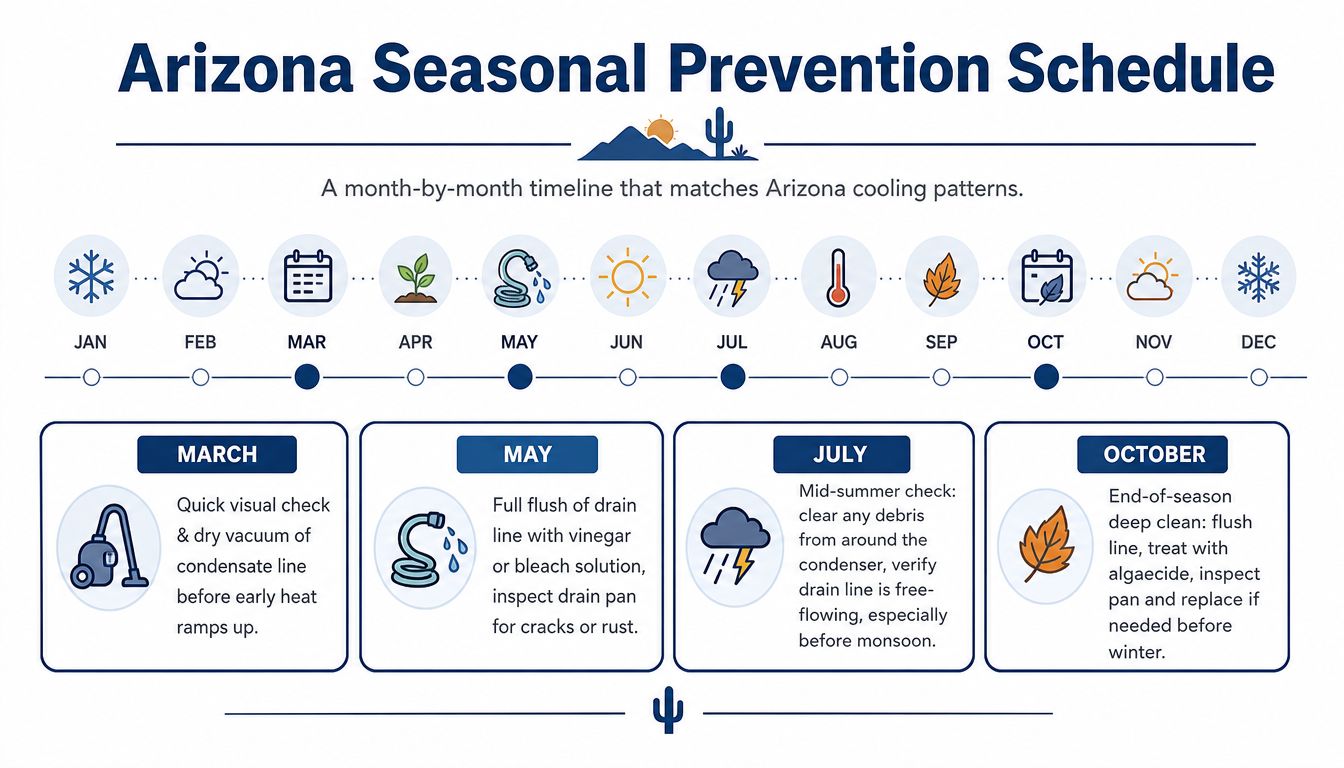
- March: Check the visible drain outlet and pan, then dry-vacuum the accessible line if the system has been idle. This is a sensible time to catch insects, dust, or old buildup before early heat arrives.
- April: Begin the monthly drain routine. Replace the filter if it's dirty, and look for standing water, slime, or discoloration near the pan.
- May: Perform a full flush and pan inspection before the equipment begins carrying heavier loads. Arizona maintenance recommendations commonly suggest about one cup of distilled white vinegar in the line during the summer season, generally from May through September. (Arizona vinegar treatment recommendation)
- June through September: Check the line every three to four weeks during monsoon season, particularly after a dust storm or humidity spike. (Monsoon AC maintenance timing) Keep the outdoor drain outlet clear and check the pan whenever the filter is changed.
- October: Give the line another thorough inspection as cooling demand begins to ease. Replace pan treatment products according to their label and note any recurring backup.
- Winter: If the system is shut down, confirm that the trap and drain are dry where accessible and that the line is capped or protected as designed.
A haboob forecast, a prolonged heat wave, or a long vacation is a reason to move the check earlier. Property managers should add drain inspection to turnover and rooftop-unit maintenance routines instead of waiting for a tenant to report water damage. For related seasonal planning, see Restore Heroes mold prevention advice.
Warning Signs and Troubleshooting Limits
The first warning may be simple: water remains in the drain pan after the AC has been running. A homeowner can turn the thermostat off, place a towel beneath the affected area, and inspect only what is safely accessible. If the pan is near electrical components, the system should remain off until a technician checks it.
Other signs point to a developing restriction:
- Air handler sweating: Condensation around the cabinet or nearby insulation can indicate drainage or airflow trouble.
- Musty attic odor: A damp pan or wet insulation may be contributing to the smell.
- Gurgling sounds: Bubbling or gurgling in the drain or vent path can signal trapped air and poor drainage.
- Ceiling or wall stains: Water marks below an air handler deserve prompt attention, even if the AC still cools.
- Short cycling: A float switch may be interrupting operation because water has risen in the pan.
A float switch is designed to shut the system down when water backs up, limiting overflow and potential damage. (Float switch leak protection) If the switch trips once, a cautious homeowner can shut the system off and check for visible water. If it keeps tripping after a flush, the cause may be deeper than a loose obstruction.
Water above electrical equipment, visible mold growth, or any leak above a finished ceiling is a professional-service situation.
A wet-dry vacuum shouldn't be used as a reason to keep entering an unsafe attic. Same-day HVAC service is appropriate when water continues to spread, the air handler won't stay on, the secondary pan fills, or the drain route disappears into a wall or ceiling.
Your Next Step and When to Call Comfort Experts
Arizona's long cooling season calls for a prevention routine built around monthly flushes, scheduled pan treatment, and float-switch checks before monsoon dust arrives. Flush the line monthly from May through September, follow the treatment product's instructions, and confirm that a condensate pump cycles correctly as indoor humidity rises. Annual float-switch testing can involve adding water to the drain pan and confirming that the AC shuts off. (Float-switch testing guidance)
Call for professional service when the same backup returns within 30 days, staining appears near the air handler, supply vents smell musty, mold is visible in the pan, or the float switch fails to stop the system. Service is also the safer option when piping runs through a finished ceiling or wall, where a concealed leak can spread unnoticed.
A technician can inspect the full drain route, clean the coil and pan, apply treatment safely, test float-switch operation, and replace damaged PVC fittings. Those steps address restrictions that an accessible vacuum or flush may not reach. Comfort Experts provides AC maintenance and tune-ups in Mesa and the East Valley, plus AC repair and diagnostic service when a backup affects system operation. Details are available through the company's AC maintenance service.
Schedule a pre-monsoon inspection by calling 480-207-1239 or request service. Stop DIY work and call when the line backs up repeatedly, water reaches the air handler, or the system protects a finished ceiling.
Comfort Experts helps Mesa and East Valley homeowners inspect, clean, and repair AC condensate drainage before a restriction becomes water damage. Call 480-207-1239 or visit Comfort Experts to arrange a pre-monsoon drain inspection and practical AC maintenance for the coming cooling season.