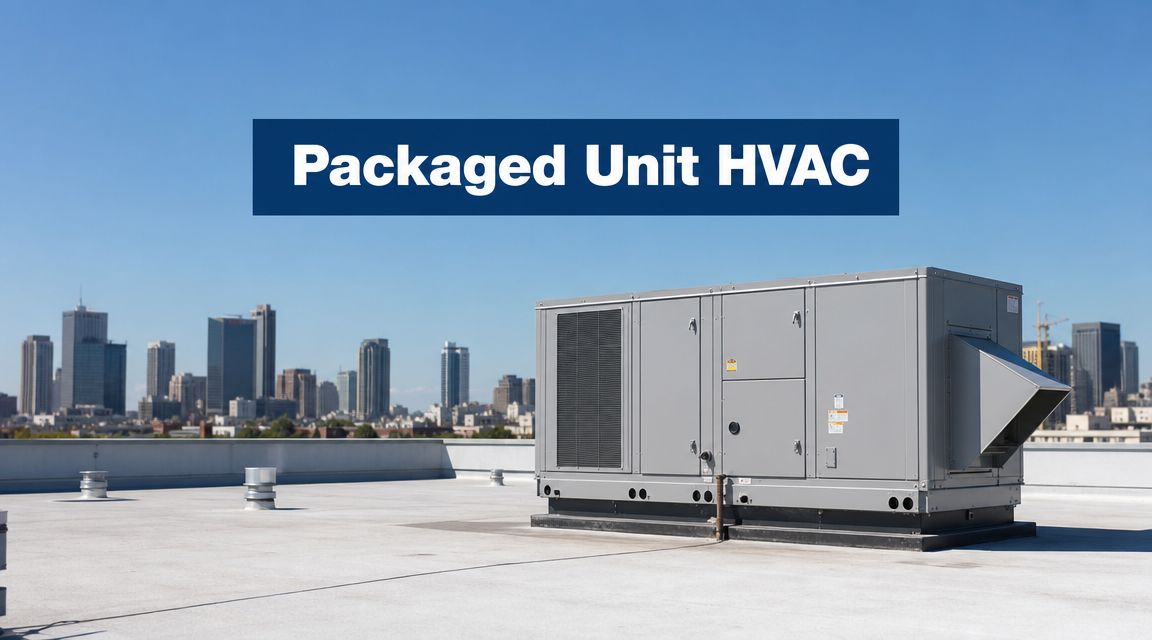
If you're looking at a roof full of metal boxes or trying to figure out how to cool a home with tight indoor space, Packaged Unit HVAC probably keeps coming up. In Mesa and across the Valley, these systems can make a lot of sense, but in our sun, dust, and monsoon season, the ultimate answer is always in the trade-offs.
What Is a Packaged HVAC Unit Anyway
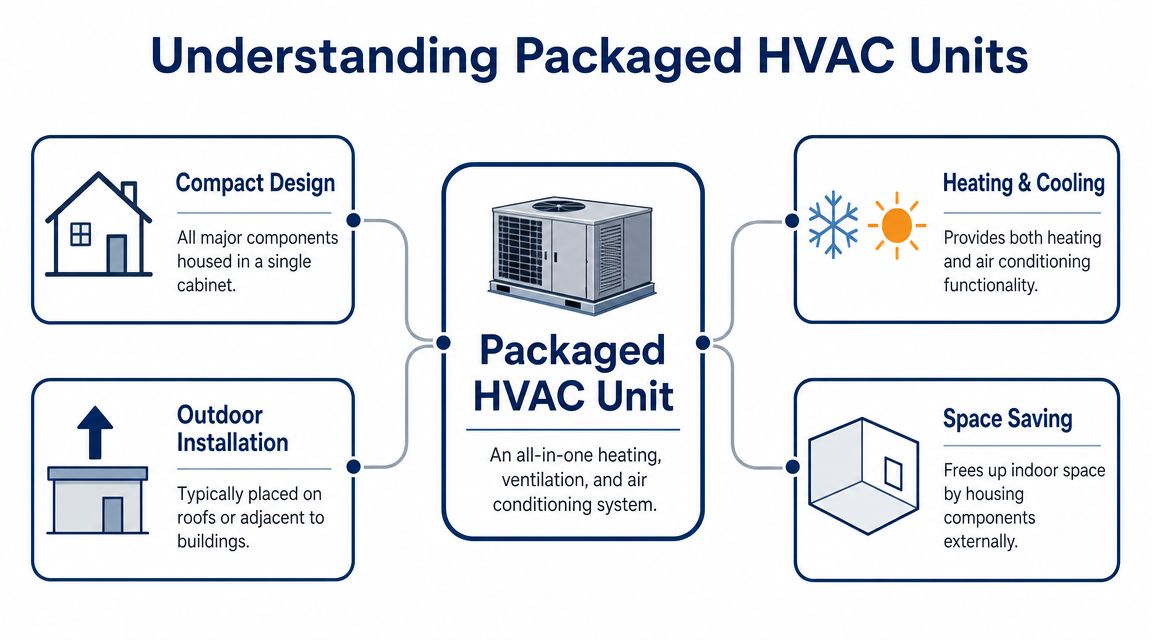
A packaged HVAC unit is the all-in-one version of central heating and cooling, similar to a combo washer-dryer versus separate machines. A split system separates parts of the system between an outdoor condenser and an indoor air handler or furnace. A packaged unit puts the major pieces together in one cabinet outside the building.
What sits inside the cabinet
A packaged unit is a self-contained system that places the compressor, condenser, evaporator coil, and blower into one outdoor cabinet, as explained in this overview of packaged air conditioner basics. Depending on the model, that same cabinet may also include the heating section or electric heat components.
That design is why you'll see packaged units on:
- Flat commercial roofs where indoor mechanical space is tight
- Ground-level pads beside small buildings or homes
- Properties with limited closet or attic space
- Certain older homes or additions where adding indoor equipment is awkward
Mesa homeowners usually notice the biggest advantage right away. You free up indoor space because the system lives outside. No air handler stuffed in a hallway closet. No furnace in a cramped attic. No indoor mechanical room getting sacrificed.
Practical rule: A packaged unit saves space indoors, but it still needs careful duct design and setup outdoors.
Why the duct connection matters so much
A lot of people hear “all-in-one” and assume the system is simpler in every way. It isn't. Because the supply and return ducting connect directly to that single cabinet, static pressure becomes a major performance issue. If the duct system resists airflow too much, the blower can't deliver what the equipment needs.
When airflow drops, several things can go wrong:
- Cooling output suffers because the coil isn't moving enough air
- Coils can get too cold and raise icing risk
- The compressor may run longer trying to satisfy the thermostat
- Comfort gets uneven from room to room
That's why techs who know packaged equipment don't treat it like a simple metal box that just blows cold air. We check airflow, verify duct connections, and pay attention to how the cabinet, curb, and duct system work together.
Where packaged units fit in the bigger HVAC picture
Packaged equipment also sits inside the broader unitary HVAC category. The Pacific Northwest National Laboratory notes that unitary systems combine heating and cooling in one packaged unit or a few split sections and are among the most common technologies for conditioning commercial buildings. It also points out their flexibility for rooftop, indoor, attic, ceiling, or ground-level installation in its unitary HVAC equipment overview.
So if you've ever looked at a restaurant, office suite, church, or retail building and thought, “That roof unit must handle the whole place,” you were probably looking at this family of equipment.
The Main Types of Packaged Units Explained
A packaged unit can cool your place well and still be the wrong fit if the heating side does not match the property. In Mesa and Phoenix, that matters more than a lot of online guides admit. We spend far more time talking about cooling, but winter mornings still expose weak equipment choices fast.
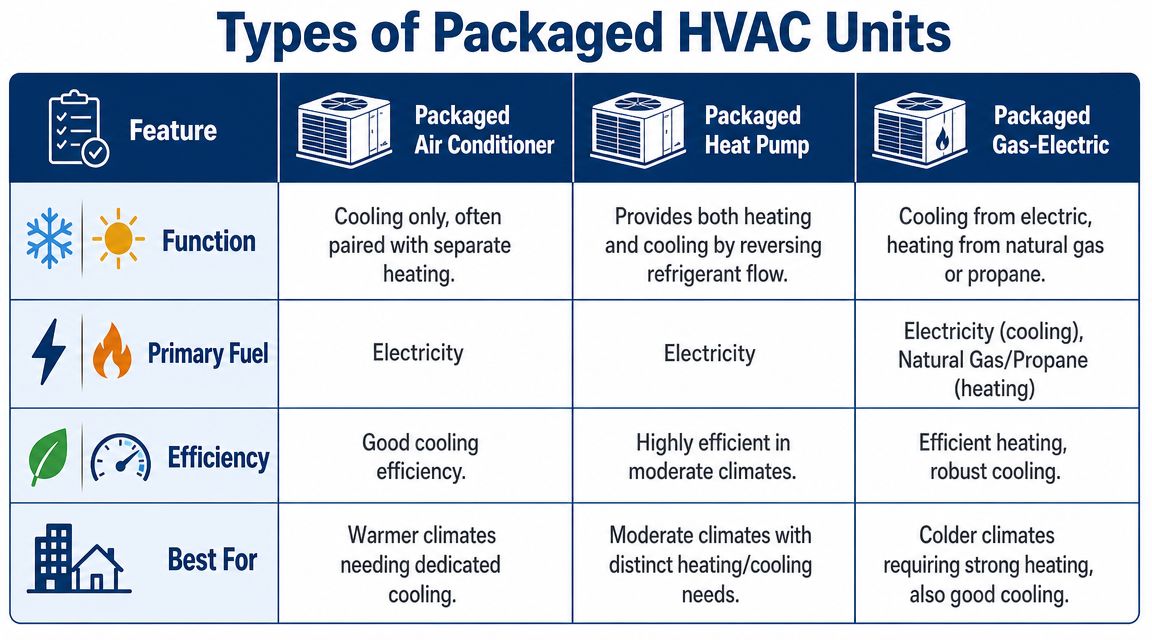
The three main packaged setups are straightforward on paper. In the desert, the trade-offs get more real because the cabinet lives outside full time under hard sun, dust, and monsoon grime. So the question is not just how the unit heats. It is also what complexity you are putting on a roof or pad where every component takes abuse.
Packaged air conditioner
A packaged air conditioner is a cooling unit first. If it provides heat, that heat usually comes from electric heat strips.
That setup is simple, and simple has value in Arizona. Fewer heating components usually means fewer parts to troubleshoot on the heating side. For a property that barely uses heat, that can make sense.
The trade-off is operating cost and comfort during colder weather. Electric resistance heat is basically expensive heat. It also heats differently than a heat pump or gas furnace, so a quote that says “heat included” does not tell you much by itself.
A packaged air conditioner often fits best when:
- Cooling is the clear priority
- The building already uses all-electric service
- The owner wants a lower-complexity setup
- Winter heating demand is limited
Packaged heat pump
A packaged heat pump cools in summer and heats by reversing the refrigeration cycle in winter. That is a good match for a lot of Phoenix-area homes and small commercial spaces because our winters are usually mild enough for heat pumps to do their job without much drama.
If you want the mechanical side explained in plain English, this guide on how a heat pump works lays it out clearly.
In practice, a packaged heat pump can be a smart Arizona option because it avoids gas piping and usually gives you more efficient heating than straight electric strips. But there is a catch. A heat pump adds parts and controls, and on a rooftop packaged unit those parts sit out in the same dust and heat as everything else. If the install is sloppy or maintenance gets skipped, the system will show it.
A packaged heat pump usually makes sense when the owner wants:
- One cabinet for both heating and cooling
- An all-electric system
- Better heating efficiency than electric strips alone
- A strong fit for mild desert winters
In Mesa, I like packaged heat pumps for the right building. I do not like them on badly designed duct systems or on properties where nobody plans to maintain the unit.
Packaged gas-electric unit
A packaged gas-electric unit, often called a gas pack, uses electric cooling and gas or propane heat. This setup is common on commercial buildings and some homes where gas service is already available.
Gas heat gives you a different feel in winter. Air coming out of the vents is hotter, recovery can feel faster, and some owners prefer it. For a business that opens early on cold mornings, that can matter.
The trade-off is the added burner section, venting requirements, and more heat-related components living in an outdoor cabinet. In our climate, rooftop gas packs can last well, but only if the heat section stays clean and the cabinet is kept in decent shape. Desert dust does not care whether a part is electrical or gas-fired.
A quick side-by-side look
| Feature | Packaged Air Conditioner | Packaged Heat Pump | Packaged Gas-Electric |
|---|---|---|---|
| Cooling | Yes | Yes | Yes |
| Heating method | Usually electric heat strips | Refrigeration cycle heating | Gas or propane heat |
| Arizona fit | Good where cooling matters most and heating use is low | Often a strong fit for mild winters and all-electric properties | Good where gas service exists and owners want furnace-style heat |
| Main trade-off | Simple, but electric heat can cost more to run | Efficient heating, but more outdoor components to maintain | Strong winter heat, but added fuel and burner complexity |
Do not choose by tonnage alone. Choose based on how often the property needs heat, what fuel is available, and how much outdoor wear the unit will have to survive in the Phoenix sun.
Packaged Units vs Split Systems The Real Trade-Offs
Regarding these systems, generic advice usually falls apart. A packaged unit is not automatically better just because everything is in one cabinet. A split system is not automatically better just because it's more common in homes. The better choice depends on the property, the location of the equipment, and how much punishment the system will take from the environment.
Where packaged units win
The biggest advantage is space. If you've got a zero-lot-line home, no useful attic room, a packed mechanical closet, or a small commercial building where every interior square foot matters, packaged equipment solves a real problem.
It can also simplify the physical layout because the unit sits outside and the ductwork ties directly into it. For some replacements, that makes planning more straightforward than trying to fit separate indoor and outdoor components where the building was never designed for them.
Packaged units are often a smart match for:
- Homes with limited indoor equipment space
- Standalone retail or office spaces
- Flat-roof commercial properties
- Replacement jobs where a packaged unit already exists
Where split systems often age better
Phoenix-area climate changes this conversation. The outdoor exposure is no joke. Rooftop and ground-mounted packaged systems sit out there taking direct sun, dust, and storm debris on the whole cabinet. A split system still has an outdoor section, of course, but some major components remain protected indoors.
That exposure issue is one of the most overlooked trade-offs. Trane's neutral consumer guidance focuses on packaged systems as space-saving and flexible, but the harder reality in hot climates is that the all-in-one setup can also mean more weathering and more consequential downtime if the cabinet goes down. That's the core concern noted in this overview of all-in-one packaged systems.
In Mesa, rooftop convenience and rooftop punishment come as a package deal.
If you're also comparing other central and space-saving options, this breakdown of ductless mini-split vs central air can help frame the bigger decision.
Packaged vs split HVAC system comparison
| Factor | Packaged Unit | Split System |
|---|---|---|
| Indoor space use | Saves indoor space because major components are outside | Requires indoor space for furnace or air handler |
| Equipment layout | One outdoor cabinet | Separate indoor and outdoor sections |
| Service location | Everything is in one place, but may be on a roof | Service may involve two locations |
| Exposure to weather | Entire system is exposed outdoors | Indoor section is protected |
| Phoenix dust and sun impact | Higher exposure on the full cabinet | Outdoor section still exposed, indoor section less so |
| Failure consequences | One cabinet problem can affect the entire system | Problems may be isolated to one section |
| Best fit | Space-limited homes and many commercial sites | Homes with indoor equipment space and long-term protection priorities |
What usually works best
If a property already has a packaged setup and the duct layout, curb, and location all make sense, replacing with another packaged unit can be practical. If the building has room for indoor equipment and the owner wants more protection from the desert environment, a split system often deserves a serious look.
Neither is universally right. Bad installation ruins both.
Sizing and Selecting the Right Unit for Your Property
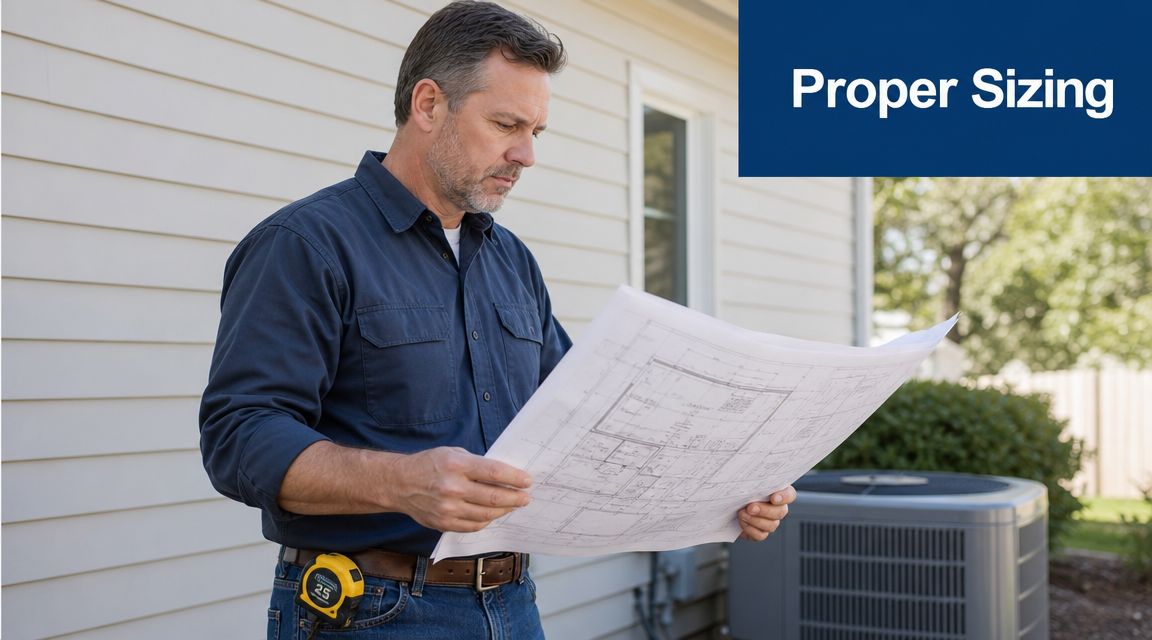
Picking a packaged system by square footage alone gets people in trouble. Two homes with the same size can need very different equipment because glass, insulation, orientation, ceiling height, duct condition, and occupancy all change the load.
Load first, equipment second
A proper selection starts with the building, not the box. That means calculating the cooling and heating demand, then matching equipment and airflow to that demand. If somebody skips straight to “you had this size before, so you need the same thing again,” that's not enough.
A better process looks like this:
- Measure the structure accurately, not roughly.
- Check insulation, windows, and sun exposure because Mesa heat punishes weak envelopes.
- Review duct size and condition so the blower can move the air the unit needs.
- Match the heating type to the property and utility setup.
- Confirm the installation details before the equipment gets ordered.
If you're trying to get your bearings before an estimate, this guide on what size air conditioner you need is a useful starting point.
The label doesn't tell the whole story
A lot of homeowners assume the efficiency number on the brochure is what they'll get in real life. Not necessarily.
Federal efficiency rules certify systems in specific combinations, and the final installed configuration can perform differently than the headline label. California's HVAC requirements also underline that installation details such as insulation and related losses matter. That's why duct sealing, component matching, and install quality are still critical even with packaged equipment, as explained in this building HVAC requirements document.
Field note: A packaged unit is not plug-and-play. If the duct leaks, the curb doesn't fit right, or airflow is off, the equipment won't deliver what the sticker suggests.
What to pay attention to on a quote
You don't need to become a technician overnight, but you should expect clear answers on a few things:
- Capacity match: Why this size, for this building?
- Heating configuration: Electric strips, heat pump, or gas-electric?
- Duct connection plan: Are existing ducts suitable, or do they need correction?
- Roof or pad details: How will the unit sit, seal, and drain?
- Commissioning steps: Will the installer verify airflow and operation after startup?
For packaged replacements and rooftop jobs, experienced contractors distinguish themselves from equipment sellers. Comfort Experts handles packaged unit replacements, maintenance, and rooftop service in Mesa and the Phoenix area, but whichever contractor you use, ask how they verify duct performance and airflow instead of just asking what brand they sell.
Installation Lifespan and Maintenance in Arizona
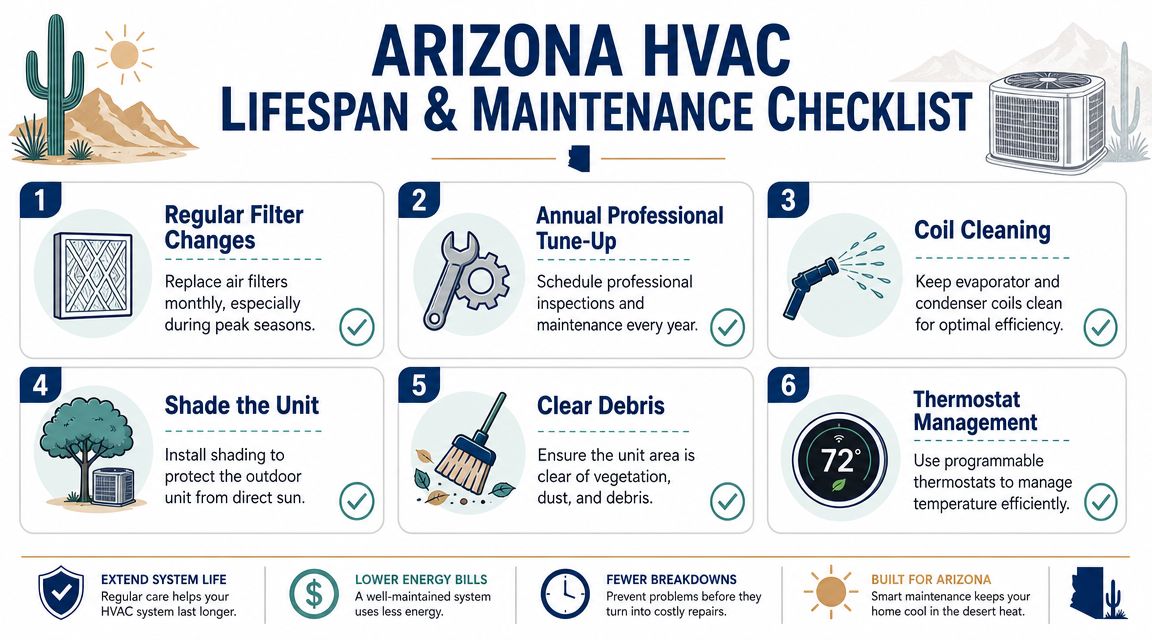
A packaged unit in Mesa can look fine in March and get exposed fast by July. The cabinet sits in direct sun, the refrigerant side runs hard through long heat stretches, and every dust storm tests airflow, coils, and electrical connections. That does not make packaged equipment a bad choice. It means installation quality and maintenance discipline matter more here than generic HVAC articles usually admit.
Rooftop and ground-level placement
Placement affects service life in Arizona more than many owners expect.
A rooftop packaged unit keeps the equipment out of the way and often fits the building layout well, especially on flat-roof commercial properties. The trade-off is harsher exposure. The roof surface throws heat back at the cabinet, sun beats on every panel, and small install mistakes show up fast. A bad curb fit, poor flashing, weak weather sealing, or tight service clearance can turn into water intrusion, premature rust, vibration, or repair headaches.
A ground-level unit is usually easier to reach and cheaper to service. It also deals with a different set of problems. Dust hangs lower, landscaping debris gets pulled into the coil, and poor drainage can leave the base sitting in mud after a storm. If the pad settles or the duct connection is sloppy, airflow and cabinet integrity suffer.
Neither location is automatically better. The right choice depends on roof condition, service access, sun exposure, drainage, and how well the installer handles the details.
What owners should stay on top of
In Arizona, neglect shows up quickly.
- Change filters on a schedule that matches dust conditions: A filter that might last longer in a milder climate can load up fast here, especially after windy weeks.
- Keep the area around the unit clean: Dirt, leaves, plastic, and monsoon debris choke airflow and trap heat around the cabinet.
- Have coils checked and cleaned as needed: Dirty condenser coils are a common reason packaged units lose performance during peak summer heat.
- Inspect the condensate system: Clogs, poor slope, or cracked drain components can lead to water damage and biological growth.
- Watch the electrical side: Arizona heat is hard on capacitors, contactors, wire insulation, and connections.
- Pay attention to sound and runtime changes: New rattles, harder starts, or a unit that runs much longer than usual usually means something is drifting out of spec.
For multi-site owners or small commercial properties, good records save money. A simple guide to effective work orders helps track repeat issues, missed filter changes, and which unit keeps eating repair dollars.
Signs the unit may be nearing replacement time
Packaged units usually decline before they quit. In the Valley, that decline often shows up first on the hottest afternoons, when a marginal system cannot keep up.
Watch for these patterns:
- Cooling falls off during extreme heat, even after normal service
- Repairs keep stacking up on motors, capacitors, compressors, or control parts
- The cabinet shows rust, panel damage, or insulation deterioration
- Airflow complaints keep coming back
- Noise gets worse, especially from the blower section or compressor
- Energy bills climb without another clear cause
Age matters, but condition matters more. A well-installed unit with consistent service can outlast a neglected one by a wide margin, especially in our climate. If you are trying to judge whether repair still makes sense, this article on how long AC units last gives useful context for that decision.
One last practical point. In Mesa and Phoenix, waiting until the unit fails in peak summer usually limits your options, raises downtime risk, and turns a planned replacement into an emergency job.
Is a Packaged Unit the Smart Choice for Your Property
A packaged unit is usually the smart choice when indoor space is limited, the building already has a packaged setup, or the property layout makes an outdoor all-in-one system the cleanest option. That includes some zero-lot-line homes, older houses with no good indoor equipment location, small standalone commercial buildings, and many flat-roof properties.
It's also a practical option when you want to keep the mechanical footprint outside instead of giving up closet or attic space indoors. That part is easy to understand. The harder part is being honest about the Valley climate. Sun exposure, dust loading, rooftop heat, and storm debris all hit packaged units directly. If the installation is mediocre or the maintenance gets ignored, the desert will expose that fast.
When a packaged unit makes sense
A packaged system is worth serious consideration if these points sound familiar:
- You don't have a good indoor location for an air handler or furnace
- Your current duct system already supports a packaged layout
- You're replacing an older rooftop or ground-mounted package unit
- Interior space matters more than protecting part of the system indoors
- You want one cabinet instead of separate indoor and outdoor major components
When to slow down and compare other options
A packaged unit may not be the right answer if long-term weather exposure is your biggest concern or if the building has a solid indoor equipment location that would support a split system well. At that point, comparison matters more than habit.
It also helps to ask better contractor questions. If you're reviewing proposals, a tool like Exayard HVAC estimating software shows the kind of structured estimating process that can help contractors organize equipment, scope, and bid details. You don't need the software yourself to benefit from the idea. You want a quote that feels thought through, not scribbled together.
If replacement cost is part of your decision, this guide on cost to replace an AC unit can help you understand the broader picture before you commit.
The bottom line is simple. A packaged unit HVAC system can be a very good fit in Mesa and Phoenix. It is not automatically the low-hassle choice just because it's all in one cabinet. In our climate, the smartest choice comes from matching the equipment to the building, installing it correctly, and maintaining it like the desert is always trying to wear it out. Because it is.
If you want honest help sorting through packaged unit options for your home or business, Comfort Experts can walk the property, evaluate the duct setup, and tell you plainly what fits and what doesn't. Call 480-207-1239 or schedule service online for a no-pressure consultation.