
A typical HVAC zoning system cost in the U.S. starts around $1,700 to $2,800 for a two-zone retrofit, and broader national pricing can run from about $1,100 to $10,600 depending on duct access, thermostat type, and the number of zones. In Mesa and the East Valley, a practical budget for most 2- to 4-zone projects often lands around $2,500 to $7,500, especially once duct layout and labor are factored in.
A neighbor in Mesa usually starts looking at zoning after the same pattern shows up every summer, the upstairs bedrooms feel baked by midday while the living room stays passable. That kind of uneven cooling is common in homes that face hard desert sun, hold heat in the attic, or have rooms that do not get the same airflow. For local homeowners, zoning can solve the comfort problem, but the right price depends on how the home is built and how much of the existing system can be reused. If you're comparing options in the area, checking HVAC services in Mesa is a practical place to start.
Introduction
The main question isn't whether zoning sounds nice, it's whether it makes sense for a Mesa home that's fighting heat, dust, and uneven room temperatures. For many East Valley houses, the answer comes down to the shape of the ductwork, the number of rooms that need separate control, and whether the current HVAC system is old enough to make a retrofit awkward.
A zoning quote that looks cheap on paper can change quickly once installers inspect attic access, thermostat locations, and the condition of the ducts. That's why local homeowners should treat the first number as a starting point, not the whole story. A well-planned zoning project can deliver targeted comfort, but a poorly matched retrofit can turn into a patchwork of extra labor and adjustments.
The shortest path to a realistic estimate is usually a full system review, especially if the home already has hot spots or if the AC is nearing replacement time. If the system is already being considered for upgrades, zoning often belongs in the same conversation as replacement, not as an afterthought. Local homeowners comparing those options often benefit from AC replacement in Mesa and the practical breakdown in AC repair vs replacement in Arizona.
Understanding HVAC Zoning Basics
HVAC zoning splits a home into separate areas that can be controlled independently. Each zone gets its own thermostat or sensor, and the ductwork uses motorized dampers to open or close airflow where it's needed.
How the system actually works
A zone control board acts like the manager. It reads the call from each thermostat, opens the right dampers, and tells the HVAC equipment how to respond. In a simple setup, that can mean cooling the bedrooms harder at night while letting the living area run less often during the day.
Practical rule: Zoning works best when the ducts, equipment, and room layout already make sense together. It's not a fix for bad duct design, it's a control strategy for a system that can already move air properly.
For Mesa homes, that matters because heat load isn't evenly distributed. West-facing rooms, upstairs spaces, and rooms under hot rooflines often need different treatment than shaded family rooms. Zoning gives those areas their own temperature control instead of forcing the whole house to follow one thermostat.
That also explains why zoning pairs well with modern thermostat upgrades. A room-by-room comfort plan depends on good controls, so any homeowner evaluating this should also look at zoning and thermostat help when they're deciding how the system should be managed.
The result is less guesswork. Instead of overcooling the entire home just to make one problem room comfortable, zoning lets the system direct airflow more selectively, which is usually the whole point for Arizona homes that heat unevenly.
Typical Costs and Itemized Breakdown
A zoning quote in Mesa usually rises or falls with one thing first, zone count. A 2-zone retrofit can stay within a more manageable budget, while a 3-zone or 4-zone project climbs as soon as extra dampers, thermostats, wiring, and labor are added.
The cleanest way to budget is to break the job into parts instead of looking at one total number. The main pieces usually include the control board, motorized dampers, thermostats, and the labor needed to wire, install, test, and balance the system. If you are comparing zoning work with a full equipment changeout, Comfort Experts' AC cost guide gives a useful reference point for the replacement side of the decision.
Zoning System Cost Breakdown
| Item | Cost Range |
|---|---|
| Control board | $280 to $420 |
| Motorized damper | $180 to $320 each |
| Thermostat | $80 to $160 each |
| Labor per zone | $400 to $700 |
| Per-zone total estimate | $800 to $2,000 |
Pricing guides consistently show that zone count is the strongest cost driver in HVAC zoning. Retrofit projects with three zones are commonly reported at $2,400 to $6,000, while four-zone retrofits are often listed at $3,200 to $7,500 PipelineOn. That matches what I see in the field, each added zone usually brings another damper, another thermostat, more wiring, and more balancing time.
A common benchmark for ducted HVAC zoning retrofits in the U.S. is roughly $1,700 to $2,800 for a two-zone system, with each additional zone adding about $350 to $500 Angi. Broader estimates put typical zoning costs around $3,000 on average, with the full range running from about $1,100 to $10,600 depending on duct access, thermostat type, and the number of zones Angi.
Most homeowners are not paying for a brand-new HVAC system when they add zoning, they are paying for controls, dampers, and the labor to make the existing ductwork behave properly.
That is why a simple two-zone retrofit often stays near the lower end, while homes with difficult access or a more complicated control setup move toward the upper end. If the quote includes more than one zone, the math should still be easy to follow, because zoning is usually priced in clear increments.
Factors Influencing Cost Including Mesa Context
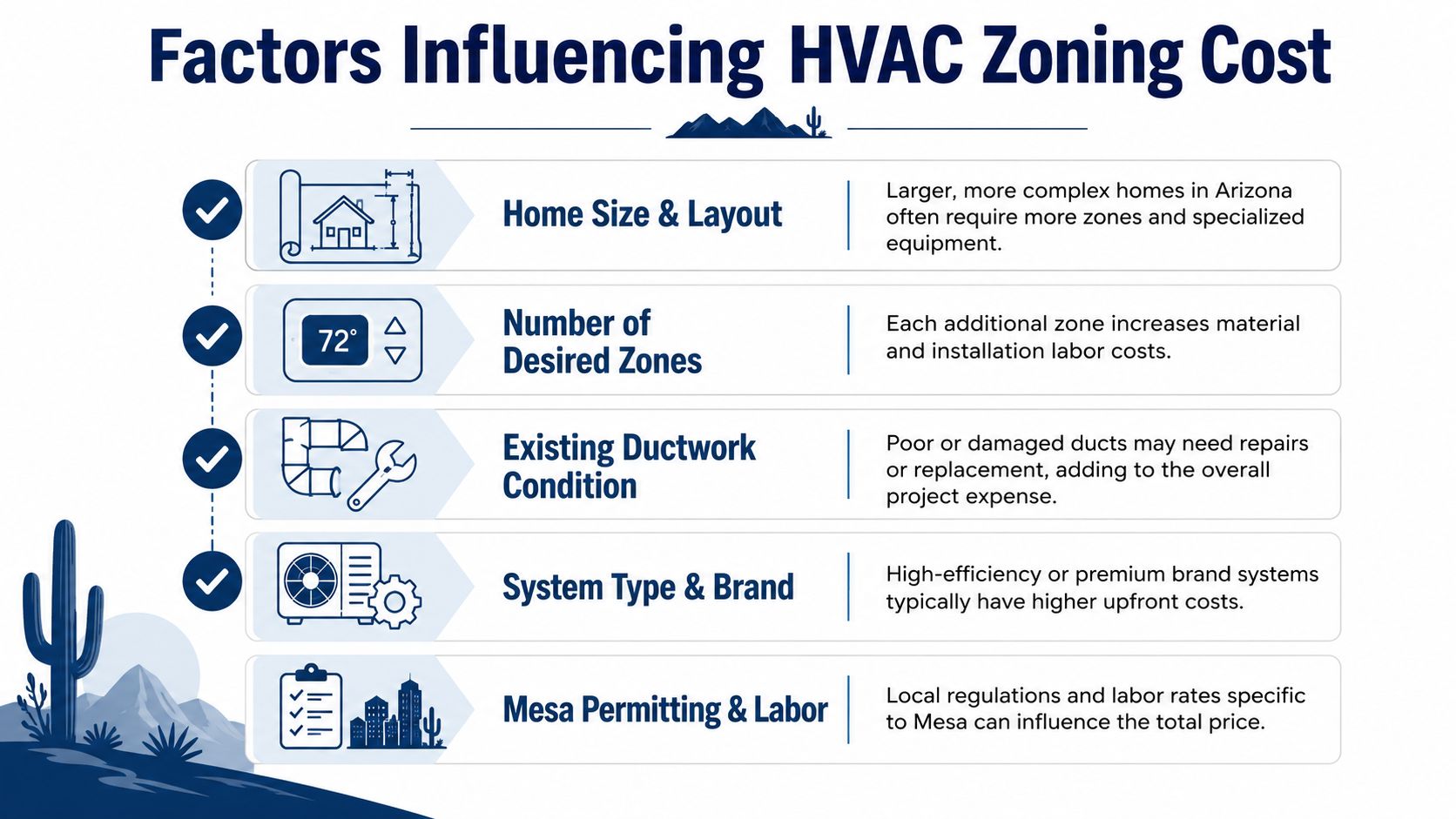
Several variables push an HVAC zoning system cost up or down, and Mesa homes tend to show the same few patterns over and over. The biggest drivers are the number of zones, the condition of the ductwork, access to the system, thermostat choice, and whether the project is a retrofit or part of a full replacement.
What moves the quote in Mesa homes
Home layout is usually the first cost driver. Larger homes, split-level plans, and properties with rooms that get very different sun exposure usually need more zones to feel balanced, and that means more dampers, more controls, and more labor. Existing ductwork comes next, because a clean, accessible duct system is easier to retrofit than one that is cramped, leaky, or partially damaged.
Mesa's climate adds a few local wrinkles. Attics run hot, so labor can slow down when installers are working in tight spaces for long stretches. Dust from monsoon season also exposes weak ductwork and poor sealing, which can turn a zoning job into a larger repair project before the dampers are even installed. That is why many homeowners look at Comfort Experts' duct sealing advice before they commit, since sealing and zoning often affect each other in the same system.
Control complexity is the other big variable. A simple thermostat setup is usually less expensive than a more advanced control package, but the lower-priced option is not always the better fit if the home needs better scheduling or tighter room-by-room control. Ductless systems can also change the cost picture because each room or zone may need its own equipment, which is a very different expense structure from a ducted retrofit.
In older East Valley homes, the cheapest quote is often the one that assumes the fewest surprises. If the ducts are tight, the attic is cramped, or the system needs extra balancing, the final number usually moves.
A quote should be read as a layout-specific estimate, not a generic menu price. In Mesa, the hidden costs often come from permits, electrical work, duct condition, and the extra time needed to make an older system work the way it should.
Installation Process Overview and Permits
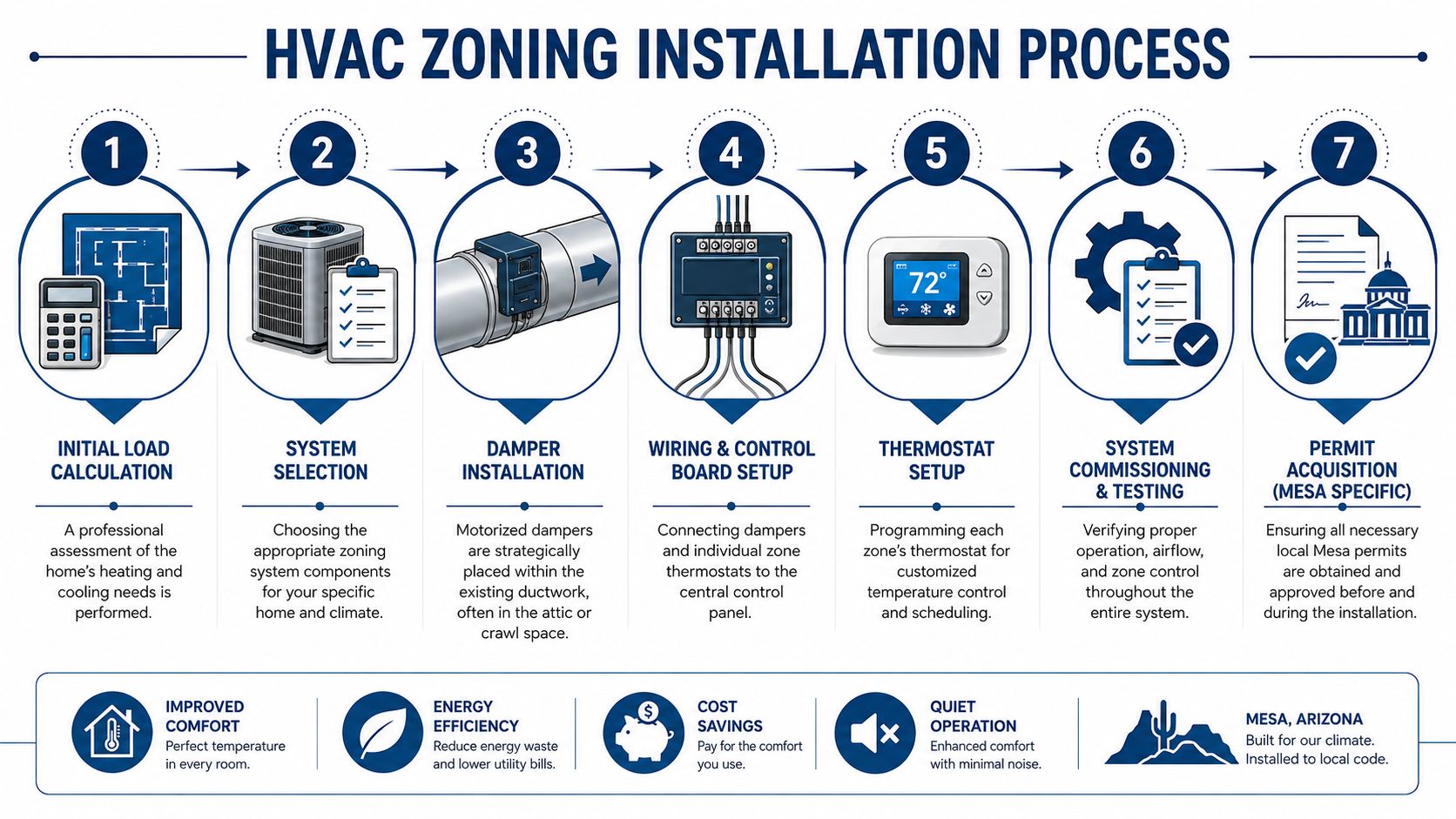
A proper zoning job starts with airflow planning, not with cutting into ducts. The installer should confirm the load and decide where each zone belongs before any dampers go in, because bad zone placement can cause airflow problems that are expensive to correct later.
What the work usually includes
The process usually moves in this order, with each step affecting the next:
- Load calculation and zone mapping. The home's needs are reviewed first so the zones aren't based on guesswork.
- Equipment selection. The control board, dampers, and thermostats have to match the existing HVAC setup.
- Damper installation. Motorized dampers are placed inside the ducts, often in the attic.
- Wiring and control setup. Thermostats, dampers, and the control board are linked.
- Thermostat setup. Each zone gets programmed for how that area is used.
- Commissioning and balancing. Airflow is tested and adjusted so the zones work together.
- Permit approval. Mesa-specific permit steps may be required before or during the job, depending on scope.
Permits matter because zoning sometimes overlaps with electrical or control changes, not just mechanical work. When the project involves new wiring, equipment changes, or larger system integration, the contractor should confirm what Mesa requires before the installation starts. That keeps the job from stalling halfway through or needing a follow-up inspection after the fact.
A good zoning install doesn't feel improvised. The dampers should be accessible, the wiring should be neat, and the final balancing should account for airflow in every zone, not just the hottest room in the house.
Long-Term Savings Maintenance and Financing
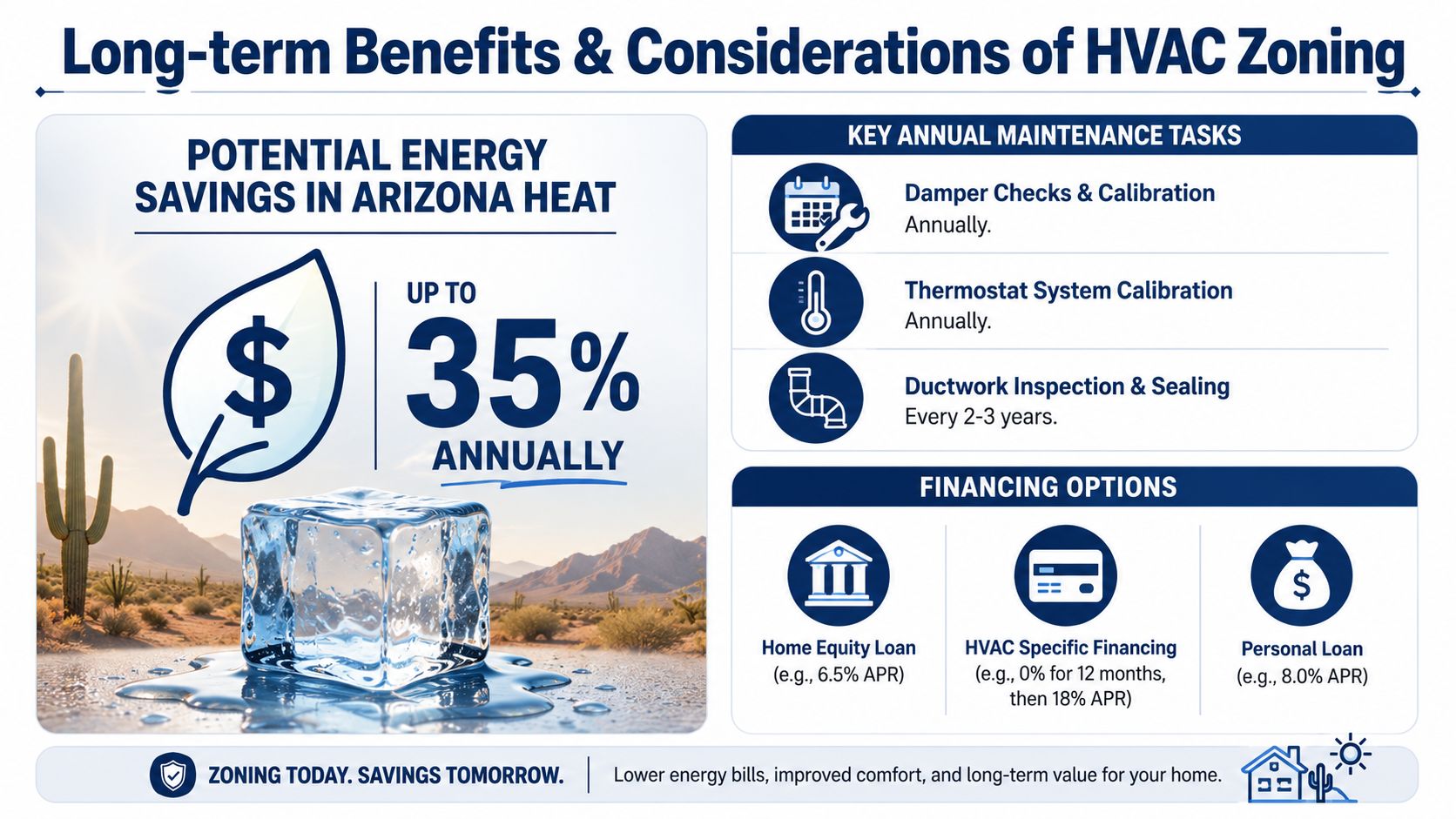
Zoning makes the most sense when the upfront cost and the long-term payoff are looked at together. In Arizona heat, selective conditioning can reduce waste by avoiding full-house cooling when only part of the home needs it, but the actual value depends on whether the system is installed and maintained correctly.
What keeps the value from slipping
The maintenance side is straightforward, but it matters. Dampers should be checked, thermostats should be calibrated, and filters still need attention because a zoned system can't perform well if airflow is restricted. Ductwork should also be inspected and sealed when needed, especially in homes that already show dust problems or uneven room temperatures.
A useful outside resource on household efficiency is save on utility bills in Upstate SC, because the broader lesson is the same even in a different climate, lower waste comes from better system control and better upkeep. In Mesa, that principle is amplified by long cooling seasons and attic heat.
Financing can also affect whether zoning is practical now or later. Some homeowners compare a home equity loan, HVAC-specific financing, or a personal loan based on monthly payment comfort rather than on the sticker price alone. The right choice depends on how soon the home needs better comfort, how old the current AC is, and whether zoning should be installed alongside replacement.
For homeowners who are trying to lower utility stress through local programs, SRP AC rebates for homeowners can be worth reviewing before any final decision. Rebates don't solve a bad equipment match, but they can make a planned upgrade easier to justify.
The important part is to compare zoning as part of the full HVAC picture. If the AC is already struggling, a zoning add-on on top of a failing system may not be the smartest spend. If the system is otherwise solid, zoning can be a practical way to improve comfort room by room without replacing everything.
Conclusion and Next Steps
For most Mesa homeowners, HVAC zoning system cost lands in the low thousands for a simple retrofit and rises as the home adds zones, complexity, or duct challenges. The smartest quotes are the ones that explain the control setup, duct access, and balancing work clearly, because those details decide whether zoning is a good fit or an expensive compromise.
If your home has one or two rooms that never feel right, zoning may be worth a serious look now. If the AC is already aging or the ducts are in poor shape, it makes sense to compare zoning with replacement before spending on controls alone.
A CTA for Comfort Experts. For a local estimate in Mesa or the East Valley, call 480-207-1239 or schedule service to get the zoning, repair, or replacement option that fits your home.