
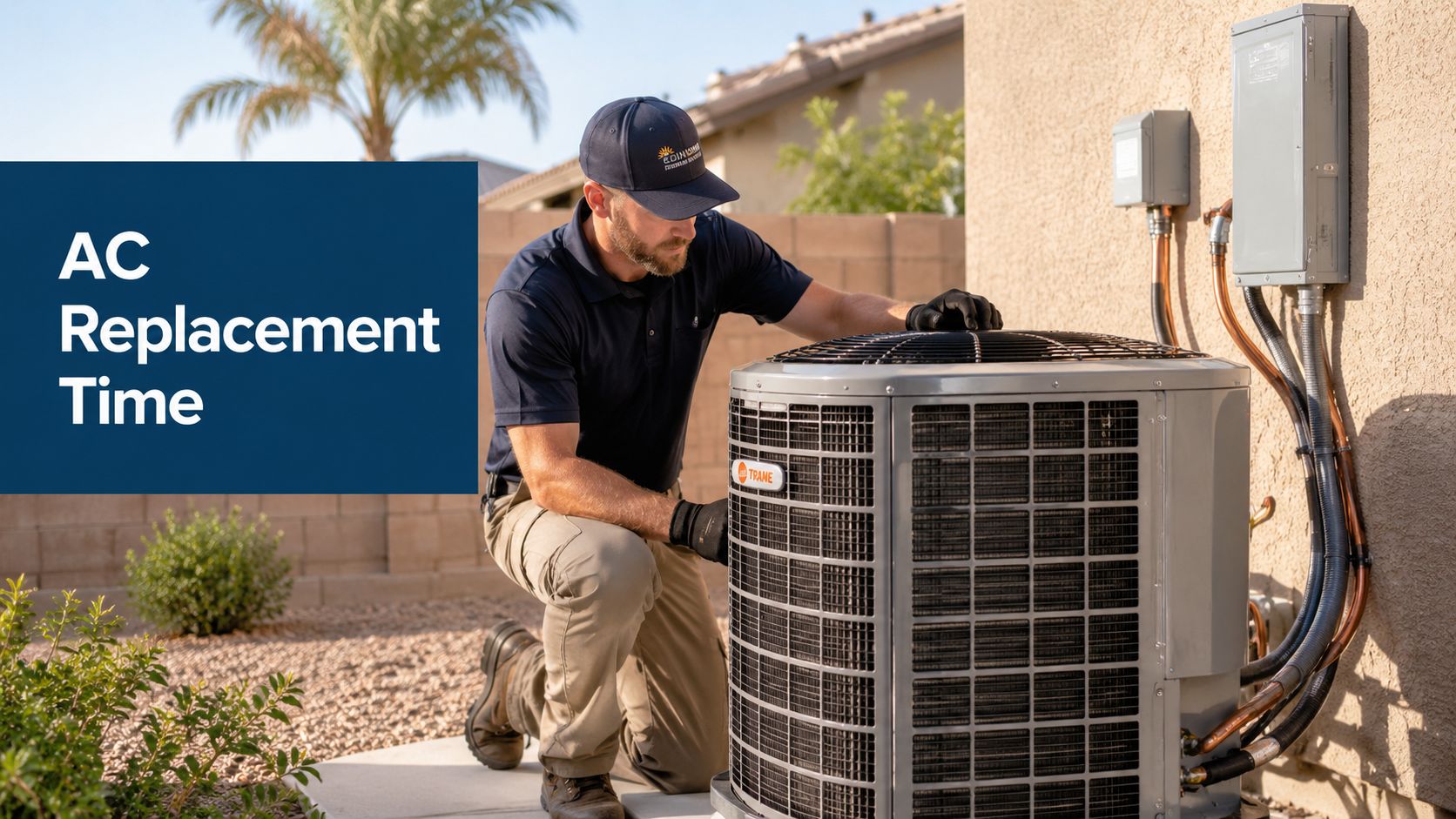
A standard AC-only replacement in Arizona usually takes 4 to 8 hours, and many straightforward jobs finish in a single day. If the project also includes a furnace swap, it often runs 8 to 14 hours, and new ductwork can stretch the work to 2 to 5 days.
That's the part most homeowners want answered first, especially when the house is already hot and the old system has given up. In Mesa and the East Valley, the schedule often depends less on the wrench time and more on access, parts, permits, and how busy the season is.
What to Expect When Your AC Needs Replacement
The common replacement call in Arizona starts the same way every summer. The house stops cooling well, the thermostat keeps calling, and the air from the vents feels weak or warm. For a standard AC-only change-out, the on-site work is usually 4 to 8 hours, and many replacements finish in one working day or less when the home already has suitable ductwork and a like-for-like setup (Arizona AC replacement timing guide).
That answer helps, but it does not describe the whole project. A homeowner may hear “same day” and assume the job is finished in a straight line, yet the timeline depends on access to the equipment, the condition of the electrical disconnect, refrigerant line fit, thermostat wiring, and whether the crew has to make adjustments during installation (Arizona replacement process overview).
What the clock usually includes
A replacement visit normally moves through removal, setting the new equipment, connecting the system, and testing it. Each step can move quickly on a clean swap, but tight attic access, rooftop equipment, or worn parts can slow the job in ways homeowners do not always see from inside the house.
Practical rule: If the project is a true like-for-like replacement, same-day completion is realistic. If the install needs duct changes, furnace work, or electrical updates, the schedule stops looking like a simple swap and starts looking like a project.
Arizona's climate pushes many systems to replacement earlier than homeowners in cooler states expect. Local HVAC guidance commonly puts AC lifespan in the state at 8 to 12 years, while another Arizona source cites a 12 to 15 year U.S. average and Phoenix-area sources often describe 10 to 15 years with good maintenance (Arizona climate and AC lifespan).
For Mesa and the East Valley, that changes the question. It is not only how long the install takes. It is also whether the existing system has enough life left to justify repair, or whether a full replacement is the cleaner move before the next long cooling stretch.
A few details can add time even when the equipment change itself looks straightforward. If the job includes a new thermostat, the crew may also need to handle thermostat installation, confirm wiring compatibility, and make sure the control setup matches the new system. That kind of work is part of a proper replacement, but it is one more reason the clock at the house can run longer than the wrench time alone.
Standard AC Replacement Timeline Breakdown
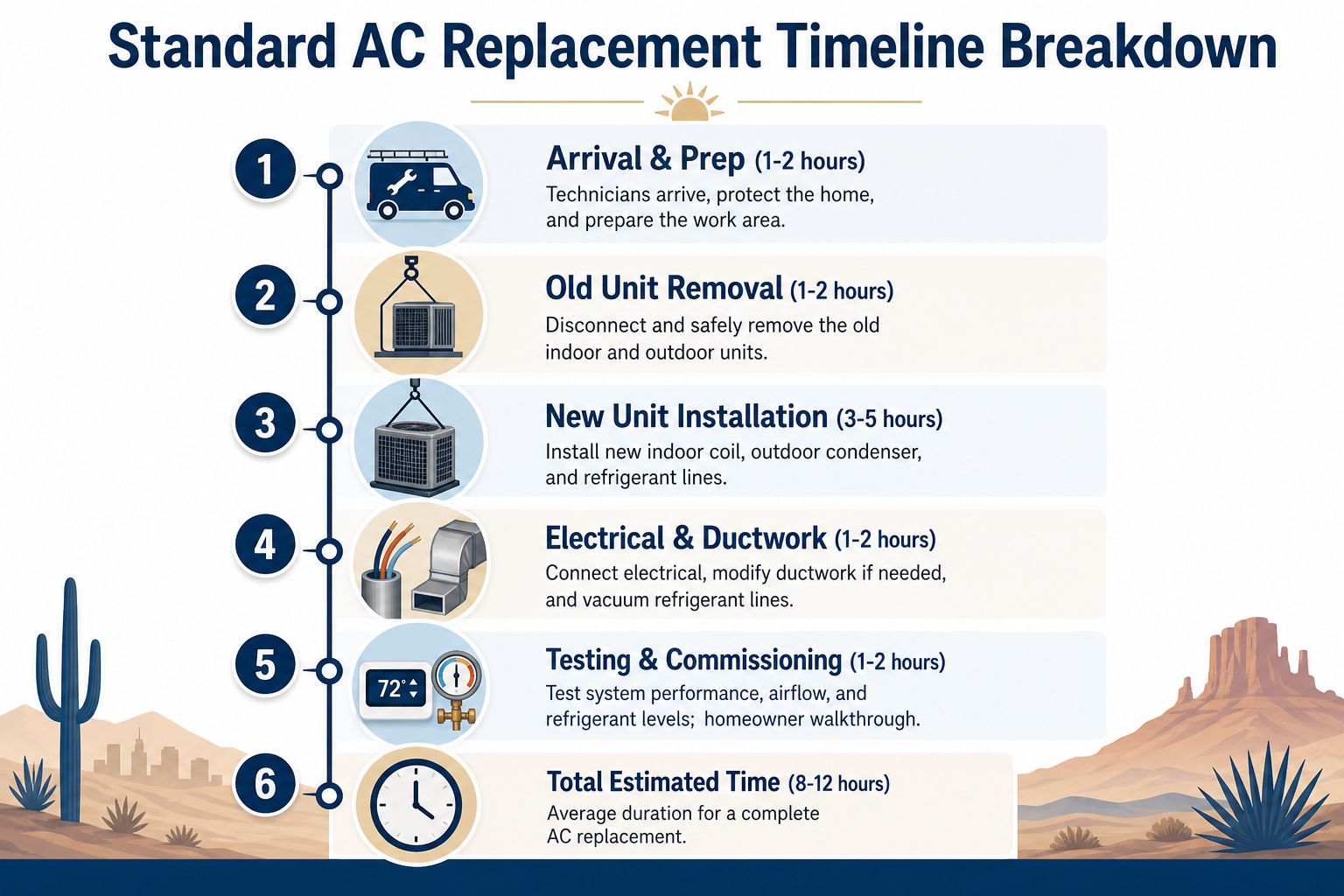
A standard replacement day has a rhythm to it. The crew arrives, protects the work area, removes the old system, sets the new equipment, finishes the connections, and then tests performance before handing the system back over to the homeowner.
How the day usually unfolds
Arrival and prep often takes the first part of the morning. Technicians need room to work around the indoor and outdoor equipment, and that prep time matters because it keeps the rest of the install from turning into a cleanup job.
Old unit removal comes next. The old condenser, coil, and related components come out before the new equipment goes in, and this stage can move quickly unless the system is cramped, corroded, or difficult to access.
New unit installation is the main block of the day. That's where the replacement equipment is set, lined up, and connected so the system can move toward startup.
Electrical and ductwork work can add time when the house needs more than a basic swap. Refrigerant line adjustments, thermostat wiring, or duct transitions all take longer than dropping in a replacement for an existing setup.
Testing and commissioning closes the job. The crew confirms the system runs properly, checks airflow, and verifies the controls respond as expected.
A homeowner usually feels the downtime most during the middle of the day, when the old system is gone and the new one isn't live yet.
For Arizona homes, a standard replacement is usually still a same-day job, but the house can be without cooling for most of the workday. That's why crews move fast on straightforward swaps and why access, staging, and equipment fit matter so much once the project starts.
Project Complexity and Time Requirements
The biggest mistake in planning AC replacement is treating every job like the same job. A clean AC-only changeout is one thing, but the timeline changes fast when the work includes a furnace, duct transitions, rooftop access, or more than one system.
| Project Type | Typical Duration | Key Factors |
|---|---|---|
| AC-only change-out | 4 to 8 hours | Straightforward swap, existing ductwork, minimal adaptation |
| AC and furnace replacement | 8 to 14 hours | More equipment, more connections, more testing |
| Ductwork modifications | 2 to 5 days | Layout changes, extra labor, access limits, cleanup |
| Complex Phoenix-area replacements | 8 to 12+ hours | Line-set replacement, rooftop access, electrical upgrades, permitting |
| Multi-system homes | Longer than a single-day swap | More than one unit, more staging, more startup checks |
The simple benchmark is the AC-only swap. Once the project includes a furnace, many jobs move into a longer install window because the crew is handling more than one major piece of equipment. That's also why homeowners comparing replacement often end up looking at more than one type of service, including a furnace cleaning timeline guide, when the heat side of the system is part of the same decision.
Why the scope changes the clock
A duct modification is rarely a quick add-on. Once ducts need to be changed, sealed, moved, or adapted, the crew has to make the system fit the house instead of just replacing old metal with new metal.
Rooftop and packaged units also change the schedule because access isn't as easy as walking out to a side yard condenser. For homeowners comparing new rooftop package unit options, the install usually demands more staging and more time spent getting the equipment in place safely.
Practical rule: The more the new system has to conform to the house, the longer the replacement takes.
On paper, a replacement may still be “just one day.” In practice, the home's layout decides whether the crew is making a straightforward swap or solving a fit problem while the house sits warm.
Arizona-Specific Factors That Extend Installation Time
Arizona changes the timeline in ways that don't show up in generic HVAC advice. Heat, dust, older construction, and rooftop equipment all push the job beyond the neat version people see in national articles.
What Mesa homes tend to throw at a crew
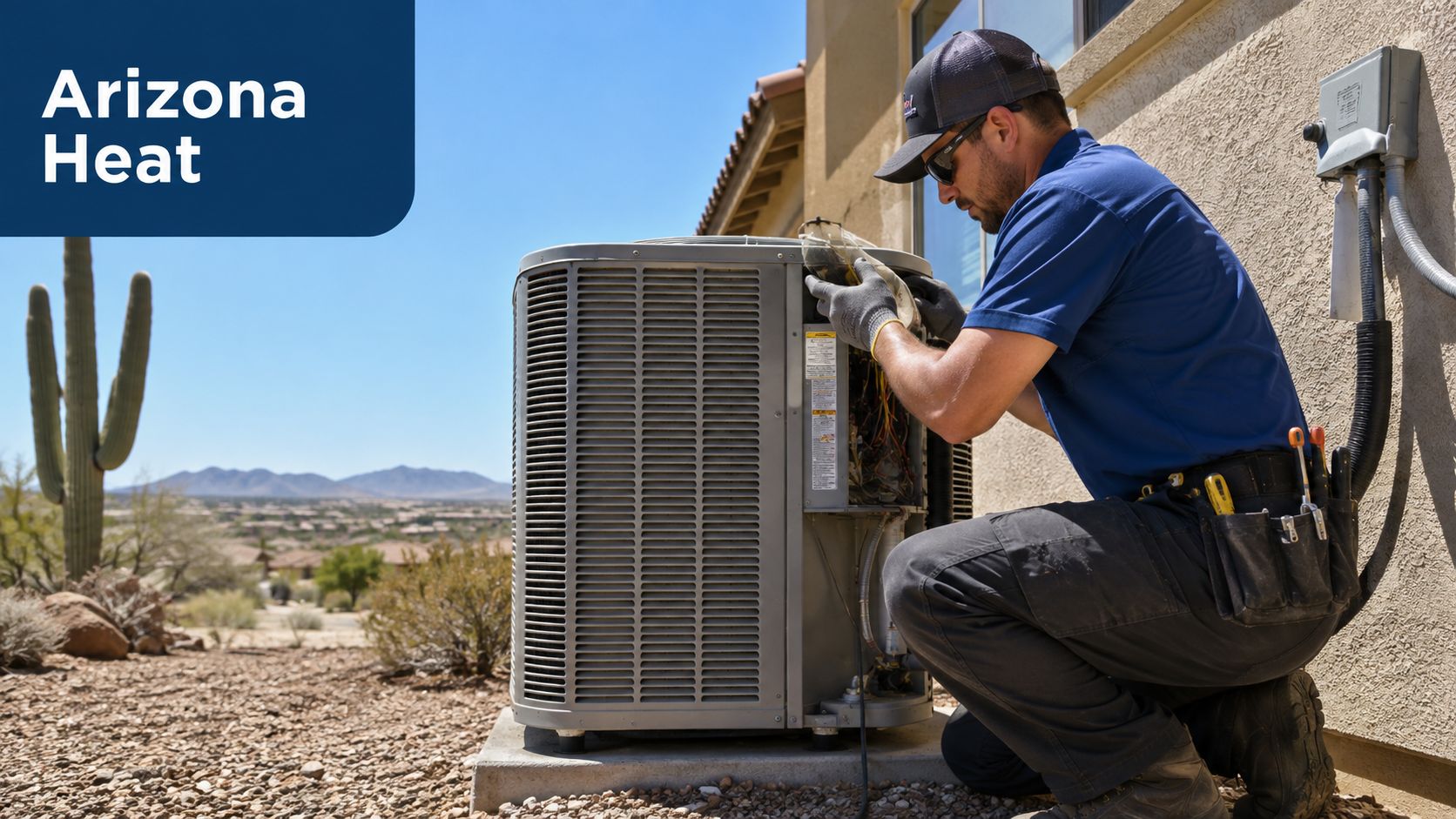
In newer East Valley homes, the replacement is often straightforward because the system was built around a clear equipment path and accessible ducting. In older Mesa neighborhoods, the story changes. Access can be tighter, parts can be worn, and the crew may need to work around aging supports, dated wiring layouts, or equipment that's had years of desert dust and heat cycling.
The climate also affects the work schedule. Arizona systems can run hard through the cooling season, and crews have to work through extreme conditions while keeping the installation safe and clean. That's one reason a replacement that looks routine on paper may still take longer.
Monsoon season creates another layer of unpredictability. Rain, wind, and dust don't just make a site messier, they can affect access, staging, and how confidently a crew can finish outdoor work on time.
For homeowners focused on indoor air quality while replacing older equipment, it can also make sense to review HVAC air purifiers as part of the broader comfort plan, especially in dusty Arizona homes where the new system is expected to work harder than a unit in a milder climate.
The local decision points that matter
Rooftop access slows some installs because equipment has to be moved, positioned, and connected in a less forgiving workspace.
Dust and corrosion can turn a replacement into a correction job, especially when the old system has lived through years of desert exposure.
Peak summer scheduling matters just as much as the work itself. When systems fail during hot stretches, homeowners aren't only waiting for installation time, they're also waiting for an available crew slot.
For planning around replacement timing in a hot market, the Comfort Experts AC buying guide is a useful local read because timing the purchase matters more here than it does in cooler climates.
How to Prepare and Prevent Installation Delays
A homeowner can't control the weather, but there's plenty that can be handled before the crew arrives. The smoother the site, the less likely the project is to drift from a same-day replacement into a longer, messier job.
Five things that save time
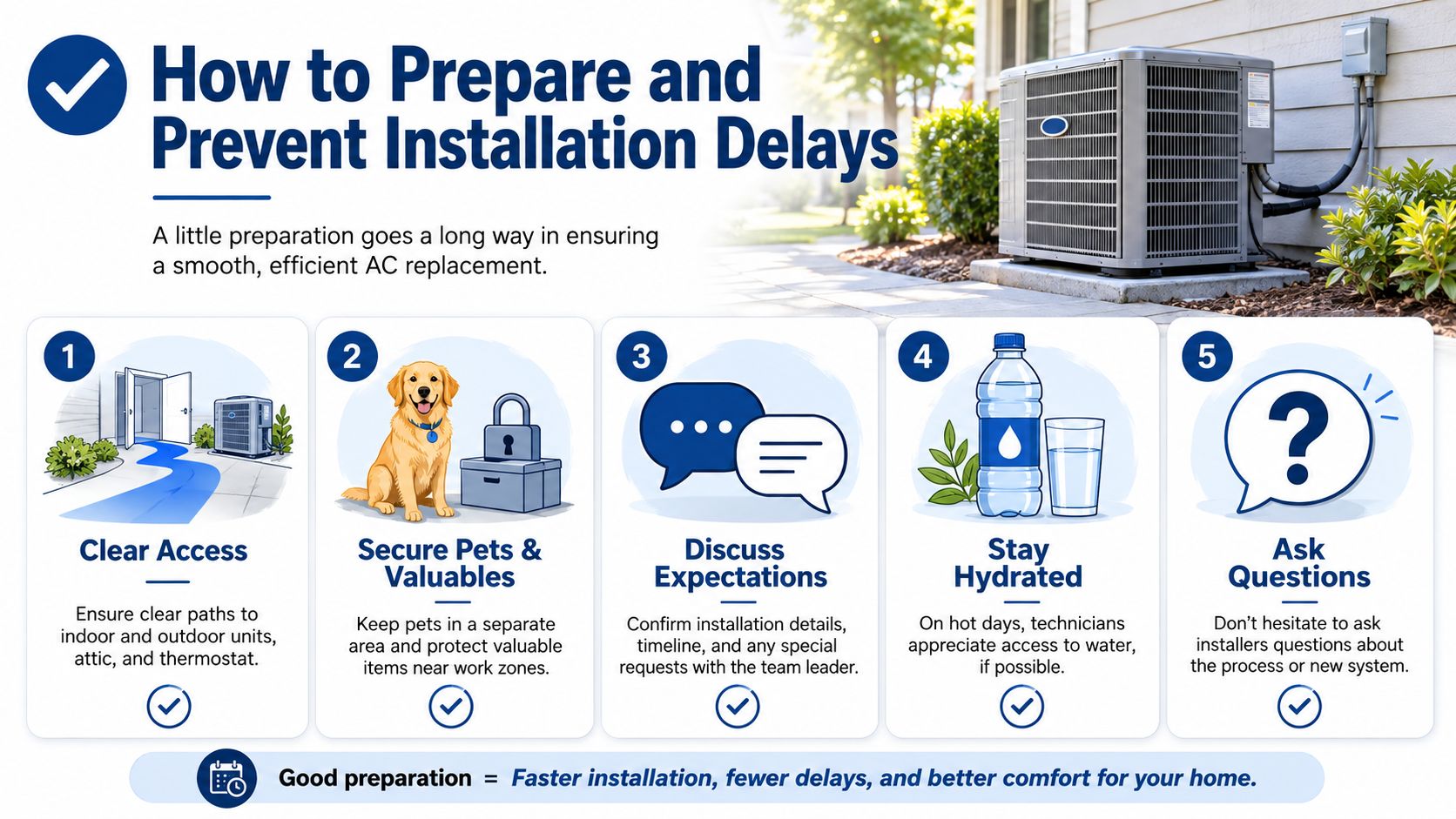
- Clear Access: Make sure the path to the indoor unit, outdoor unit, attic, and thermostat isn't blocked by boxes, furniture, or stored items.
- Secure Pets and Valuables: Keep pets away from the work zone and move breakables before the crew starts.
- Confirm the Plan: Review the equipment choice, installation details, and any special requests with the team leader before the appointment.
- Keep the Electrical Panel Reachable: The crew may need quick access during startup and testing.
- Ask About Permits Early: If the job needs them, it's better to know before installation day than after the equipment is on the truck.
Those basics sound small, but they keep technicians from spending the first hour moving obstacles instead of installing equipment. That matters more in Arizona, where the house may already be hot and the crew needs to keep the work moving.
Clear access is one of the easiest ways to protect a same-day finish.
For homeowners comparing proposals, the AC replacement guide for Arizona homes is a useful way to think through what should be included before installation starts.
A final practical point is scheduling. When the install is planned well in advance, the crew can confirm the system, the equipment path, and the expectations before anyone is standing in a hot hallway waiting on a missing part.
Understanding Total Project Duration Versus Installation Time
A lot of online content gives the on-site install time and stops there. That misses the part homeowners feel, which is the gap between the first phone call and the day the new system is cooling the house again.
The actual physical replacement may be 4 to 8 hours on a basic job, but the full project can take longer once research, decisions, scheduling, permits, and part ordering are added in. Trane's homeowner guidance notes that the install itself may take 4 to 8 hours, while the full process can take a few days up to two weeks once those front-end and back-end steps are included (Trane install timing overview).
Where the extra time goes
Decision time comes first. Homeowners need to compare equipment, understand the scope, and decide whether the existing system is worth repairing or replacing.
Scheduling pressure hits hardest in the summer. When systems fail during peak heat, the wait for an appointment can feel longer than the installation itself.
Permits and inspections can add back-end time on certain jobs, especially when the project isn't a simple swap.
Ordering equipment can also slow things down if the selected unit, parts, or accessories aren't already on hand.
That's why the timeline should be framed as two different things. The install day is the wrench time. The project duration is everything from first estimate to final startup.
For readers comparing options and budget impact, the Comfort Experts pricing guide is worth reviewing alongside any estimate because a clean price comparison only makes sense when the scope is clear.
Practical rule: If a homeowner wants the shortest path to cold air, the fastest route is a decision made early, with equipment selected before the old system fails.
In Arizona, that distinction matters more than in milder markets. Summer demand, monsoon timing, and older housing stock all add friction before and after the crew is on site, so the best plan is the one that accounts for both the install day and the lead-up to it.
Planning Your AC Replacement with Comfort Experts
Mesa and East Valley homeowners get the most accurate timeline when the contractor looks at the home, the equipment path, and the scope before promising a date. A basic swap may be quick, but rooftop units, duct changes, and peak-season scheduling can change the plan fast.
Comfort Experts handles AC replacement and can help homeowners compare the project against a repair or full swap, while a separate compare AC replacement prices tool can be useful for a rough outside comparison. The smarter next step is still a local assessment, because Arizona homes rarely fit neat national averages.
Call 480-207-1239 or use schedule service to get a replacement timeline that fits the house, the equipment, and the season. For a local team that works in Mesa and the East Valley every day, start with Comfort Experts.