
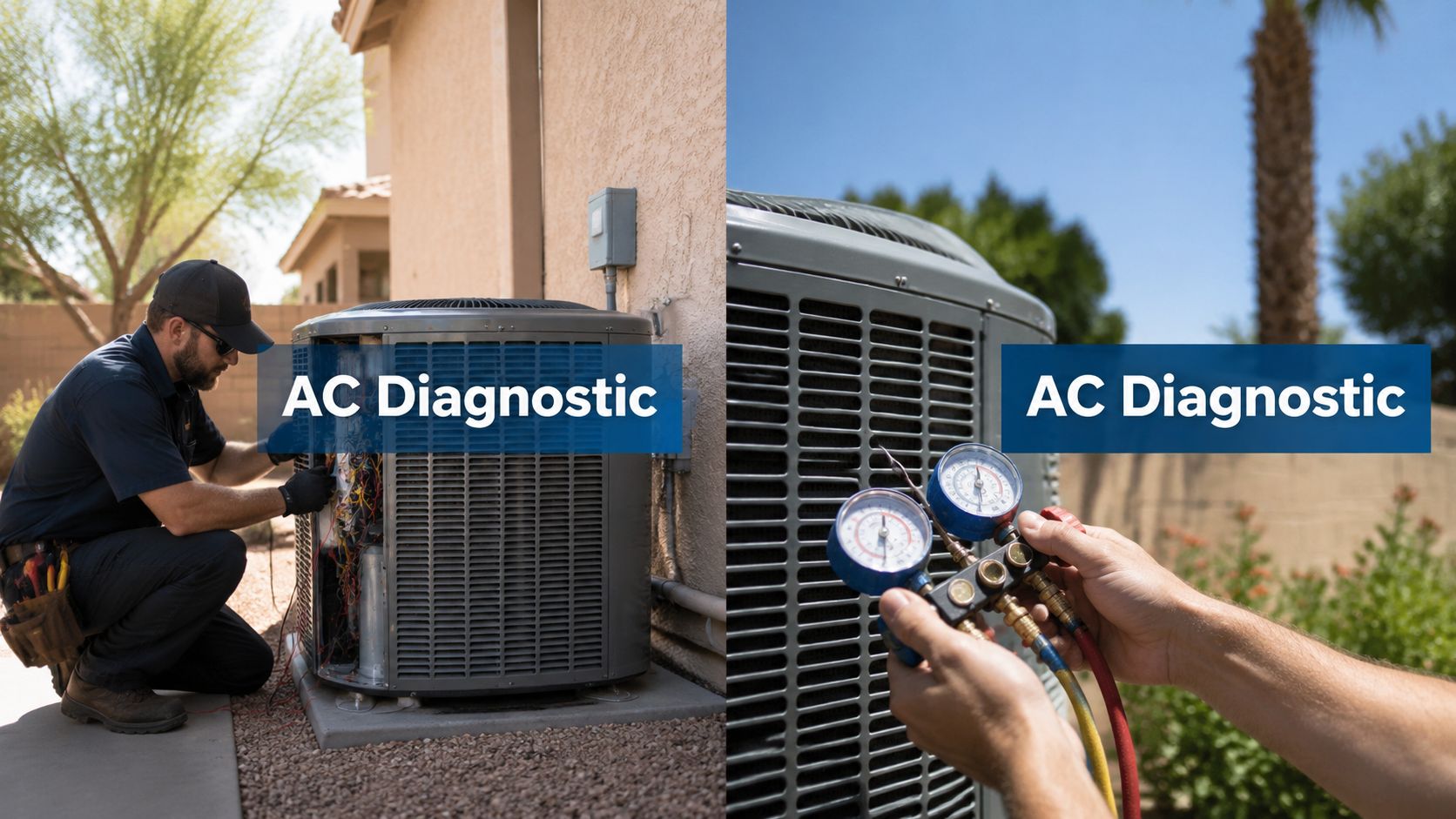
A Mesa afternoon can turn brutal fast. When the AC starts blowing warm air, short-cycling, or running without ever pulling the house down, most homeowners want the same answer, wait and hope, add refrigerant, or call somebody who can find the actual problem.
The Moment Your Mesa AC Acts Up
A good AC diagnostic visit is the step between suspicion and a real plan. It's not a guess, and it's not a sales pitch. The technician should leave with a clear read on what's failing, what's working, and what should happen next, whether that means a quick repair, a more involved fix, or a replacement conversation later on.
In Mesa and the East Valley, that matters because heat doesn't give a system much slack. When the house is already fighting afternoon sun, dust, and long run times, a vague “we'll keep an eye on it” answer usually burns time and comfort.
Practical rule: if the technician can't explain the findings in plain language, the visit isn't finished yet.
For homeowners comparing symptoms before the truck shows up, Comfort Experts Mesa HVAC tips can help spot whether the issue looks like airflow, control, or mechanical trouble, Comfort Experts Mesa HVAC tips. The rest of this guide follows the visit chronologically, from arrival to the final recommendation, so the process feels less mysterious when the system is acting up in real Arizona heat.
Arrival, Identification, and the Homeowner Interview
The first few minutes matter more than many people expect. A solid technician starts by confirming the address, checking the equipment model, and asking whether the system is under warranty or has recent service history. That early context shapes everything that follows.
The questions that help narrow the problem
A useful interview usually covers when the issue began, what changed before it started, and whether the problem is constant or intermittent. A bedroom that stays hot while the hallway feels fine points in a different direction than a unit that won't start at all. The homeowner should also mention recent repairs, odd smells, buzzing sounds, breaker trips, and whether pets, locked gates, or rooftop access will affect the outdoor unit.
The thermostat deserves attention right away. If the hallway sensor says one thing and the bedrooms say another, the technician needs to know that before touching gauges or parts. That difference can come from airflow, zoning, control logic, or room balance, not just the AC box itself.
A homeowner who has the install date, recent utility bills, and any notes about the problem is already helping the diagnostic move faster. Those details don't fix the system, but they keep the visit focused on the right questions instead of a random parts chase.
A useful diagnostic starts with the story of the failure, not the wrench.
That conversation also helps the technician decide whether the issue sounds like something visible, something electrical, or something buried deeper in the refrigeration circuit. By the time tools come out, there should already be a short list of likely causes.
Visual and Safety Inspection of the System
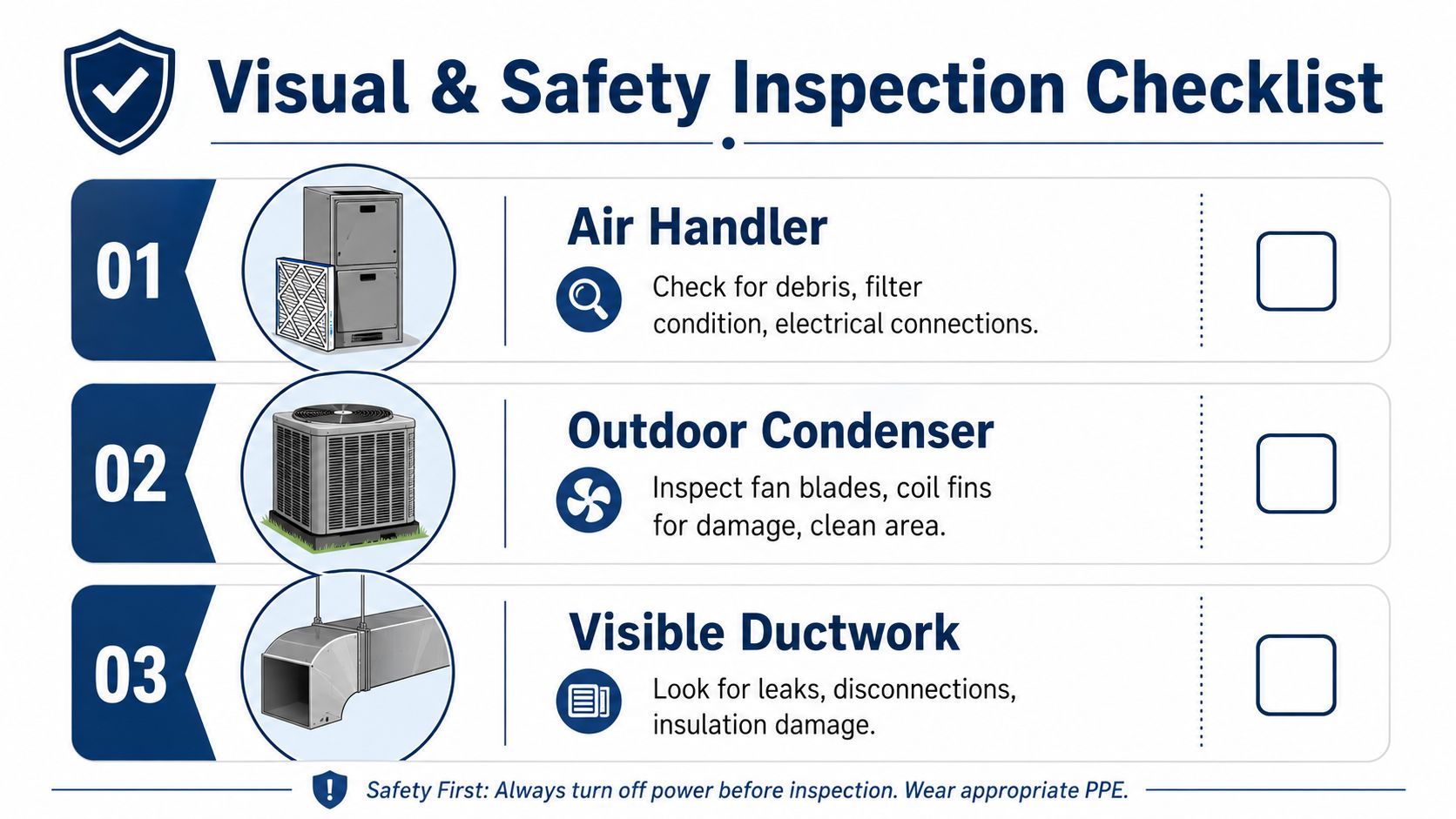
The visual pass tells a lot before any meter leads or gauges come out. In Mesa, where dust and seasonal debris build up fast, a thorough look often reveals the obvious culprit first, which saves time and prevents unnecessary testing.
What gets checked inside and outside
Inside, the technician looks at the air handler or furnace cabinet, the filter area, the drain pan, and any visible duct connections. Standing water, clogged condensate lines, rust, or loose panels can explain complaints that feel like a bigger system failure. Outside, the condenser gets the same attention, including coil condition, fan operation, cabinet damage, and the clear space around the unit.
A clean outdoor setup matters more than people think. When the coil is packed with dirt or the area around it is crowded, the system has a harder time dumping heat, especially after a stretch of desert dust or monsoon grime. The technician also looks for signs of electrical scorching, pitted contactors, bulging capacitors, cracked belts, or leak evidence around fittings and lines.
Safety checks before testing
A careful visit also checks the disconnect, breaker condition, and any visible damage that could make the system unsafe to energize. If the equipment includes a heat pump or gas heating components, the tech should stay alert to those pieces too, even during a cooling call. Safety comes first, because a fault that looks minor from the porch can still be risky once power is applied.
That visual stage often tells the story faster than a gauge set can. A clogged drain, damaged contactor, or dirty coil doesn't need a guess, it needs a documented repair path.
If the home just needs a AC tune-up, the diagnostic and maintenance conversation often overlap, AC tune-up. The difference is simple, maintenance aims to keep the system in shape, while diagnostics are about finding the exact reason it isn't performing right.
Live System Tests and What the Numbers Mean
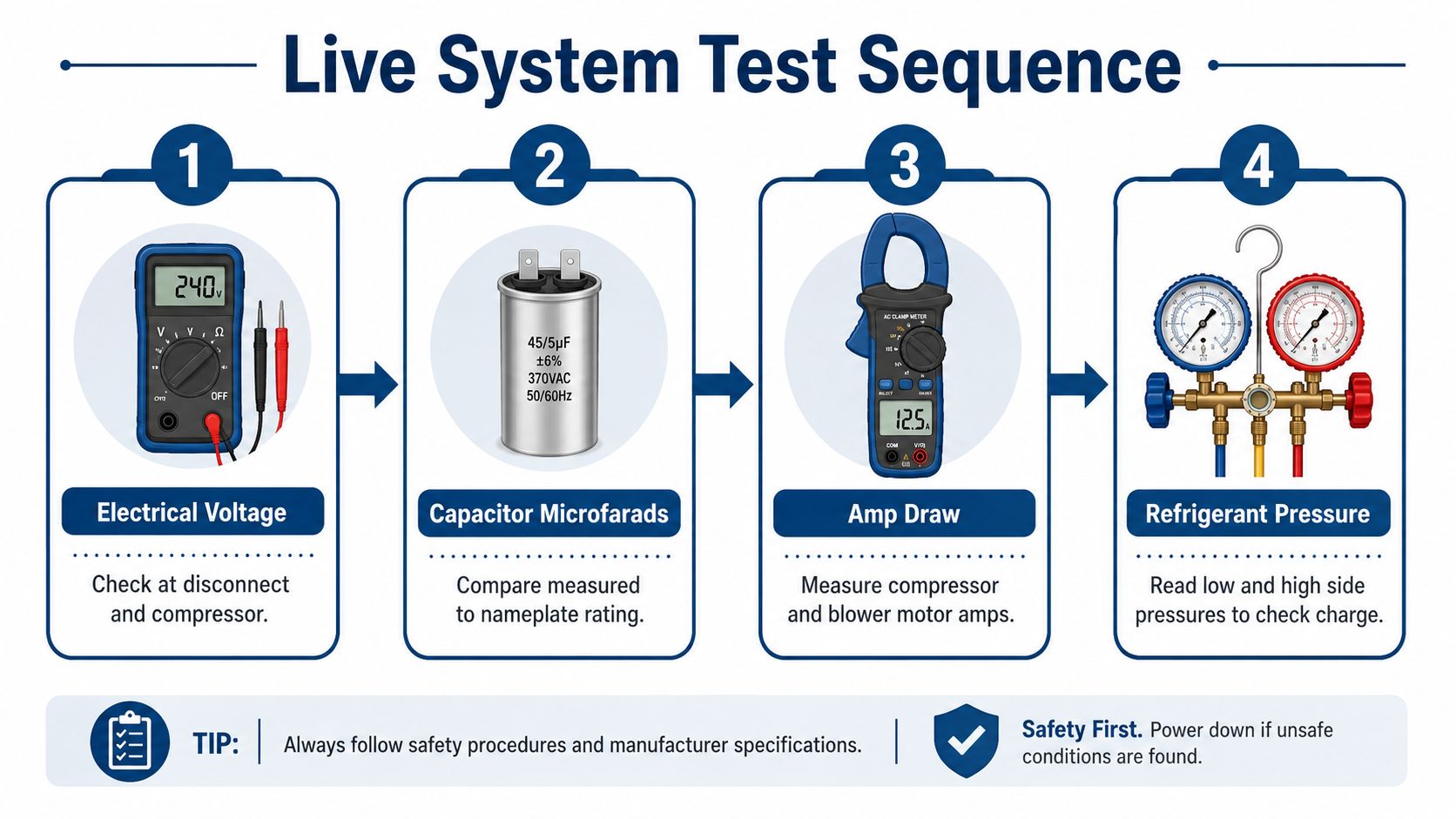
Once the unit is running, the technician moves from observation to measurement. That's the part homeowners usually want most, because it turns “something's wrong” into readings that can be explained.
Electrical checks
The first live check is usually electrical. The technician verifies voltage at the disconnect and at the compressor, then checks the capacitor and amp draw on the compressor and blower motor against the equipment nameplate. If voltage is unstable or a capacitor is weak, the system may struggle to start, run hot, or trip out under load.
Refrigerant checks
Next comes refrigerant performance under real operating conditions. The tech reads suction and head pressure, then interprets superheat and subcooling based on the equipment, not a generic guess. That's where a lot of bad advice shows up. Low suction pressure plus low superheat doesn't automatically mean “low charge,” it can also point to airflow restriction or a metering issue.
A good diagnostic treats low refrigerant as a symptom that needs a cause. The technician should inspect for leaks, look for leak clues, and confirm whether the charge is off because refrigerant escaped or because the system is operating outside its expected range. The goal is to restore the system to the manufacturer's specified charge, not guess and top off blindly. For a deeper look at the troubleshooting sequence, see this quick AC problem checks Phoenix guide, quick AC problem checks Phoenix.
Airflow and control checks
Airflow matters just as much as the refrigerant side. The technician compares supply and return temperatures, looks at filter condition, and checks total external static pressure against the manufacturer's allowable range. High static pressure often means the system is being starved for air by a dirty filter, dirty coil, duct restriction, or another bottleneck.
Thermostat and control behavior gets tested at the same time. The technician watches how the system responds to a call for cooling, whether it stages properly, and whether it delays, short-cycles, or refuses to hold steady. The homeowner should be shown the readings, not just told “it's fine” or “it's bad.”
If the numbers aren't shown, the diagnosis is incomplete.
The best diagnostic visits connect those readings into a simple cause-and-effect story. That's the difference between replacing a part that only looks suspicious and fixing the part that's holding the whole system back.
Timing, Diagnostic Fees, and What Is Included
Mesa homeowners usually want two things at this point, a realistic time frame and a fair fee. In practical terms, emergency diagnostic visits are often finished in about 45 to 60 minutes, while routine maintenance-style appointments commonly take 60 to 90 minutes depending on access, grime, and how stubborn the fault is. Those ranges come from the way a system has to be checked in real time, not from a stopwatch at the front door. Az Trade Masters notes the typical diagnostic sequence and timing.
On pricing, diagnostic service is a real, paid step before repair starts. Comfort Experts says its diagnostic visit is $69.99, positions that fee on the lower end of industry pricing, and waives it if the customer proceeds with the repair. The company also schedules arrivals within a 4-hour window and operates Monday through Saturday from 7:00 AM to 7:00 PM. For context, ConsumerAffairs places legitimate HVAC diagnostic or dispatch fees in the $75 to $200 range, which shows that the inspection itself is commonly treated as a separate service across the U.S. Comfort Experts cooling repair information makes that structure clear, and the battery-optimised aircon guide by HighFlow Energy is a useful comparison point for homeowners thinking about operating cost in general terms.
A fair fee should cover the visit, the measurements, the written findings, and the recommendation. What it should not hide is the actual repair scope. Vague flat-rate quotes without measurements are a red flag, because they skip the part where the technician proves what failed.
For homeowners comparing the inspection fee with the likely repair range, the AC repair cost guide Mesa is a practical place to start, AC repair cost guide Mesa. If the numbers on the bill never connect to the numbers taken on the equipment, the estimate deserves a second look.
From Findings to a Real Recommendation
A good diagnostic ends in buckets, not confusion. The technician should sort the findings into immediate fixes, planned repairs, and replacement conversations, then explain why each one fits the system's condition.
Immediate fixes
Some problems can be handled the same visit if the part is available and the rest of the system is healthy. A bad contactor, failed capacitor, or clogged condensate line usually falls into this category. These are the kind of problems where the homeowner wants the AC back fast, and the diagnostic should point straight at the part instead of circling around it.
Repairs worth scheduling
Other findings need a follow-up repair because they take more time, parts, or testing. Leak search and proper recharge work, blower motor replacement, and duct sealing belong here. Those repairs solve the root issue better than a temporary patch, especially when the home has uneven rooms or the system has been under strain all summer.
Replacement conversations
Replacement enters the conversation when age, repeated failures, or comfort problems keep showing up even after the obvious fixes are done. Arizona heat is tough on roof-mounted package units, older duct systems, and equipment that has already spent too many summers under heavy load. That doesn't mean every older unit needs to be replaced, but it does mean the technician should be honest about whether another repair is a smart use of money or just another band-aid.
For a grounded comparison, the AC repair vs replacement discussion helps frame the choice without pushing a new system that isn't needed, AC repair vs replacement. In Mesa, that talk should include the home's duct condition, rooftop exposure, and whether the system is still cooling evenly after the fix.
Comfort Experts also handles the repair side directly, including AC repair in Mesa, AC repair in Mesa, which makes it easier to move from diagnosis to action when the fix is straightforward.
How to Prepare and What to Ask Before the Tech Leaves
A little preparation makes the visit smoother. Clear a path to the indoor air handler and the outdoor condenser, keep pets secured, and make sure the thermostat is easy to reach. Recent APS bills, the install date if it's known, and a short note about when the problem started all help the technician avoid missing a clue.

Questions worth asking before the truck pulls away
- What failed first? That answer tells the homeowner whether the symptom matches the cause.
- What was measured? Readings should back up the recommendation.
- Is this a repair or a stopgap? Some fixes buy time, others solve the problem.
- What's covered on parts and labor? If the company offers a warranty, the homeowner should know what it applies to.
- Would the same technician handle follow-up? Continuity matters when a fault is intermittent or has multiple contributors.
If the system failed during monsoon season or a heat wave, ask about same-day service and after-hours help before the visit ends. It also makes sense to confirm that the company is licensed through the Arizona Registrar of Contractors before any work starts, because the paperwork should be as solid as the repair.
For Mesa and the East Valley, the next step is simple when the AC isn't keeping up. Call 480-207-1239 or use schedule service to set up a diagnostic visit with Comfort Experts. A clear inspection, honest findings, and a real recommendation beat guessing every time when the Arizona heat won't wait.