

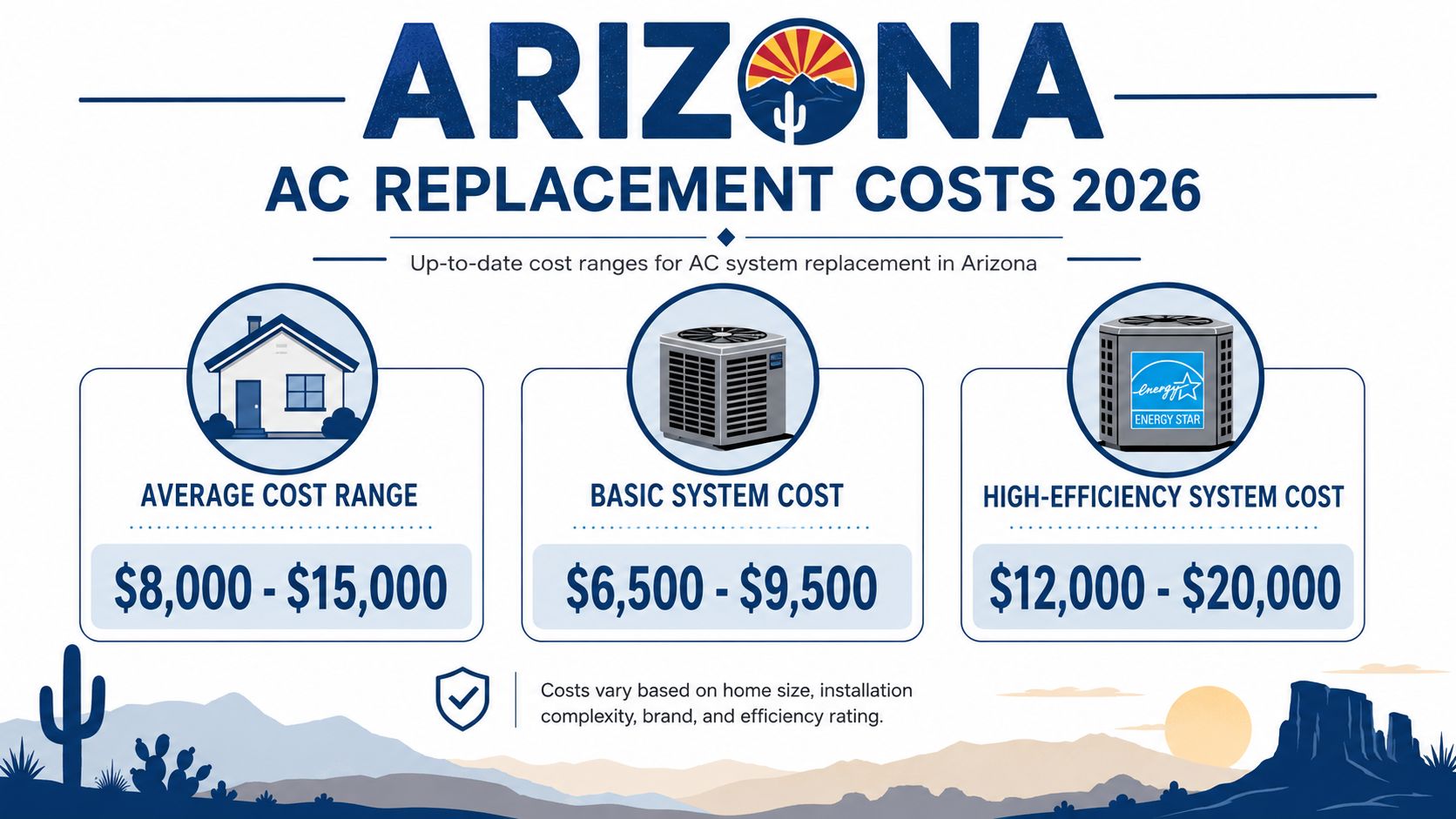
In Arizona, a full AC replacement in 2026 typically runs $6,500 to $15,000+, and higher-efficiency or larger systems can go past $18,000. If a home in Mesa, Gilbert, Chandler, or the rest of the East Valley has aging ductwork, airflow problems, or a more complicated layout, the complete all-in price usually depends on more than the outdoor unit sitting on the side of the house.
That's the part many cost articles skip. A homeowner often starts by asking about the box outside, but the final number usually comes from heat load, duct condition, installation access, code requirements, and whether the old system can support the replacement being quoted.
The Bottom Line on Arizona AC Replacement Costs in 2026
A Mesa homeowner usually starts here. The AC quits in June, the house is climbing past 85 inside, and the first question is simple: what does a real replacement cost, installed and ready for an Arizona summer?
A workable budget for a full AC replacement in 2026 is $6,500 to $15,000+. Larger homes, higher-efficiency equipment, or jobs with added duct and electrical work can push past $18,000, according to Arizona AC pricing benchmarks for 2026. Those prices often run higher than broad national averages because Arizona systems work harder, longer, and under tougher conditions.
Why Arizona prices run higher
In Mesa and the East Valley, the equipment is only part of the bill. The all-in cost usually changes when an older home has leaky attic ducts, undersized returns, a weak electrical setup, or a system that was never sized properly for the home in the first place.
That matters here more than it does in milder markets. A unit can survive a bad install for a while in a cooler climate. In Arizona, poor airflow, attic heat, and long runtime expose those problems fast.
Monsoon season adds another layer. Contractors may recommend a new pad, tie-downs, drain updates, or electrical cleanup when the existing setup looks questionable. Those items are not glamorous, but they can keep a new system from turning into a callback after the first hard storm.
A low quote can miss all of that.
Estimated AC replacement cost in Mesa and the East Valley by system size
System size still affects price, but tonnage should never be picked from square footage alone. Sun exposure, insulation levels, window load, ceiling height, and duct condition all change what the house needs.
| System Size (Tons) | Typical Home Size (sq. ft.) | Estimated Cost Range |
|---|---|---|
| 2.5 tons | Smaller to mid-size homes | $7,500 to $12,000 |
| 3.0 tons | Mid-size homes | $8,000 to $13,500 |
For a closer local reference, see AC unit replacement costs for homeowners. Use those numbers as planning ranges, not final pricing. A 3-ton system in a well-sealed single-story home is one job. The same nominal size in an older Mesa house with poor attic ducts and limited return air can cost much more to replace correctly.
What homeowners should budget for
Most East Valley replacement jobs fall into one of three buckets:
- Lower-range replacement: Straight equipment changeout, decent existing ductwork, standard access, and fewer code or electrical corrections.
- Middle-range all-in project: The most common result. This usually includes normal installation materials, labor, startup work, and a few house-specific fixes that show up during inspection.
- Higher-range project: Larger homes, two-story layouts, duct repairs, return-air upgrades, harder access, or better efficiency equipment built for long Arizona cooling seasons.
The practical takeaway is simple. Budget for the full job, not just the condenser and coil. In Arizona, the final number often comes from the house around the unit as much as the unit itself.
Deconstructing Your AC Replacement Quote
A Mesa homeowner gets three AC replacement quotes for the same house and sees a spread of several thousand dollars. Usually, the difference is not magic pricing. It is scope.
Equipment is only one part of the number
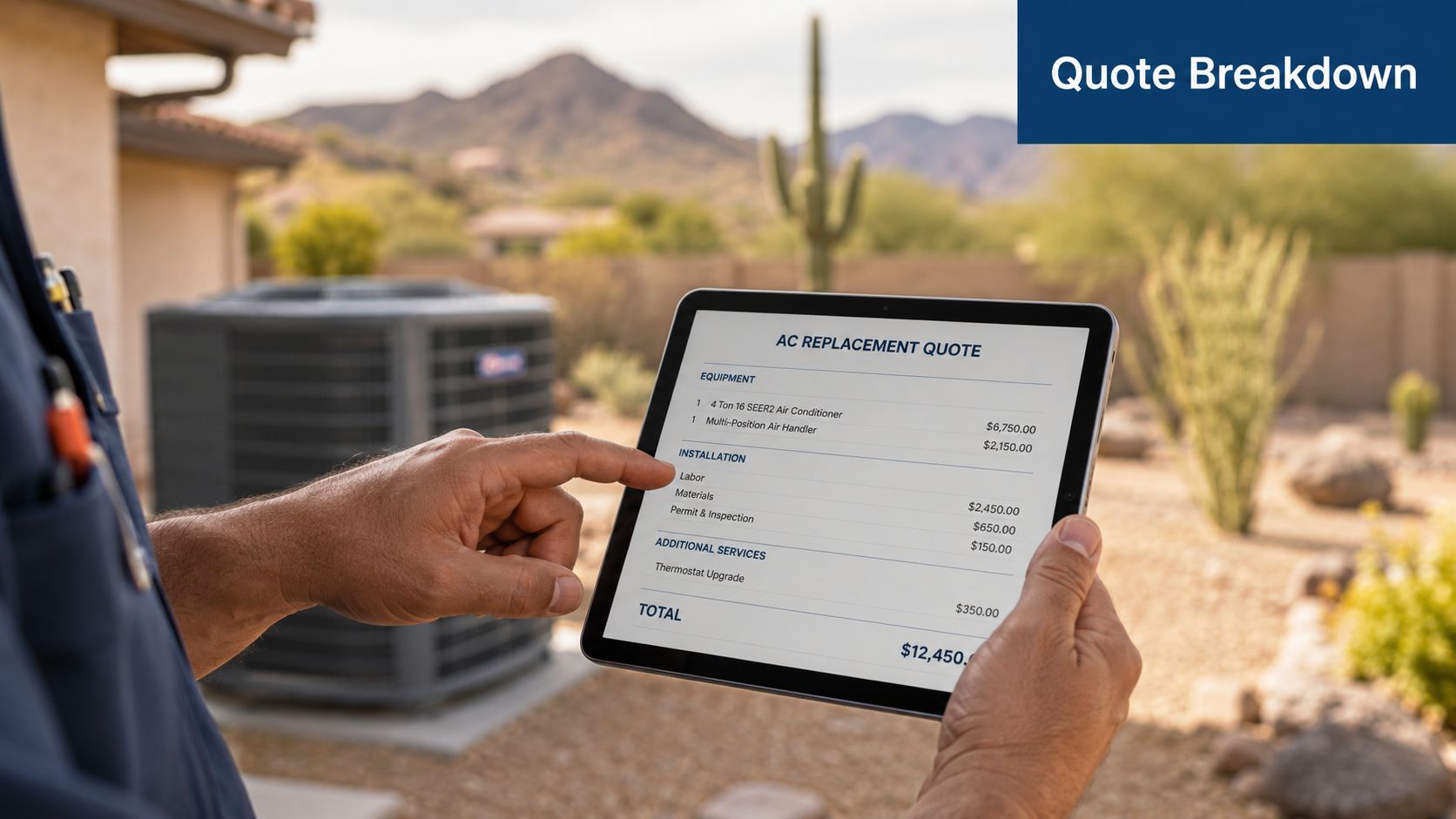
The equipment line should spell out exactly what is being replaced. That means the outdoor condenser, the indoor coil, and the air handler or furnace if the system calls for it. In Arizona, a quote that only highlights the brand and tonnage leaves out too much.
Matched components matter for efficiency, warranty coverage, and how the system handles long summer run times. A cheaper proposal sometimes looks attractive because it keeps an older indoor piece in place or skips items that should be updated with the replacement. That can lower the upfront price and raise the chance of airflow, drainage, or performance problems later.
Efficiency choice changes the quote too. Higher SEER equipment can make sense for homeowners who plan to stay put and run their system hard through long cooling seasons, but the payback depends on the house and the install quality, not just the brochure. For a practical comparison, see Comfort Experts' SEER 16 and 14 advice.
The install scope is where quotes separate
A real replacement quote should show the work around the equipment, not just the equipment itself.
That includes removing the old system, setting the new equipment, brazing and pressure-testing refrigerant lines, pulling a vacuum, wiring controls, checking refrigerant charge, verifying airflow, testing temperature split, and hauling away the old unit. If those steps are not clear, ask what is included.
I would also want to see the smaller parts listed. Thermostat adapters, secondary drain protection, condensate line materials, disconnects, whips, fuses, pad replacements, sheet metal transitions, and line-set modifications are common on Arizona replacements. None of those items are glamorous, but they affect whether the job is done cleanly and whether the system starts its life with avoidable problems.
Materials, permits, and code corrections add real cost
This is the part many generic articles gloss over. The unit price is only part of the bill. The house often drives the rest.
In Mesa and nearby cities, permit handling and inspection requirements should be addressed in writing. The quote should also call out likely code-related corrections, especially if the existing installation is older. That can include electrical disconnect updates, condensate safety switches, proper pad or mounting support, and other fixes needed to bring the new system up to current standards.
Older homes often need sheet metal work at the coil, drain changes, or return-air improvements to support the new equipment. If a quote is vague here, it is hard to compare it fairly against a proposal that includes those corrections up front.
Watch for what is missing
Low numbers usually come from reduced scope, not from some secret way to install an AC system cheaper.
If a proposal does not mention line-set condition, airflow testing, drain design, permit responsibility, or startup procedures, there is a good chance those details have not been priced properly. The same goes for duct leakage. Homeowners who want background on why duct sealing can affect replacement value can review these Sparkle Tech Window Washing LLC insights.
A solid estimate should answer these questions:
- What equipment is included: condenser, coil, air handler, furnace, or a full matched system
- What labor is included: removal, installation, startup, testing, and disposal
- What materials are included: drain parts, electrical connections, transitions, mounting hardware, and refrigerant line work
- Who handles permits and inspections: contractor, homeowner, or not included
- What house-side issues were noted: return air, duct defects, drainage concerns, or electrical corrections
The best quote is usually the one that makes the full job visible. In Arizona, that matters more than a low equipment price on the front page.
Arizona-Specific Factors That Impact Your Final Cost
A Mesa homeowner can price the equipment online in five minutes and still miss the part that changes the actual number. In Arizona, the final cost often comes from what the new system needs around it, not just the condenser and coil.
Ductwork is often the real budget variable
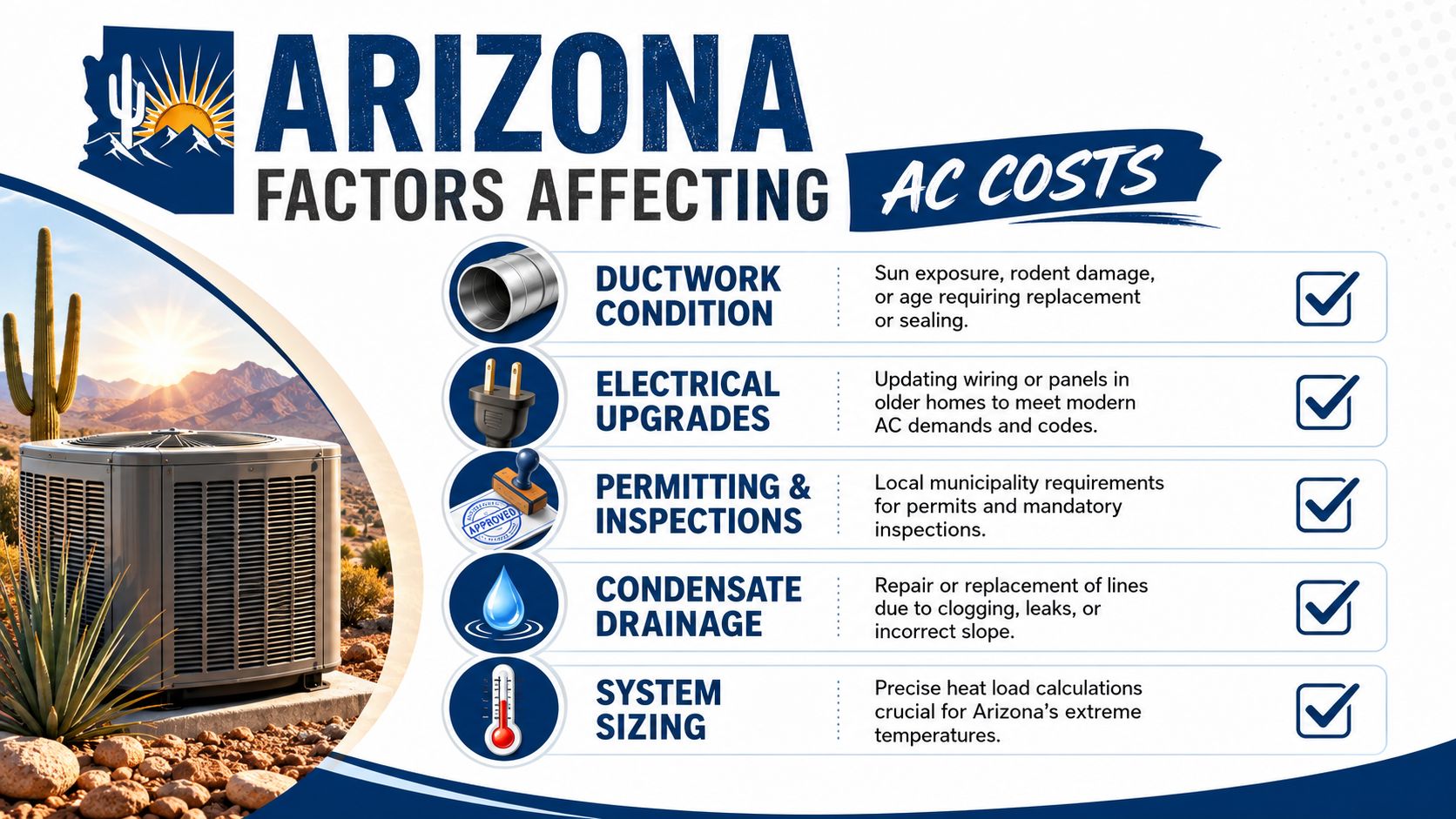
In older Mesa, Tempe, and East Valley homes, ductwork is where a "simple replacement" turns into a larger job. I see the same problems over and over: loose connections in the attic, crushed flex runs, thin or damaged insulation, undersized returns, and supply ducts that were never balanced well in the first place.
That matters more in Arizona than many generic cost guides admit. Attic temperatures get brutal, the cooling season is long, and weak ducts waste capacity you already paid for. A new high-efficiency unit cannot make up for air that never reaches the rooms that need it.
Sometimes the fix is modest. Sometimes it means sealing, replacing sections, adding return air, or correcting bad layout choices from an older install. Homeowners researching duct sealing before replacement can review these Sparkle Tech Window Washing LLC insights for background on how leakage affects performance and why duct improvements can belong in the same project.
Sizing errors get expensive fast in desert heat
Copying the old unit size is one of the most common mistakes on replacement jobs. The old system may have been oversized from day one, or the house may have changed with new windows, added insulation, patio covers, or a room addition.
A proper load calculation matters here because Arizona punishes bad sizing. An oversized system can short cycle and leave hot spots. An undersized one may run for long stretches and still struggle on extreme afternoons. If airflow is poor, even the right tonnage can feel wrong.
Efficiency choice ties into this too. Higher SEER equipment can make sense, but only if the duct system and installation quality support it. For homeowners weighing efficiency levels, Comfort Experts' SEER 16 and 14 advice gives a useful comparison of upfront cost versus operating value.
Extreme heat and monsoon conditions add work that generic quotes miss
Arizona installation conditions are hard on equipment and hard on shortcuts. Long refrigerant line runs through hot attics, rooftop package units, sun-beaten disconnects, aging electrical whips, and drains exposed to heavy seasonal dust all affect labor and materials.
Monsoon season adds another layer. Equipment pads need to be stable. Roof penetrations and curb conditions on package units need a close look. Condensate drains need proper slope and clean termination so they do not become a service call right after install. These are not flashy line items, but they are part of the all-in cost of doing the job right in this climate.
Home age and layout change the scope
Two-story homes, older block homes, and houses with additions usually take more time to sort out. Longer duct runs, uneven second-floor temperatures, tight attic access, and older electrical setups can all push the quote higher.
The same goes for homes where the air handler closet is tight or the platform needs to be rebuilt. Labor increases because the crew has less room to work, more materials are needed, and startup adjustments take longer. That is normal. It is not padding. It is the difference between replacing equipment and correcting a system so it performs in July.
Old equipment can trigger more than a repair decision
Once a system gets older, replacement cost is not just about the machine failing. Older equipment can bring refrigerant issues, weak blower performance, rusted secondary drain pans, and worn electrical parts that make a major repair harder to justify.
Homeowners who are on the fence can review Arizona repair or replacement guidance before putting more money into an aging system. In many Arizona homes, the smarter question is not "What does the box cost?" It is "What does this house need so the new AC survives the heat and cools evenly?"
Rebates and Upgrades to Maximize Your Investment
A lot of Mesa homeowners get surprised here. The equipment price looks manageable, then the significant money questions show up. Which upgrades improve comfort, which ones lower summer operating cost, and which ones are just add-ons that sound good in the sales pitch.
Upgrades that usually make sense
The best upgrade depends on what is wrong with the house now.
If the home cools unevenly, spends all afternoon fighting hot back bedrooms, or has one floor that never feels right, money often goes farther on airflow and control upgrades than on jumping to a higher equipment tier. In older Arizona homes, duct corrections are often one of the smartest places to spend because the new system can only deliver the air the ductwork will carry.
A few upgrades are usually worth reviewing during replacement:
- Smart thermostats: Better scheduling, easier control during long cooling months, and cleaner system monitoring.
- Zoning options: Useful in larger homes, two-story layouts, or homes with rooms that stay hotter than the rest.
- Duct corrections: Often a better return than paying for a bigger unit that still has poor airflow.
- Higher-efficiency equipment: A practical option for homes with heavy summer runtime, if the duct system and airflow support it.
Good contractors price these as options with a reason behind each one. They should be able to say what problem the upgrade solves and what happens if you skip it.
Rebates and credits need verification before signing
Rebates can help offset part of the replacement cost, but they are rarely as simple as homeowners expect. Eligibility can depend on the exact model number, efficiency rating, utility service area, install date, and whether the paperwork is submitted on time.
For local utility guidance, this overview on how to get SRP rebates for HVAC is a practical starting point. For homeowners also thinking about bigger home-energy planning, this guide to Florida solar for homeowners offers a useful example of how rebate research and documentation can affect project timing, even though it's a different market and utility environment.
Tax credits can also change from year to year. Before signing, confirm that the equipment on the quote matches the rebate or credit being discussed. I have seen homeowners assume they were getting an incentive, only to find out later the installed combination did not qualify.
Focus on payback, comfort, and Arizona runtime
In Arizona, a better system earns its keep through long cooling seasons and hard summer runtime. That does not mean every premium option pays off. A high-efficiency unit can be a smart move in a house with strong airflow, decent duct sealing, and usage patterns that justify the added cost. In a house with attic duct losses, weak returns, or rooms that already struggle, the first dollars often belong somewhere else.
Monsoon season matters too. Surge protection, proper condensate management, and clean control wiring are not glamorous upgrades, but they can save headaches in a climate with dust, power issues, and heavy summer demand.
The goal is simple. Spend on the items that improve comfort, protect the system, and lower waste, not on features that leave the problem untouched.
The best investment is usually the system that fits the house, includes the right supporting work, and holds up through an Arizona summer.
How to Compare Quotes and Choose the Right Contractor
A Mesa homeowner can collect three bids for the same house and still be looking at three very different jobs. One quote may cover only the condenser and coil. Another may include return-air corrections, a new pad, permit fees, and drain work for a garage-attic setup that struggles every July.
That is why the lowest number often tells you the least.
What a serious quote should include
A solid proposal should show exactly what the contractor plans to replace, what problems were found in the home, and what labor is included to make the system run correctly in Arizona heat. If the quote feels vague, it usually is.
Look for these items in writing:
- Matched equipment details. The model numbers should show whether you are getting a full system replacement or a partial swap.
- Sizing method. A contractor should explain how they arrived at the system size, especially if the old unit short-cycled, ran nonstop, or never kept up.
- Duct and airflow notes. Older Mesa and Phoenix homes often have undersized returns, leaky attic ducts, or rooms that were added later. If those issues were discussed, they should appear on the quote.
- Electrical, drain, and pad work. These small line items add real cost and are easy to leave out until install day.
- Permit and inspection handling. It should be clear who is pulling the permit and whether the fee is included.
- Warranty terms. Parts, labor, and any workmanship coverage should be spelled out clearly.
Arizona replacement quotes can vary widely for legitimate reasons. Higher efficiency, difficult attic access, crane lifts, duct repairs, and heat-load problems all change the final number. The point of comparing quotes is to see what is included, not to assume every contractor is pricing the same scope.
Repair versus replace still matters during quote review
Some contractors quote replacement fast because it is easier to price than a complicated repair. Homeowners should still ask what condition the existing system is in and whether the repair would buy meaningful time.
Age matters. Refrigerant type matters. The history of breakdowns matters more than a blanket rule. A unit that is older, uses phased-out refrigerant, and has weak airflow in half the house is a different decision than a system with one isolated part failure.
In Arizona, I also tell people to look at summer risk. If a system is already limping into June, the cost of one more repair is only part of the decision. The bigger question is whether the house is likely to lose cooling during a stretch of 110 degree weather.
A practical way to compare bids
Set the quotes side by side and mark up the scope like a checklist. Commercial property teams do this all the time, and homeowners can borrow the same approach with an essential HVAC contract template.
Use a simple review list:
- Confirm Arizona licensing and insurance. Verify it before you sign anything.
- Ask what the contractor inspected. Equipment, ductwork, return air, drain line, electrical, thermostat, and attic conditions should all be part of the visit.
- Ask what is excluded. This question catches a lot. Duct modifications, drywall access, code upgrades, and hauling fees are common gaps.
- Check startup and testing details. The install should include more than turning the unit on.
- Look at local reputation and estimate quality. Clear communication and detailed proposals matter when finding local HVAC services in Mesa.
One more point that gets missed. If one contractor spent an hour measuring, inspecting the attic, and checking static pressure, while another glanced at the old unit and wrote a number on the spot, those quotes are not equal even if the equipment brand matches.
A good contractor prices the house you have, not the house they assume is there.
What to Expect on AC Installation Day
Most homeowners don't replace an AC system often, so the process can feel uncertain until the crew arrives. The smoother installs usually start with clear expectations.
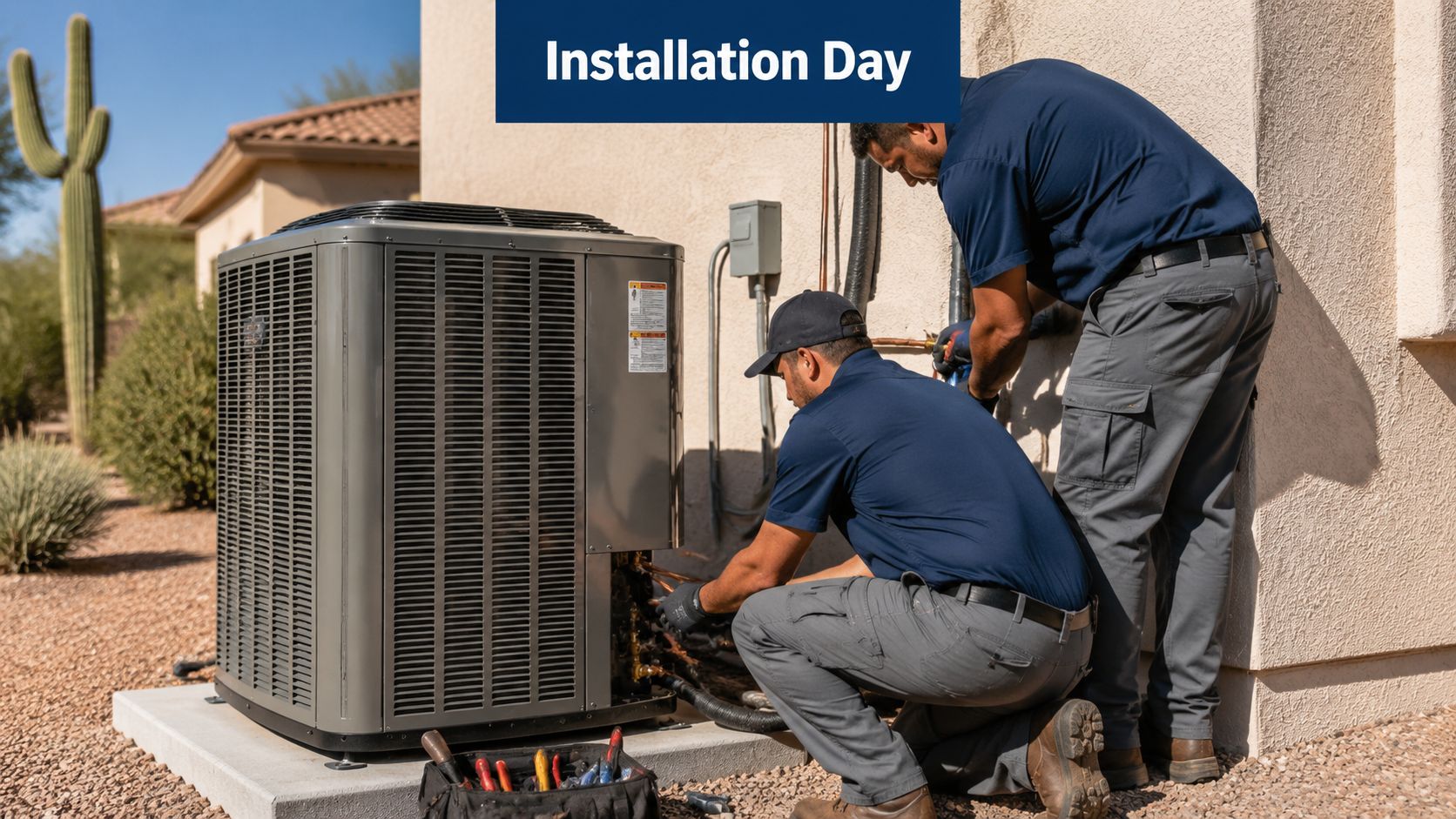
The job starts with protection and removal
The team typically begins by confirming equipment, access, thermostat details, and any special notes about the home. Indoor work areas should be protected before removal starts, especially if the project includes an air handler, furnace, or attic access.
The old equipment is disconnected and removed. If the job includes coil changes, drain updates, or line work, those items are handled before the new system is set and connected.
Installation, startup, and testing
Once the new equipment is in place, the crew connects refrigerant lines, electrical, drain components, thermostat controls, and any approved accessories. Then comes startup and performance testing.
That testing should do more than confirm the system turns on. A proper finish includes checking operation, airflow behavior, thermostat response, and overall system performance.
Final walkthrough matters
The last part is often the most useful to the homeowner. In this part, the technician explains filter access, thermostat settings, maintenance basics, and anything the homeowner should monitor during the first run cycle.
If the project involves new air conditioner installation, the homeowner should leave the appointment knowing what was installed, how to operate it, and what to expect during normal summer use in Arizona.
A clean installation day should feel organized, not rushed. That usually tells a homeowner as much about the contractor as the quote did.
For homeowners in Mesa and the East Valley, the right next step is getting a replacement estimate that looks beyond the unit price and checks the full system. Comfort Experts can help review repair-versus-replace options, explain what's driving the quote, and outline practical solutions for Arizona homes. Call 480-207-1239 or schedule service to get started.